Practically · Internet and remote work
Can you actually work from here?
You can, and the line is the least of it. A SIM is bought against your passport, a month of data costs 12,000 to 22,000 pesos, home fibre starts at 65,000. The real obstacles are two: verification codes going to your old number, and the six to seven hour difference that turns mornings into the only slot for meetings with Europe.
Checked 1 September 2026
Say remote work from Colombia and most people picture a connection problem. There is none. The real obstacles are three, and none of them is about line speed: registering a SIM against your passport, two-factor codes tied to your old number, and the six hour time difference that decides what your day looks like.
Phone: what to buy on day one
There are four operators. Claro has the best coverage outside cities and the highest prices. Movistar and Tigo sit in the middle. WOM is the cheapest, works well in town and gets lost in the mountains.
A prepaid SIM is bought against your passport and registered on the spot; the seller copies the document number and will not activate the card without it. Unregistered SIMs are banned in Colombia because of phone extortion, so this step finds you even at a corner stall.
Prepaid package prices in 2026:
- from 2,500 pesos for the smallest package, valid a few days
- 12,000 pesos for 1.5 GB a month at WOM
- 15,000 pesos for 1 GB at Claro
- 22,000 pesos for 2 GB at Movistar
- around 60,000 to 100,000 pesos for an unlimited data package
What separates the operators is what does not count against your data: social apps and maps are often thrown in. For a short stay a twenty thousand peso package is plenty, about four euros a month.
eSIM is supported by all four and is the fastest way to have data the moment you land. The seller by the baggage belt charges more than a shop in town, but on day one it is worth it.
Get a number straight away, not after a week. Without a local number you will not open a ride hailing account, will not pay through Bre-B, and the bank will not deal with you.
Two-factor codes: the trap nobody expects
This is the one thing that genuinely derails a move. Banks back home, government portals and plenty of services send the code to your old number. The moment you stop using it, you lose access to things you took for granted for years.
What to do, best first:
- Keep your old number alive on a cheap plan, in the second slot of your phone or as an eSIM. It costs a few euros a month and solves everything.
- Switch verification to an app rather than SMS wherever you can.
- Print backup codes before you fly and leave them with someone you trust.
- Change the contact number at your bank only once the Colombian number has been stable and verified for weeks.
Skip this and you will be sorting it out on a video call with your bank at six in the morning local time.
Internet at home
Fibre rules in Medellín and it is cheap. For 300 Mbps in 2026:
- Tigo from 65,000 pesos a month
- Claro from 75,000 pesos
- UNE, meaning EPM, from 80,000 pesos
900 Mbps runs roughly 120,000 to 150,000 pesos. Installation, router and support are usually included, contracts typically run twelve months, and going contract free costs a little more.
Two things worth knowing:
- A rented flat usually has it already. In a furnished place the line comes with the rent and putting it in your name is work for nothing.
- Plan your fallback on mobile. Outages are rare but they happen. A hotspot from a phone on an unlimited package is the cheapest insurance for the call that cannot be moved.
Where to work in Medellín
Coworking. A day pass runs 40,000 to 80,000 pesos, a monthly membership 200,000 to 400,000, unlimited 350,000 to 600,000. Most spaces are in Poblado and Laureles, the same neighbourhoods where most people who came here to work remotely live.
Cafés. This is coffee country and there are dozens with good wifi. One unwritten rule applies: at noon you free the table, because that is lunch. And the laptop does not stay on the table while you fetch your coffee; downtown, nobody declines an offer like that.
Home. Cheapest, and after two in the afternoon the most comfortable, because the fan is at home. Live higher up the slope and you get better air and a worse mobile signal.
The time difference that shapes the day
Colombia is UTC−5 and does not change clocks. Central Europe is therefore seven hours ahead in summer, six in winter.
In practice: if you work with Europe, you are done by lunch. Seven in the morning in Medellín is two in the afternoon in Prague, the last sensible slot for a meeting. Afternoons here are quiet because at home people are having dinner.
It is a better arrangement than it sounds. Mornings take the calls and the email, afternoons are left for work that needs quiet, and by five nobody writes to you. Working with the United States flips it: the day slides into the afternoon and evening.
The visa, if you want to stay
For remote work there is the V visa for nomads, the visa V nómadas digitales. It runs up to two years and asks for two things:
- income of at least three times the minimum wage, which in 2026 means 5,252,715 pesos a month, roughly 1,200 to 1,400 dollars, documented month by month
- health insurance for the full period the visa is issued for, not just a few months
The paperwork lives in its own guide about visas. What matters here is that insurance is arranged before the application, and that the income proof cannot be averaged out.
Taxes are their own subject and one sentence will not do. Spend more than 183 days in a twelve month window and you start dealing with Colombian tax residency, and with what the tax office at home thinks about it. That belongs with an accountant on both ends, not in a blog post.
What I would do again and what differently
Again: buy an eSIM before the flight, keep the old number alive, and spend the first month in a coworking space even with fibre at home. For the people, not for the line.
Differently, one thing: I would not have changed the contact number at my bank until the Colombian one had worked flawlessly for three weeks. It looked like a detail and it cost me a week without access to the account.
What I wrote about it
September
2026
17 entries
10 September · Article
Driving in Medellín: the day of the week your car stays home
The last digit of your number plate keeps the car off the streets one day a week, from five in the morning to eight in the evening, across the whole valley. Plus the licence that expires after six months, a fine over six hundred thousand pesos, and road death figures that make me uneasy.
10 September · Article · La Candelaria, Medellín
No water after eight in the evening. What is going on in Medellín
Three hundred thousand people in six communes have had water every other day since late August. The city broke its temperature records in May, Ideam expects a strong El Niño into March, and the grid operator warns that power may not stretch through December. What the rule says, why it landed on the hillsides, and what it means for a trip.
10 September · Article · La Casa del Alimento, Medellín
A lunch where the meat dries on a washing line
A Colombian lunch is not one dish, it is a whole set for one price. Two mains, two desserts, two coffees and a lemonade came to 146,000 pesos. And in that restaurant's yard, beef hangs drying.

10 September · Article · Conquistadores, Medellín
The bin men of Medellín
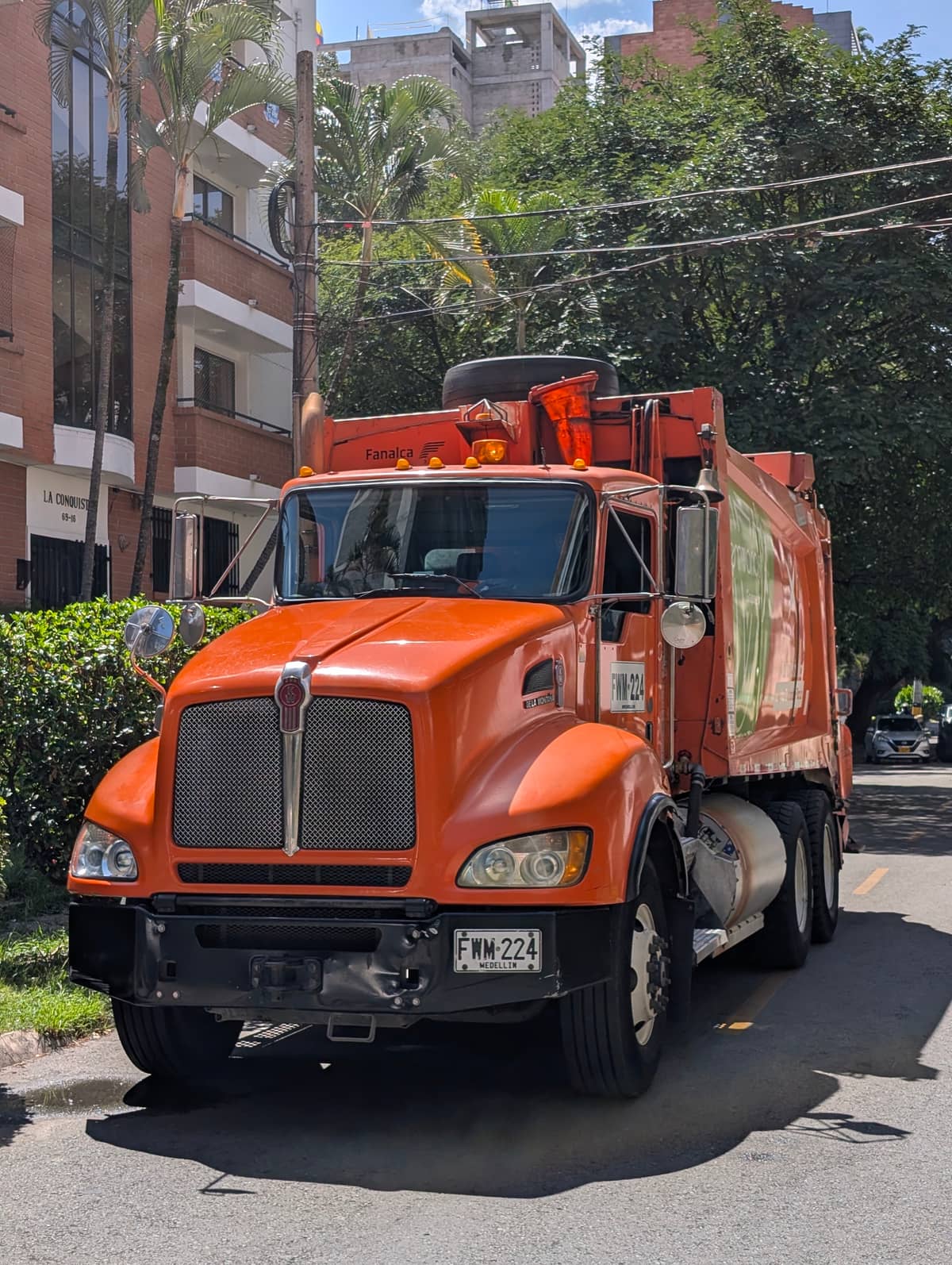
A garbage truck with a slogan saying this city is a little silver cup. Who runs it, where the waste goes, why the landfill has eight years left, and how the people who open bags on the street come to be paid out of the water bill.
10 September · Article · Comuna 8, Villa Hermosa, Medellín
Villa Hermosa after dark
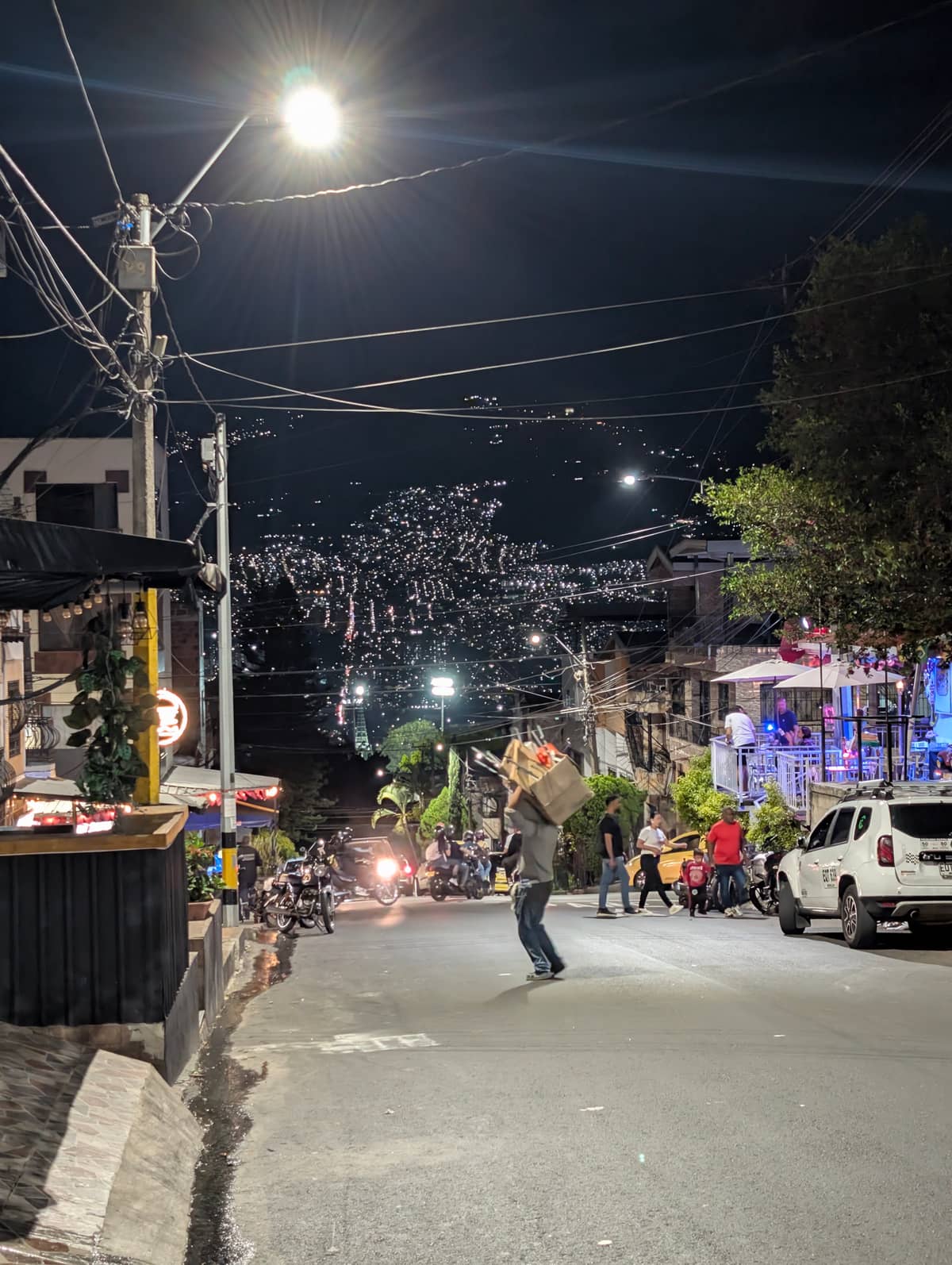
A house with almost no windows, hot rice pudding with cheese, and a slope full of lights right up to the ridge. And the only thing that made me uneasy was not what someone who has read about comuna 8 online would expect.
8 September · Article · El Poblado, Medellín
El Poblado after dark
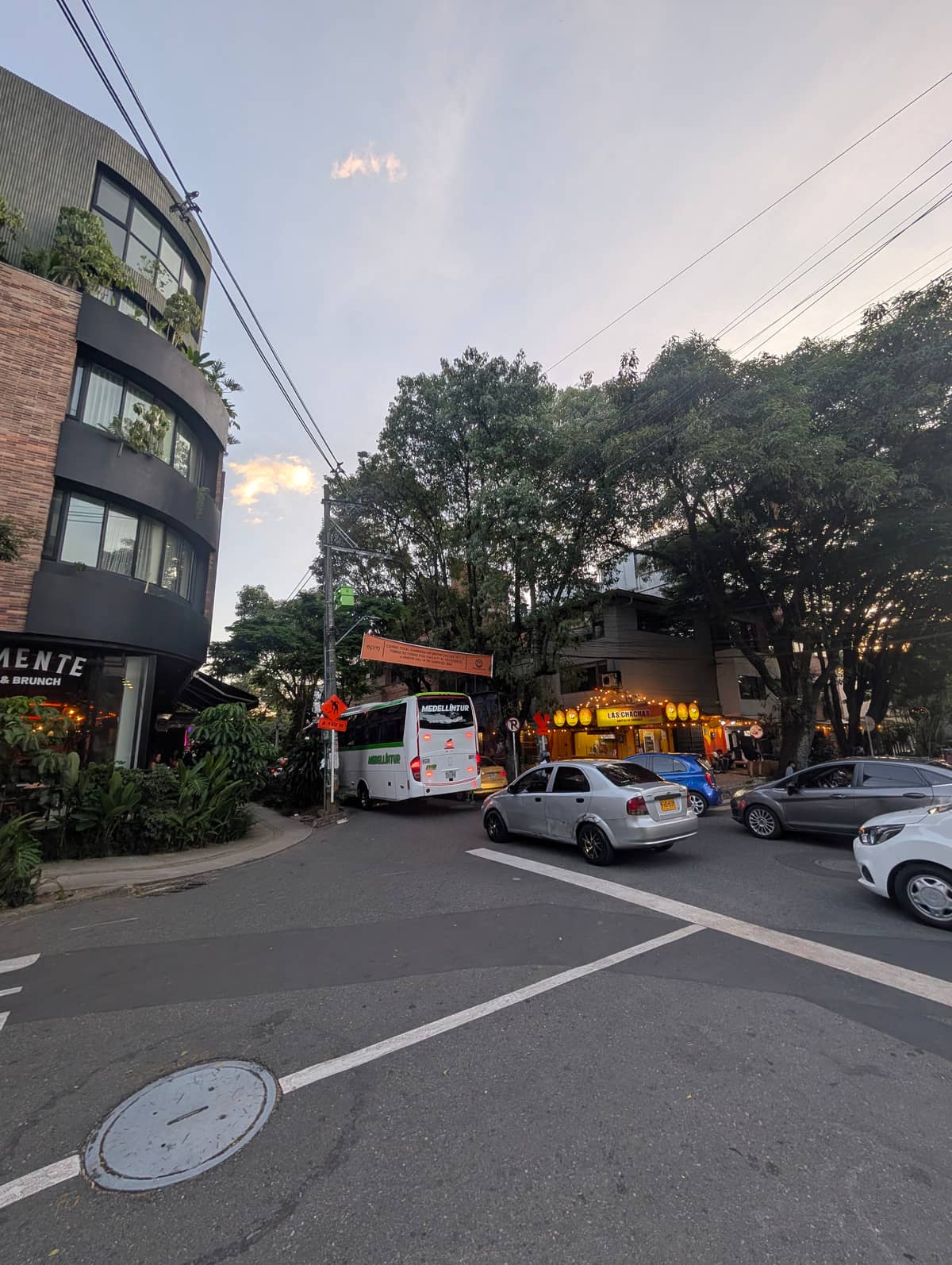
The district where Medellín was founded in 1616 and where almost everybody who flies into the city now sleeps. Provenza with lights in the trees, the singer Karol G's restaurant, a road sign saying tourist zone, and a bill that sums it all up.
8 September · Note · La Candelaria, Medellín
At a junction on Carrera 55, Spider-Man stands at a red light selling…
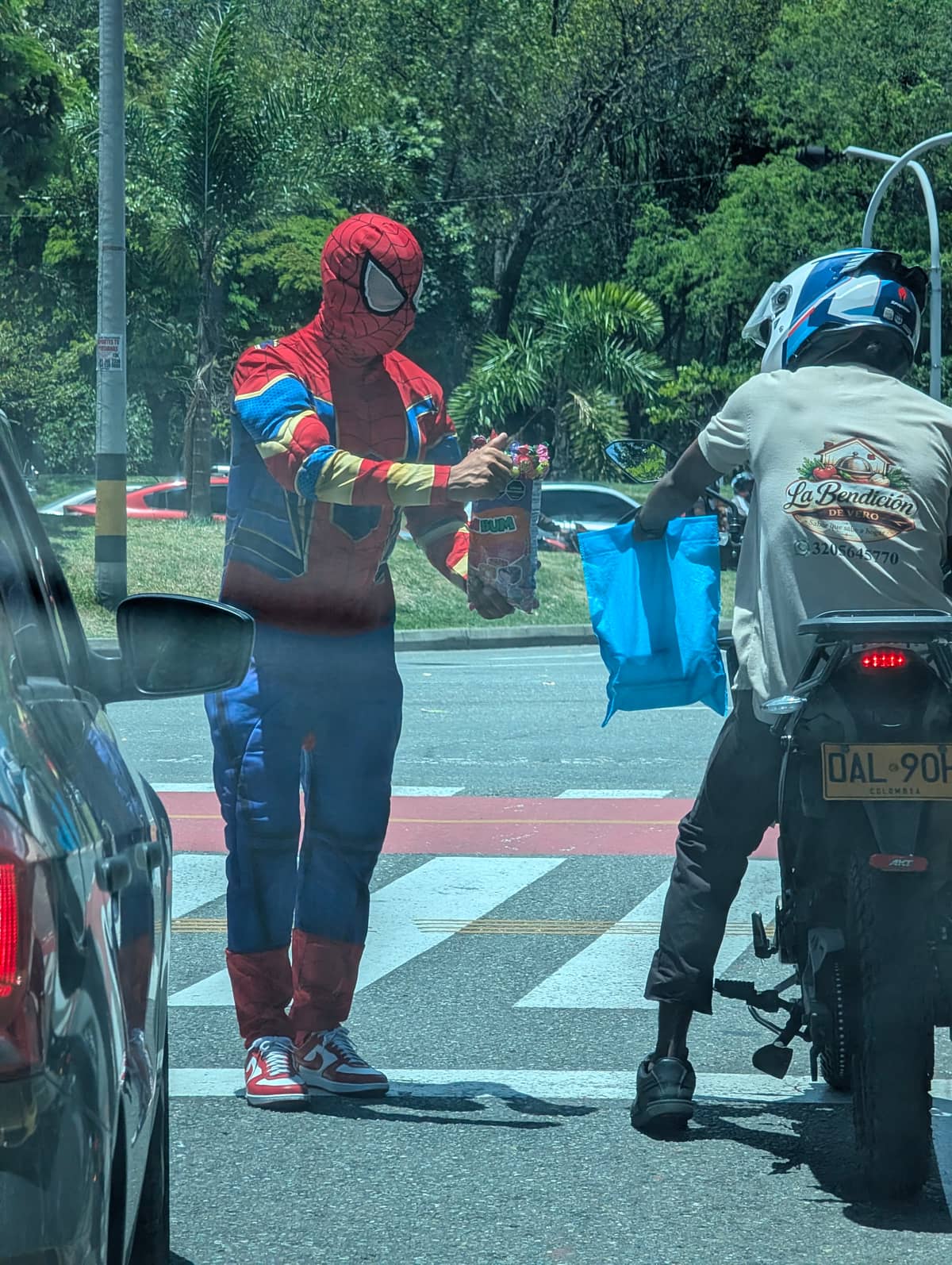
At a junction on Carrera 55, Spider-Man stands at a red light selling sweets between the cars. A motorbike rider behind him, a water stall beside him.
8 September · Note · Café Mattelsa, Medellín
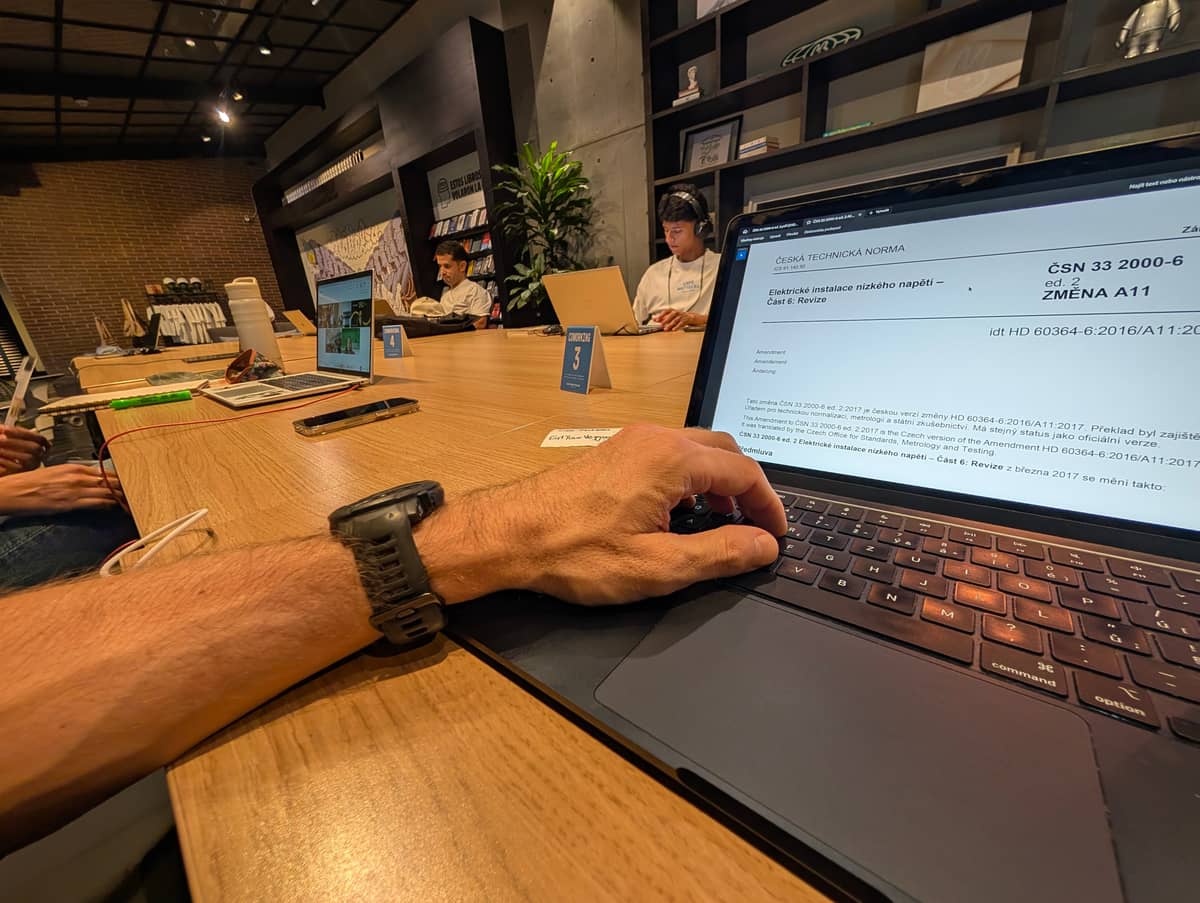
Café Mattelsa, two hours, one coffee and a kombucha. A Czech standard…
Café Mattelsa, two hours, one coffee and a kombucha. A Czech standard for electrical installations on the screen, a palm tree outside the window, people with laptops all around, and nobody making a…
7 September · Note
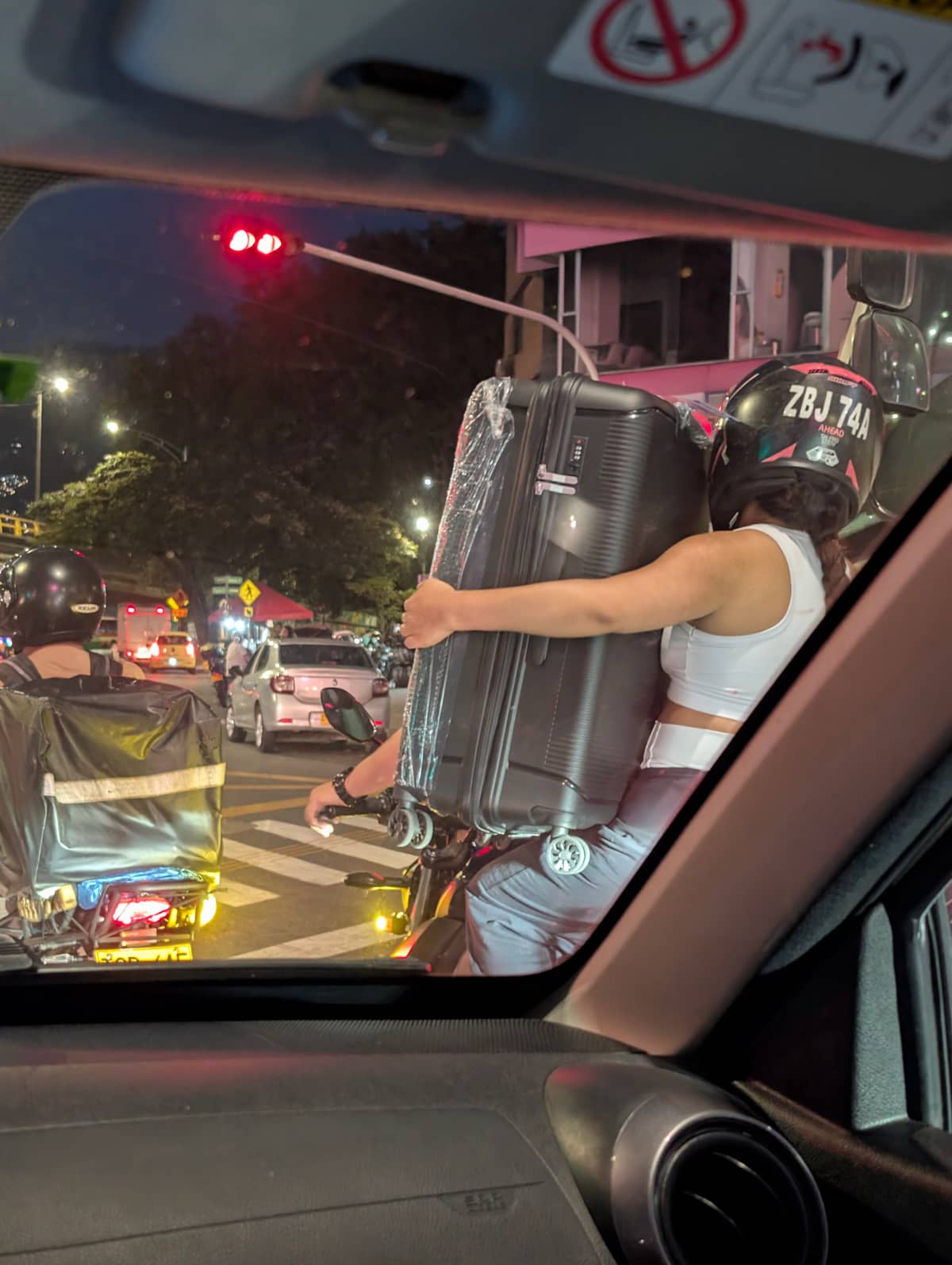
A pillion passenger on a motorbike carrying a large wheeled suitcase…
A pillion passenger on a motorbike carrying a large wheeled suitcase. One arm clamped around it, the other around the rider, knees against the tank, riding in traffic between the cars.
6 September · Article · Comuna 8, Villa Hermosa, Medellín
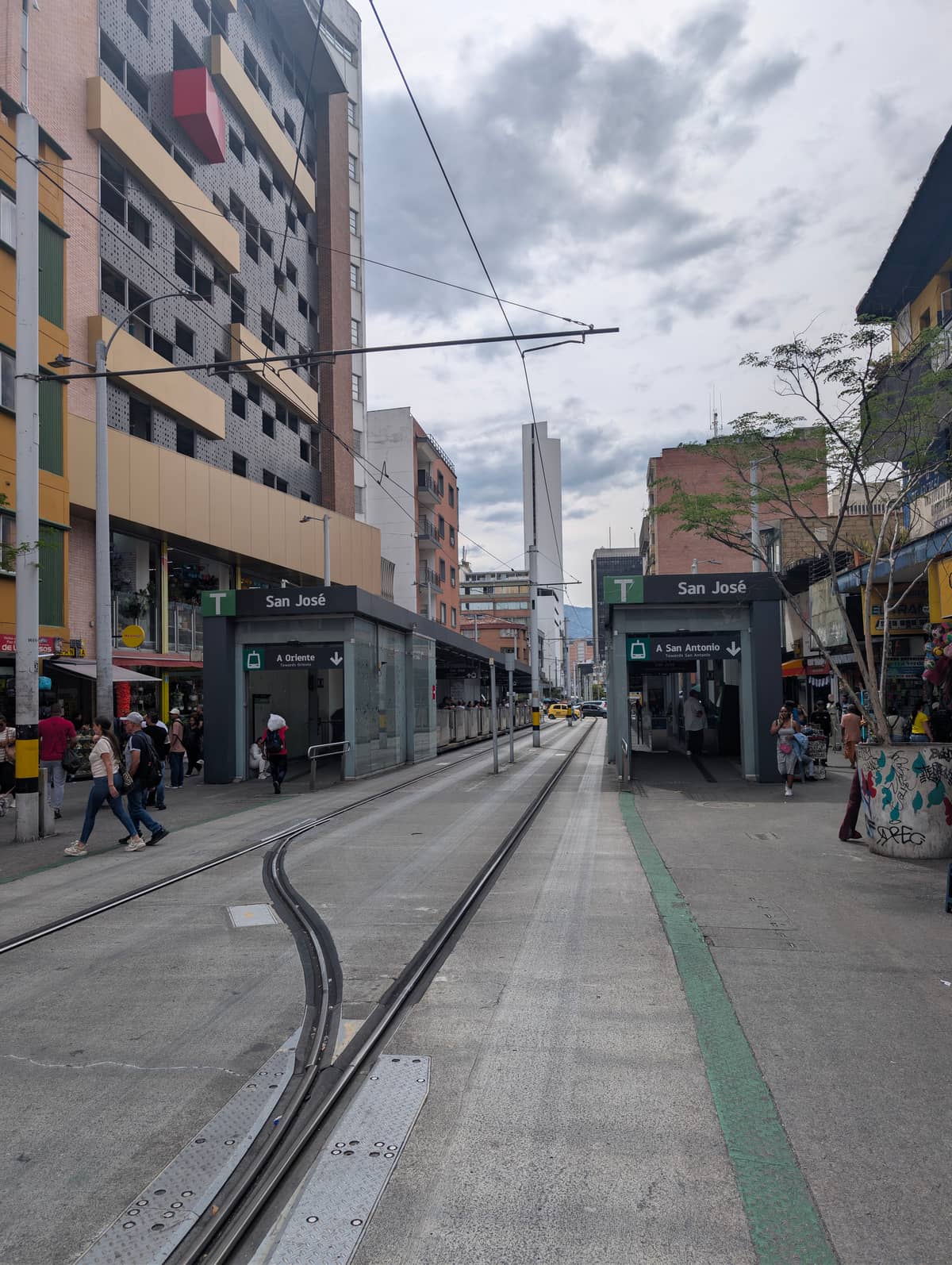
Up by cable car, down for an arepa
A tram on rubber tyres takes you from the centre to the edge of the city, and a cable car lifts you from there over the roofs of comuna 8. Back down there was an arepa festival, parakeets in a tree, a café in the house by the church, and a concert hall underground.
6 September · Article · La Candelaria, Medellín
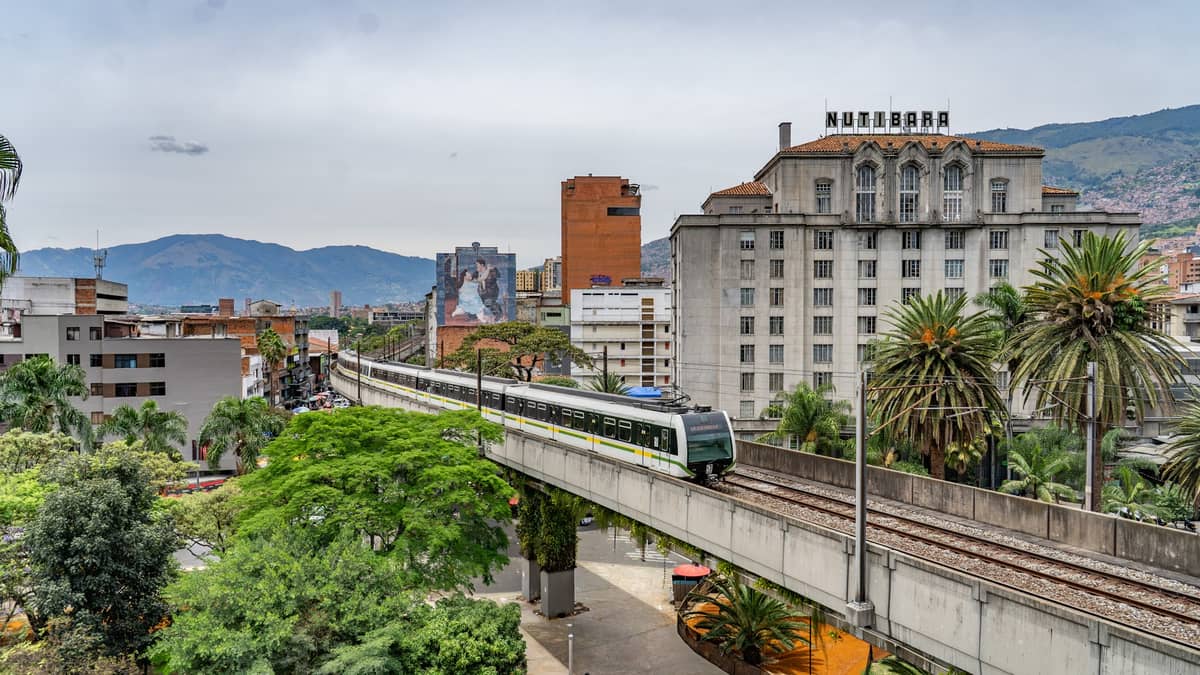
El centro: the day I finally saw the city
Every second person told me not to go into the centre of Medellín. I went by metro, cleaner than the one at home, and found a palace with a chequerboard facade, twenty three Botero sculptures, a cathedral made of a million bricks, and a market that has run since the seventies.
5 September · Note
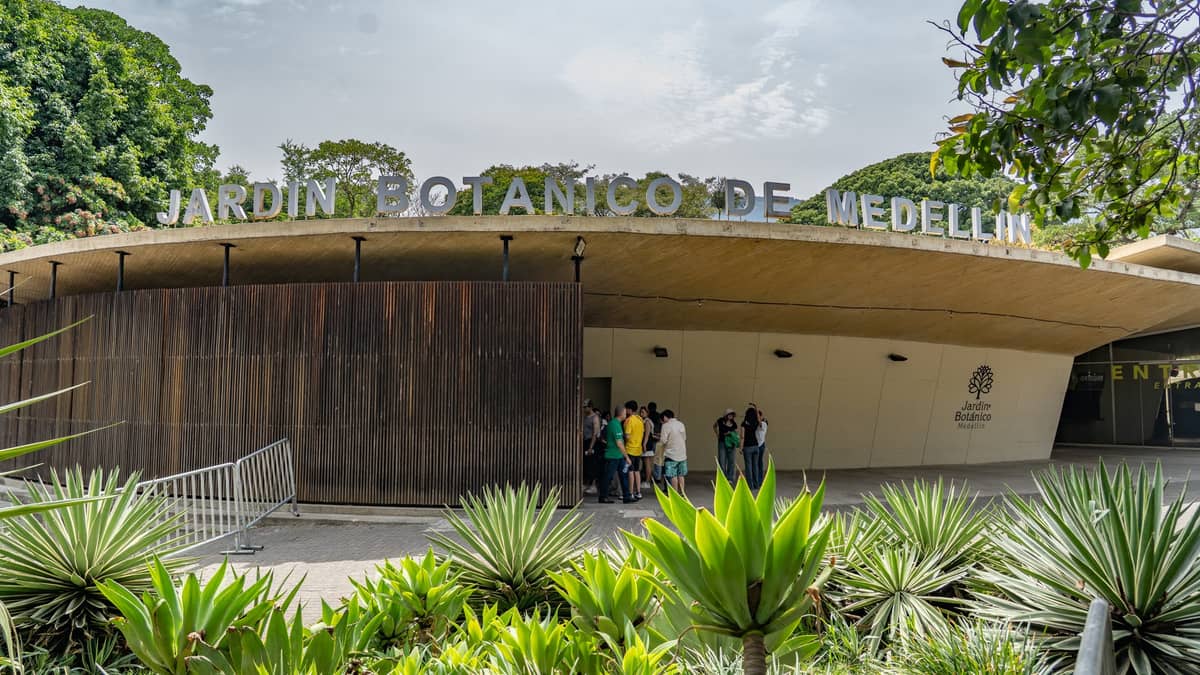
The botanical garden was closed. Not for a holiday or repairs: they…
The botanical garden was closed. Not for a holiday or repairs: they are building the Fiesta del Libro y la Cultura inside it, the city's book festival, in its twentieth year and running from 11 to 20…
4 September · Article · Comuna 8, Villa Hermosa, Medellín
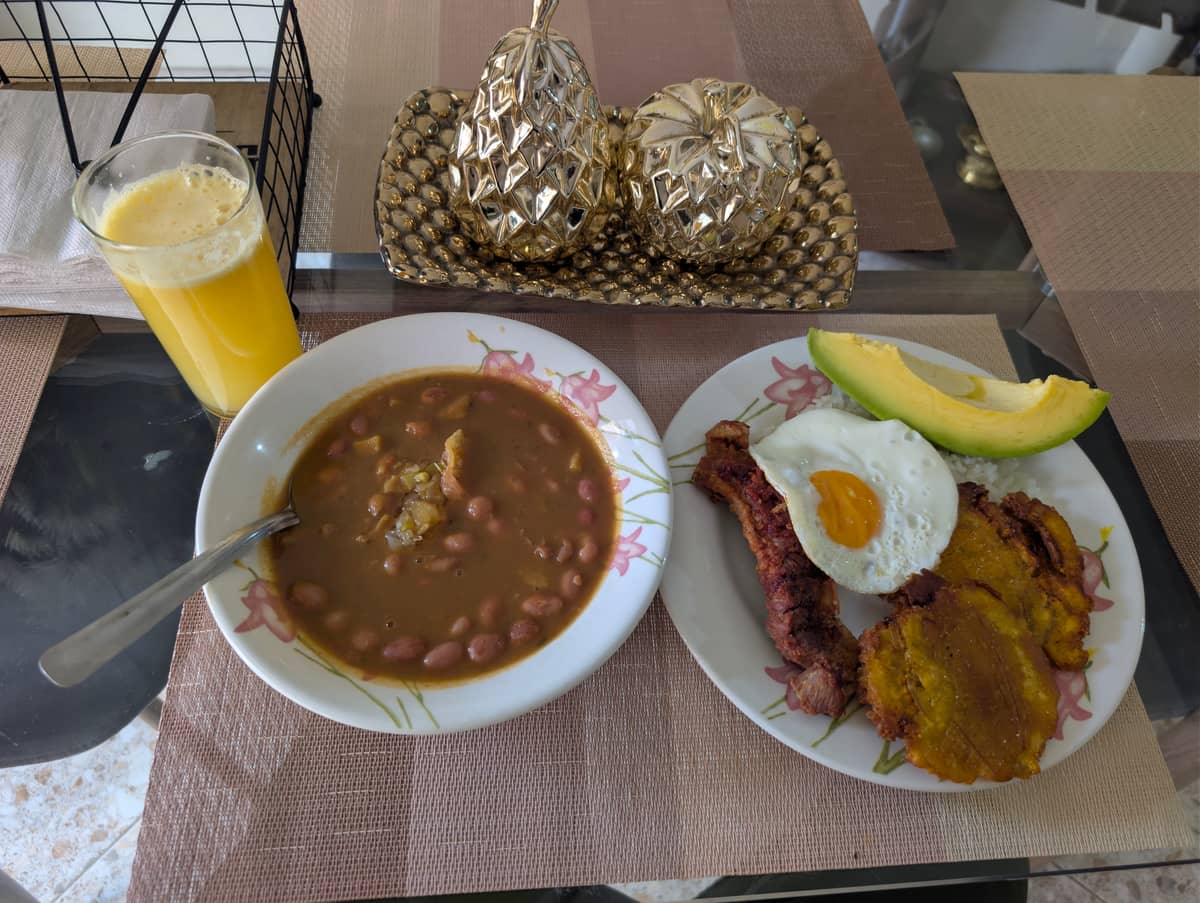
Villa Hermosa: lunch, a church and a market
Comuna 8 up close, not from the cable car. A home cooked bandeja paisa with chicharrón, the brick church of La Sagrada Familia, stalls on the pavement, and traffic that runs on eye contact. On the way back, a stop among the villas of Prado.
3 September · Article · El Poblado, Medellín
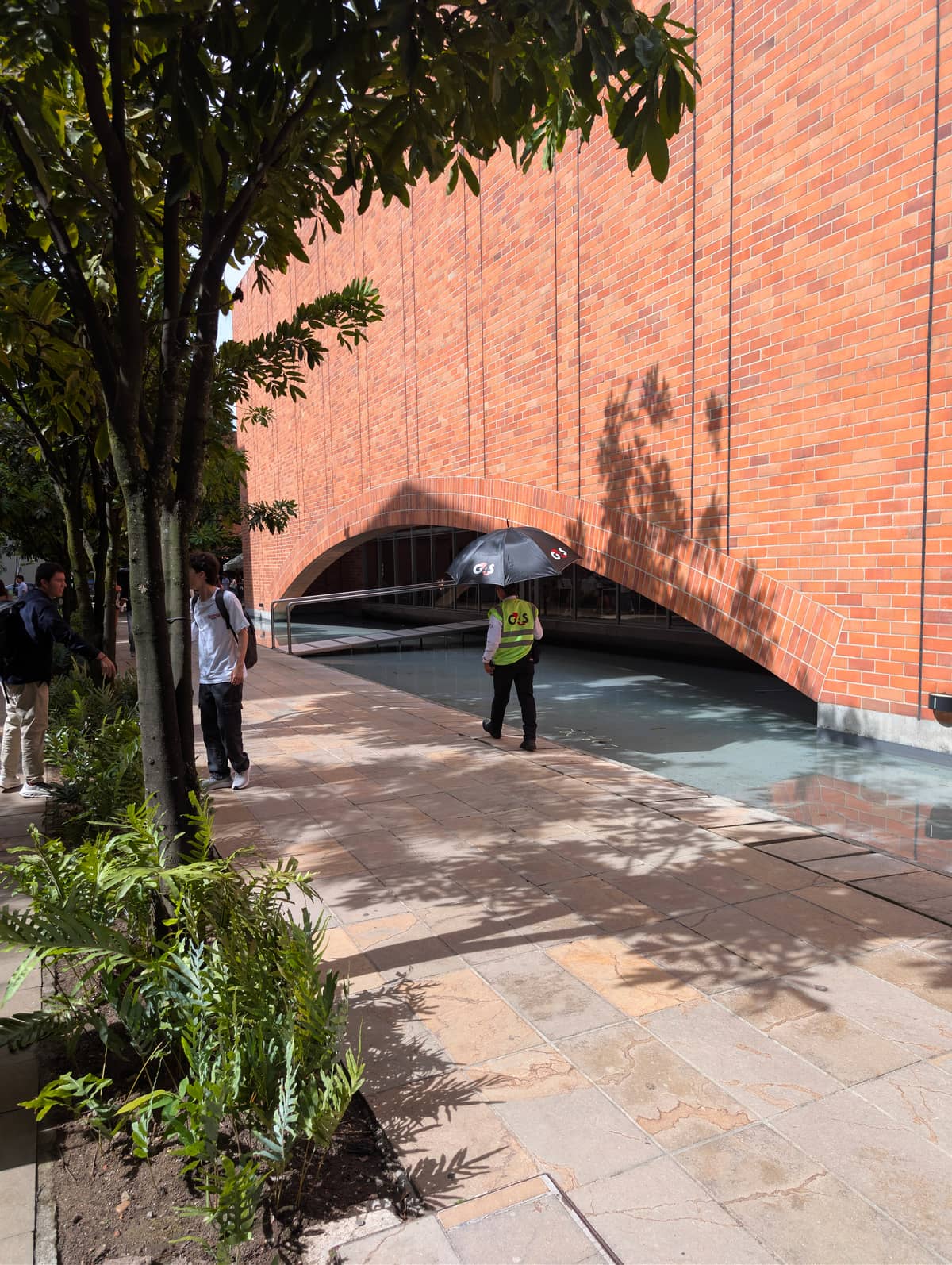
A university as a park and a cinema in a mall
The EAFIT campus, which you can simply walk into, with mango trees, water along brick walls and birds in the middle of the city. And in the evening, the oldest mall in El Poblado, the first in Colombia to have its own cinema.
3 September · Article · El Poblado, Medellín
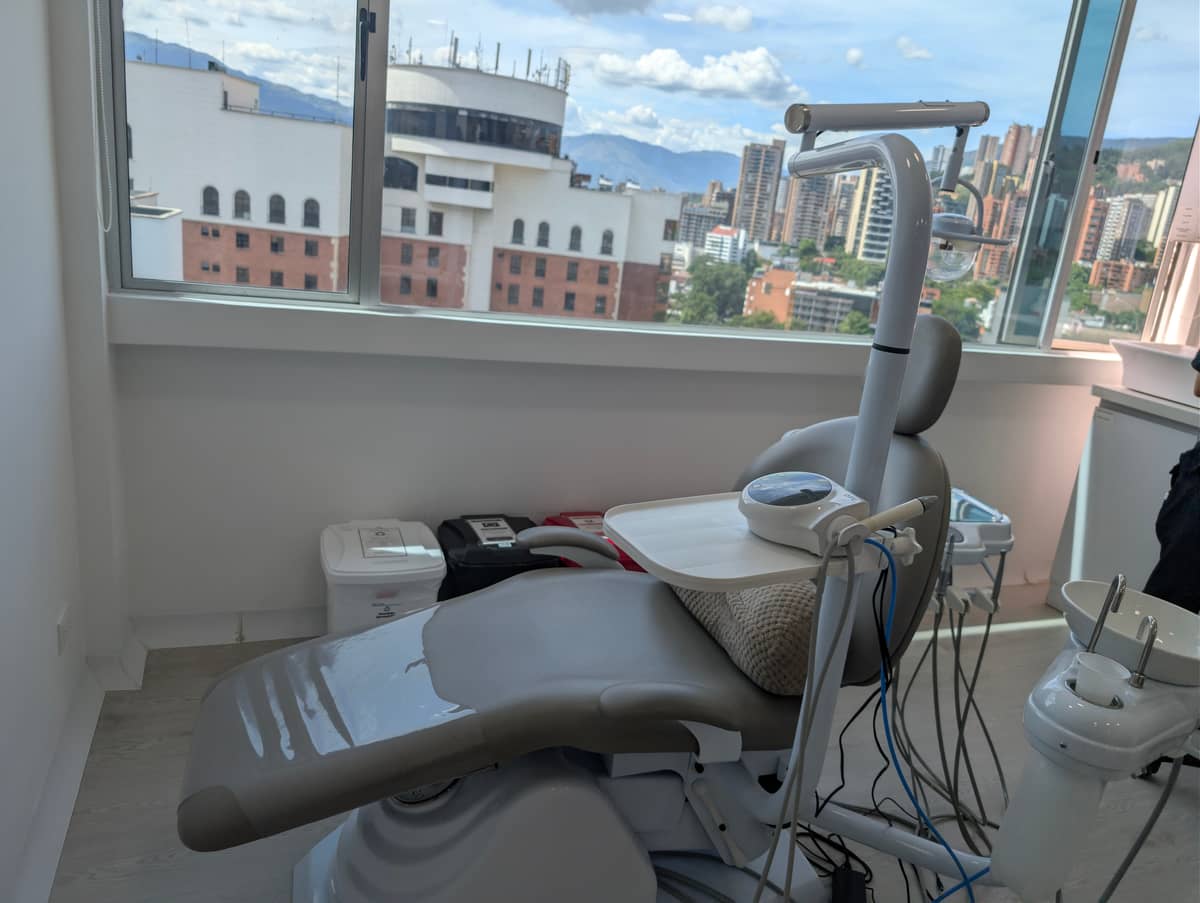
A dentist with a view
A tower full of consulting rooms in El Poblado, a restaurant on the ground floor, and a dentist's chair a metre from a glass wall with the whole Medellín valley behind it. What private care in Colombia looks like to a patient who arrived a month ago.
2 September · Note · Laureles, Medellín

2 September · Article · Laureles, Medellín
Laureles: a neighbourhood drawn in circles
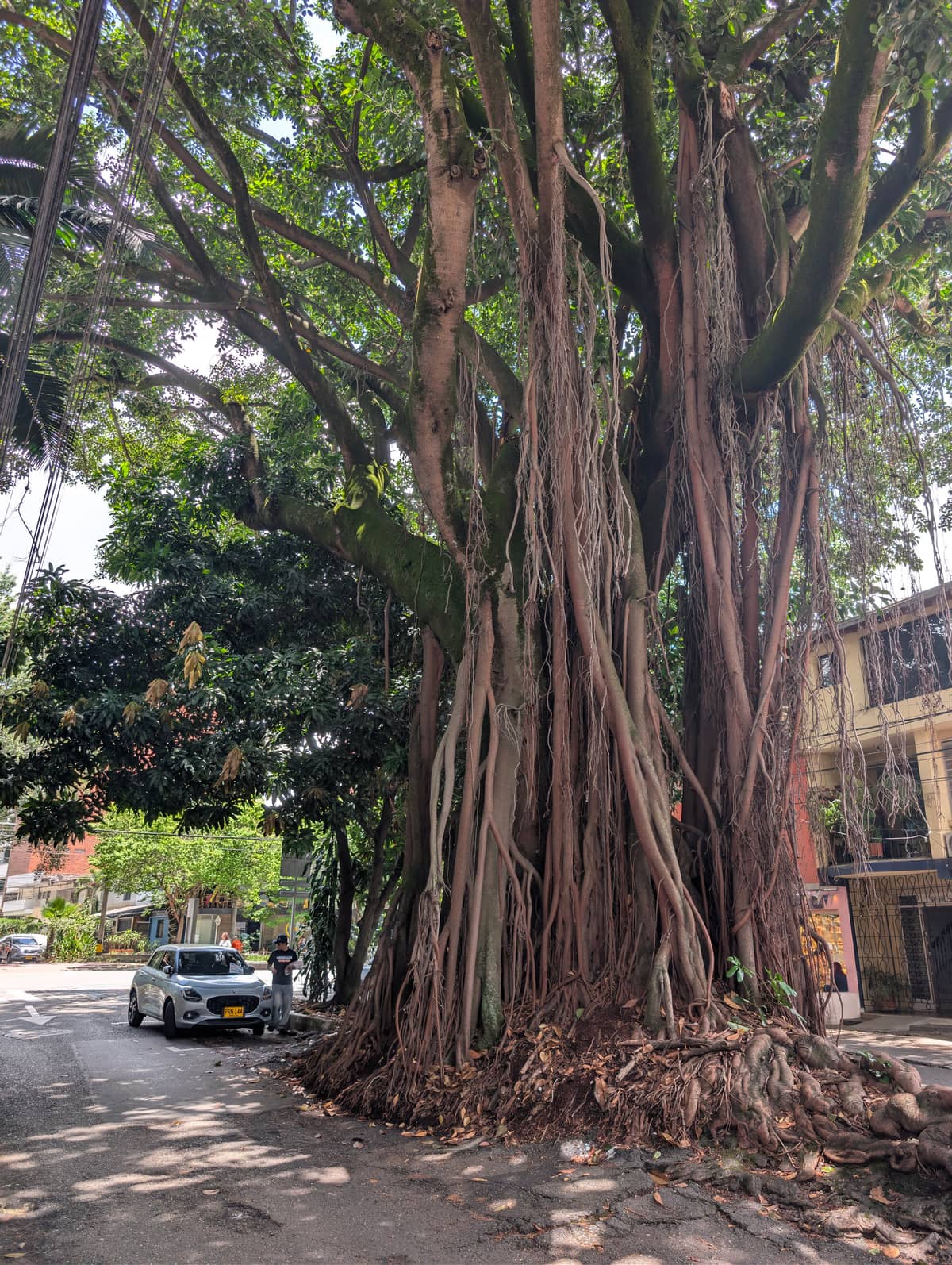
A garden city from 1940 with circular streets, fig trees across the whole road, and cafés you can work from. The neighbourhood Medellín recommends to itself, and the one Time Out called the best in the world.
August
2026
2 entries
31 August · Article · Conquistadores, Medellín
Where I live: Conquistadores
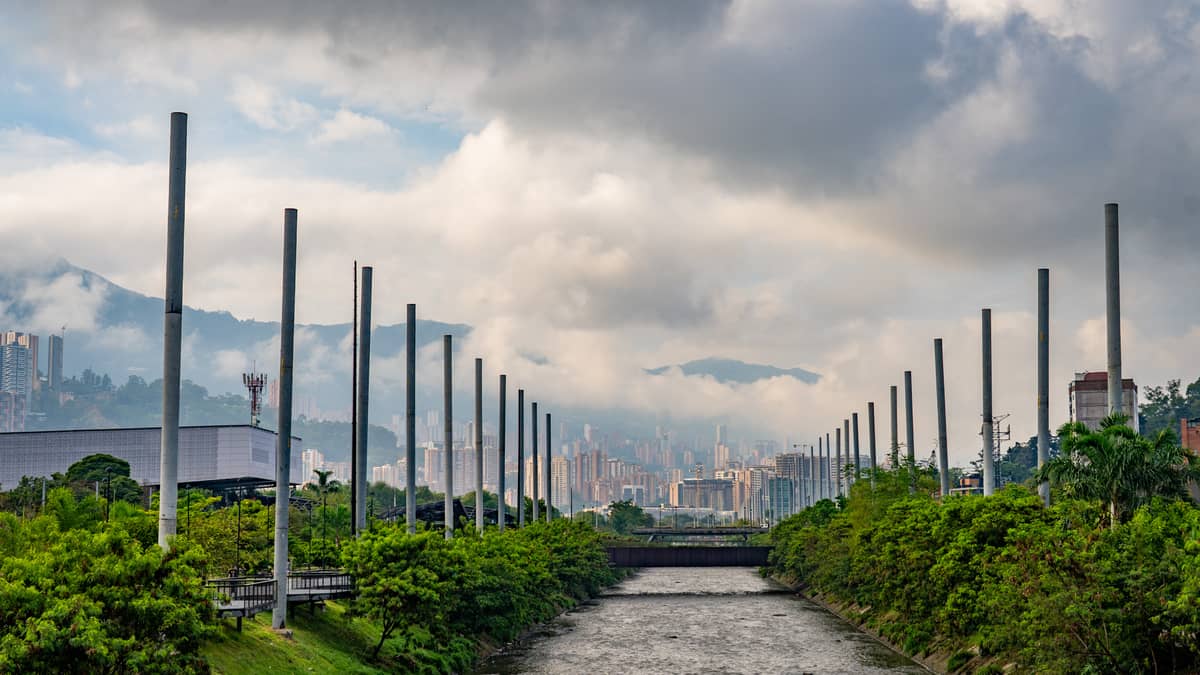
A neighbourhood between the river and Laureles that nobody writes about. Dogs on every corner and clean pavements, greenery that is not an accident, a bridge to the Barefoot Park, and seventies buildings among the palms.
26 August · Note
A mobile plan (Claro)
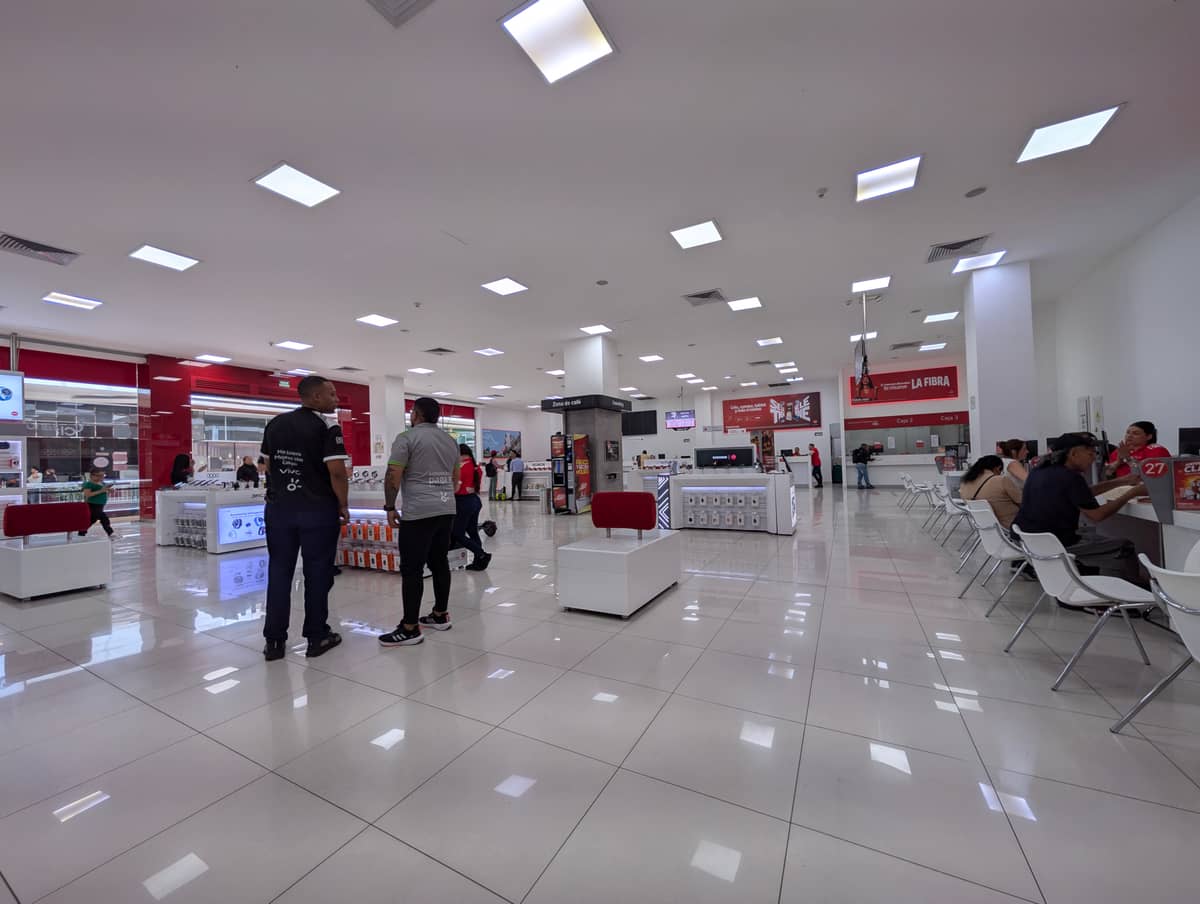
Today I finally bought a mobile plan from Claro, the local operator and probably the best known one.
Frequently asked
Which mobile operator is best in Colombia?
Claro has the best coverage outside cities and the highest price, WOM is the cheapest and lacks nothing in town, Movistar and Tigo sit in between. If you travel through the mountains and villages, pay for Claro; if Medellín is enough, WOM saves you money.
How much does a month of mobile data cost?
Packages start at 2,500 pesos, an ordinary monthly bundle with one or two gigabytes runs 12,000 to 22,000 pesos, and unlimited data costs around 60,000 to 100,000. In most bundles, social apps and maps do not count against your data.
Do I need ID for a SIM card?
Yes, your passport. Unregistered cards are banned in Colombia because of phone extortion, so even a street stall copies the document number. And without a local number you will struggle at the bank and in ride hailing and payment apps.
How much does home internet cost?
For 300 Mbps in Medellín in 2026 you pay from 65,000 pesos at Tigo, from 75,000 at Claro and from 80,000 at UNE. Installation and router are usually included and contracts tend to run a year. In a furnished rental the line normally comes with the rent.
How does working with Europe across the time difference go?
Colombia is UTC−5 and does not change clocks, so central Europe is seven hours ahead in summer and six in winter. Meetings work until about seven in the morning local time; by the afternoon the working day at home is over. Working with the United States flips the day into the afternoon and evening.
What is the most commonly forgotten problem when moving?
Two-factor codes tied to your old number. Banks and government portals send them there, so keep the old number alive as a second SIM, switch verification to an app, and keep printed backup codes. Changing the number at your bank comes last of all.
Questions and answers
What do you want to ask?
Ask anything about this topic. I answer, and the answer stays here so the next person who wonders the same finds it.