Practically · Housing
How do you find a flat in Medellín, and what will be asked of you?
Short term you pay roughly double; long term you will be asked for a guarantee. A cash deposit is prohibited by law, so it is handled with a Colombian co-signer or with rent insurance at thirty to forty per cent of one month's rent per year. You search on Fincaraíz and Metrocuadrado, the scams happen on Facebook, and the owner can be verified from the land registry.
Checked 31 August 2026
Medellín has two housing markets, and in the first year a foreigner usually only sees one of them.
The first is the tourist market: furnished flats by the week, prices in dollars, listings in English, keys handed over at a reception desk. The second is the ordinary one: an empty flat, a one year contract, a guarantee, utilities in your name and a price between a third and two thirds lower.
Crossing from the first to the second is the biggest saving available here. There are two obstacles in the way, and both are only manageable if you know about them in advance.
The address you have to learn to read
Without this you cannot even search for a flat, let alone find one.
Colombian addresses are not street names, they are coordinates. A calle runs across, a carrera runs along (in Medellín roughly calles east to west, carreras north to south). The address "Cra 70 # 44-32" means: I am on carrera 70, thirty two metres past the crossing with calle 44. Add "apto 501", a flat on the fifth floor.
Which gives you something practical: the address tells you where a place is without looking at a map. Carrera 70 is Laureles, carrera 43A is Poblado, calle 10 is southern Poblado. Learn the axes and you stop mixing up neighbourhoods.
And listings often give only the barrio and the nearest junction instead of an address. Ask for the exact address before you travel anywhere.
Short term: the month you overpay for
Starting short term is sensible. Without a cédula, without a guarantor and without knowing the neighbourhoods, there is no point signing a year long lease on a flat you have seen in photographs.
Expect to pay roughly twice what the same place costs long term. That is the fee for not having to promise anything.
Since the spring of 2026, though, the environment around short term rentals has changed. The city started running inspections and looks for three things: the Registro Nacional de Turismo (RNT), the operator's registration; permission in the building's own rules; and reporting of foreign guests. The first rounds of inspections found dozens of flats meeting none of that, most of them in Laureles, San Cristóbal, El Poblado and the centre.
The practical consequence for you is a single one: a flat let off the books can be shut down overnight. Ask whether the building allows short term rentals in its rules, and for a longer stay do not build your plans on this kind of housing.
And one more: plenty of buildings have banned short term rentals by their own owners' assembly. The law does not ban it by itself, but without permission in the building rules it is not allowed either.
Long term: what will be asked of you
Here the urban housing tenancy act applies, Ley 820 of 2003, and it is a good servant once you know it.
A deposit may not be charged
A cash deposit on a residential lease is prohibited. Nobody may ask you for two months up front as security, and agreeing to it does not change that.
What the law does allow:
- rent insurance (póliza de arrendamiento) from an insurer or a specialised company,
- a co-signer: codeudor or fiador, a Colombian with income and usually with property,
- a guarantee for utility bills, but only up to their value, no more.
For a foreigner, the policy is the way
A co-signer means finding a Colombian willing to back you with their property. If you have one on arrival, you are set; if you do not, you take the insurance route.
The policy is paid by the tenant and costs roughly thirty to forty per cent of one month's rent per year. The company checks you: identity document, proof of income, bank statements. A foreigner without a cédula and without local income has a harder time, though it is not impossible, and this is exactly where an agency used to foreigners differs from one that is not.
Documents to have ready
- passport and cédula de extranjería, once you have it,
- proof of income: an employment contract, invoices, a tax return or three to six months of bank statements,
- a Colombian bank account, which simplifies a great deal,
- sometimes a RUT, the tax registration number.
Furnished or empty
An empty flat in Medellín is almost always cheaper, commonly by a third to a half. Furniture here is cheap, so furnishing one pays off from roughly six months of staying upwards.
A furnished flat makes sense for three months, for trying out a neighbourhood, or when you do not know whether you are staying. An empty one makes sense for a year and more. In between there is a band where it comes down to what your convenience costs and how quickly you want to be done.
Watch out for the word semiamoblado: it means a fitted kitchen, appliances and sometimes wardrobes, but not a bed and not a sofa. Ask for a list, not for an adjective.
What the words in the listings mean
- Apartaestudio. A studio, one room with a kitchen, usually 30 to 45 square metres.
- Apartamento. A flat with a separate bedroom, counted in alcobas, meaning bedrooms: "dos alcobas" is two bedrooms, not two rooms in total.
- Aparta-hotel. A furnished flat with a reception desk and cleaning, monthly price, the simplest and the most expensive option.
- Casa. A house, often older, common in Laureles and cheaper per square metre than a flat in a tower.
- Unidad cerrada. A gated complex with a guard, a pool and shared spaces. Safer, with a higher administración.
- Edificio sin portería. A building with no doorman. Cheaper, but parcels, keys and security are your problem.
- Dúplex and penthouse. Two floors, or the top floor with a terrace. Beautiful, and demanding in the wet season.
Everything that comes on top of the rent
- Administración, the building fee. From a few hundred thousand pesos to 600,000 or 800,000 a month in a tower with a pool and security. Ask whether it is included in the rent or charged separately.
- Utilities by estrato. The same consumption costs more in estrato 6 than in estrato 3, because the higher tier pays a surcharge that subsidises the lower one. It is explained in the Medellín guide.
- Internet, usually your own contract.
- Parking, which may not come with the flat.
- Cuota extraordinaria, a special levy voted by the owners for a lift or a facade. The owner pays it, not the tenant, but ask whether one is coming: a building raising its fees tends to raise rents too.
When you have neither a cédula nor a guarantor
The law knows more than co-signers and policies. These routes work too, if the owner accepts them:
- Paying several months of rent in advance. That is not a deposit, it is rent paid ahead, and the law does not forbid it.
- A term deposit (CDT) in your own name, serving as security while remaining yours.
- An agency that works with foreigners routinely and has an insurer used to foreign documents.
What not to do: sign something that behaves like a deposit and is merely called something else. Anyone asking you for a "depósito" either does not know the law or is counting on you not knowing it.
What is negotiable
On a yearly contract, negotiating is normal and expected:
- the rent itself, usually a few per cent,
- what stays in the flat (appliances, air conditioning, wardrobes),
- painting and small repairs before you move in,
- the administración included, especially on furnished flats,
- a longer term for a lower rent, two years instead of one.
You negotiate before the contract is drawn up, not after. And always in writing, even if that means a WhatsApp message: in Colombia that is ordinary, usable evidence.
Where to look
Portals. Fincaraíz and Metrocuadrado are the two biggest, with Ciencuadras, Properati and Mercado Libre alongside. Most listings come from agencies, in Spanish, with prices excluding the policy.
Agencies (inmobiliarias). They handle the contract, the guarantee and the handover, and they are the simplest route for a foreigner. The commission is usually paid by the owner, but confirm that in advance.
Facebook and expat groups. The fastest way to find a flat and the fastest way to lose money. Almost every scam happens here.
Signs on buildings. In Laureles and Envigado the oldest method still works: walk the neighbourhood and call the numbers on the "se arrienda" signs. Prices tend to be the lowest and competition the thinnest, because nobody does it.
A rule that holds everywhere: the listed price is the start of a negotiation. On a yearly contract both the rent and what stays in the flat are commonly negotiable.
What a scam looks like
Real estate agents in Colombia are not licensed, so an agent is anyone who says they are. Treat it accordingly.
Seven things that should stop you:
- Payment before you see the place. The most common scam: a "reservation" or "holding deposit" so the flat is not taken. Never.
- A price well below the market. A furnished studio in Laureles for a quarter of the going rate does not exist.
- Pressure and a queue of applicants. "I have two other people, you have to confirm by tonight."
- The owner is abroad and a cousin will hand over the keys as soon as the transfer lands.
- Payment to a stranger's Nequi or Daviplata, with no contract and no receipt.
- A sublet with no paperwork from somebody who is themselves a tenant.
- Photos from another listing. Run them through a reverse image search; scammers lift photos from sales listings.
How to verify the owner. In Colombia you can order a certificado de tradición y libertad, the land registry extract, online for a fee in the low tens of thousands of pesos. It says who owns the property. For a yearly contract with somebody you do not know, it is the cheapest insurance you can buy.
And a simple rule for the first payment: send money only to the account named in a contract you have already signed.
The contract: four things to read
Term and renewal. The standard is twelve months with automatic renewal. A tenant can end it at the anniversary with three months' notice; ending it earlier normally costs an indemnity of three months' rent. This is spelled out in the contract, so read it even when it is "the standard one".
Rent increases. At most once every twelve months and by no more than the previous year's inflation. Nothing above that is allowed, whatever the letter says.
Who repairs what. Ordinary maintenance falls to the tenant, structural repairs (water, electricity, structure) to the owner. Write it into the contract by name and you will save yourself an argument about the water heater.
Inventory and condition. At handover, write a list and photograph everything, scratches included. At the end that is how you tell what you did from what was already there.
The viewing: what to check before you sign
- Water pressure on the upper floors and whether the building has a backup pump. Water outages happen.
- Damp and mould. During a rain wave it always shows; outside one, look in corners, behind wardrobes and on the bathroom ceiling. In this climate it is the most common hidden defect.
- Noise. Come at six in the evening and at ten. A speaker on the pavement is a normal part of a business and it comes straight through the window.
- Sun. A flat facing north into a courtyard is dark in the wet season and dries badly.
- Internet in the flat itself, not on the operator's coverage map. Ask them to run a speed test.
- The hill to the metro station. Distance on a map is not the same as elevation.
- The building rules: short term rentals, pets, guests, quiet hours, notices. Ask for them, they are a public document of the building.
- The last three utility bills, so you know what energy and water cost in this flat, not in a similar one.
- The lift and power cuts, especially on higher floors.
- Neighbours and quiet hours. Ask the doorman, not the owner.
The first week after moving in
Transfer the utilities into your name, or get it in writing that the owner pays them and how. Order internet, because installation is rarely immediate. Photograph the state of the flat and send it to the owner. Ask for a paz y salvo, a certificate that nothing is owed for the previous period; otherwise you inherit somebody else's arrears.
And change the lock, or ask the owner to do it. It is not distrust, it is hygiene.
When to leave, even if everything else is fine
Mould you cannot air out. Water that runs every other day. A neighbour with a speaker under your window. None of it improves, and a year is a long contract. There are plenty of flats in Medellín and moving costs less than a year of five hour nights.
How to read the numbers in this guide
The legal rules hold until the law changes. Prices of policies, fees and rents come from research as of the date above and move faster. What is first hand is written as my own experience; verify the rest with an agency or a lawyer before you sign.
What it costs
All prices- Pošta, 8.6 kg balík, 230 km70 000 COPabout 22 USD2 September
What I wrote about it
September
2026
17 entries
10 September · Article
Driving in Medellín: the day of the week your car stays home
The last digit of your number plate keeps the car off the streets one day a week, from five in the morning to eight in the evening, across the whole valley. Plus the licence that expires after six months, a fine over six hundred thousand pesos, and road death figures that make me uneasy.
10 September · Article · La Candelaria, Medellín
No water after eight in the evening. What is going on in Medellín
Three hundred thousand people in six communes have had water every other day since late August. The city broke its temperature records in May, Ideam expects a strong El Niño into March, and the grid operator warns that power may not stretch through December. What the rule says, why it landed on the hillsides, and what it means for a trip.
10 September · Article · La Casa del Alimento, Medellín
A lunch where the meat dries on a washing line
A Colombian lunch is not one dish, it is a whole set for one price. Two mains, two desserts, two coffees and a lemonade came to 146,000 pesos. And in that restaurant's yard, beef hangs drying.

10 September · Article · Conquistadores, Medellín
The bin men of Medellín
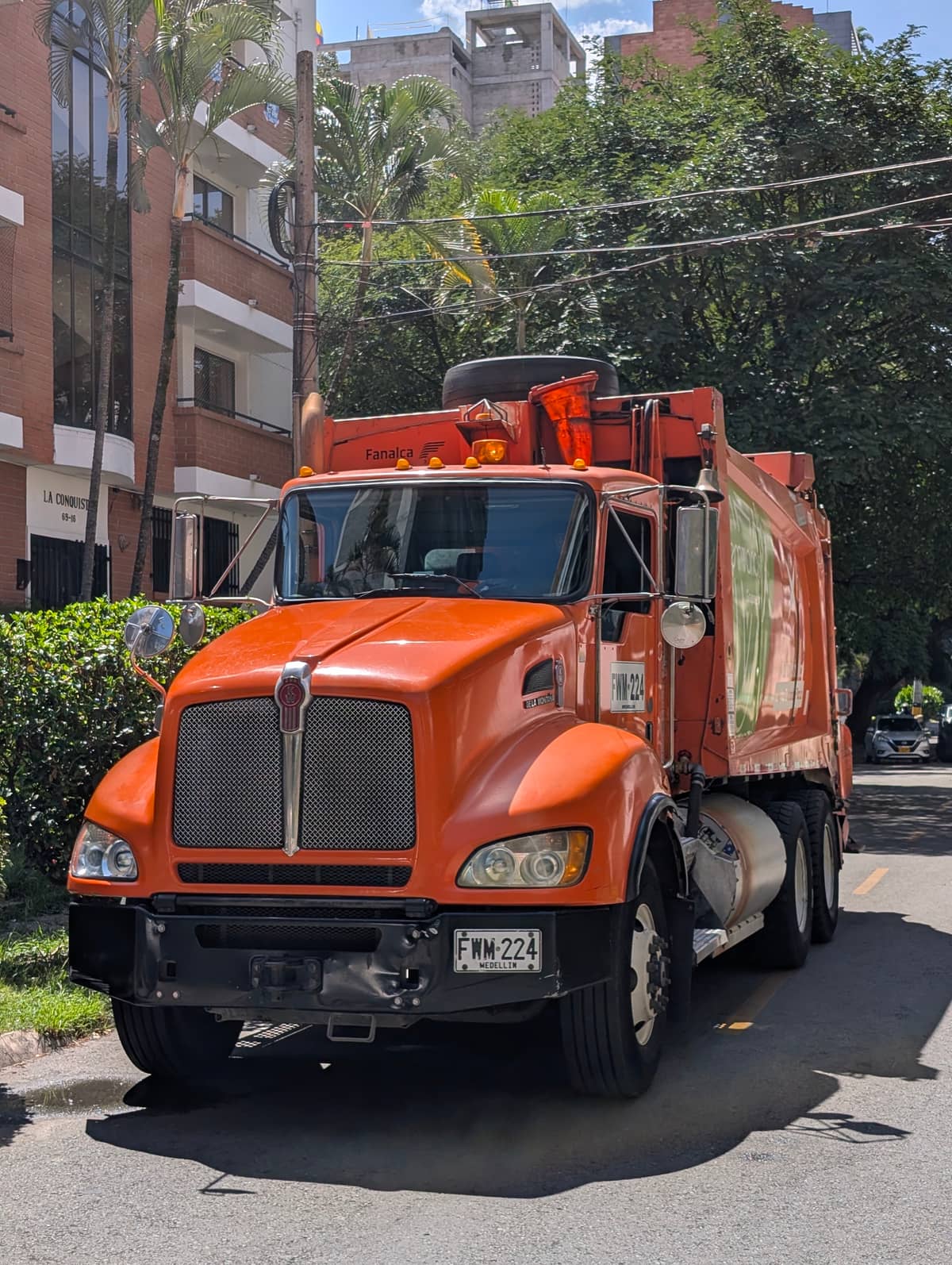
A garbage truck with a slogan saying this city is a little silver cup. Who runs it, where the waste goes, why the landfill has eight years left, and how the people who open bags on the street come to be paid out of the water bill.
10 September · Article · Comuna 8, Villa Hermosa, Medellín
Villa Hermosa after dark
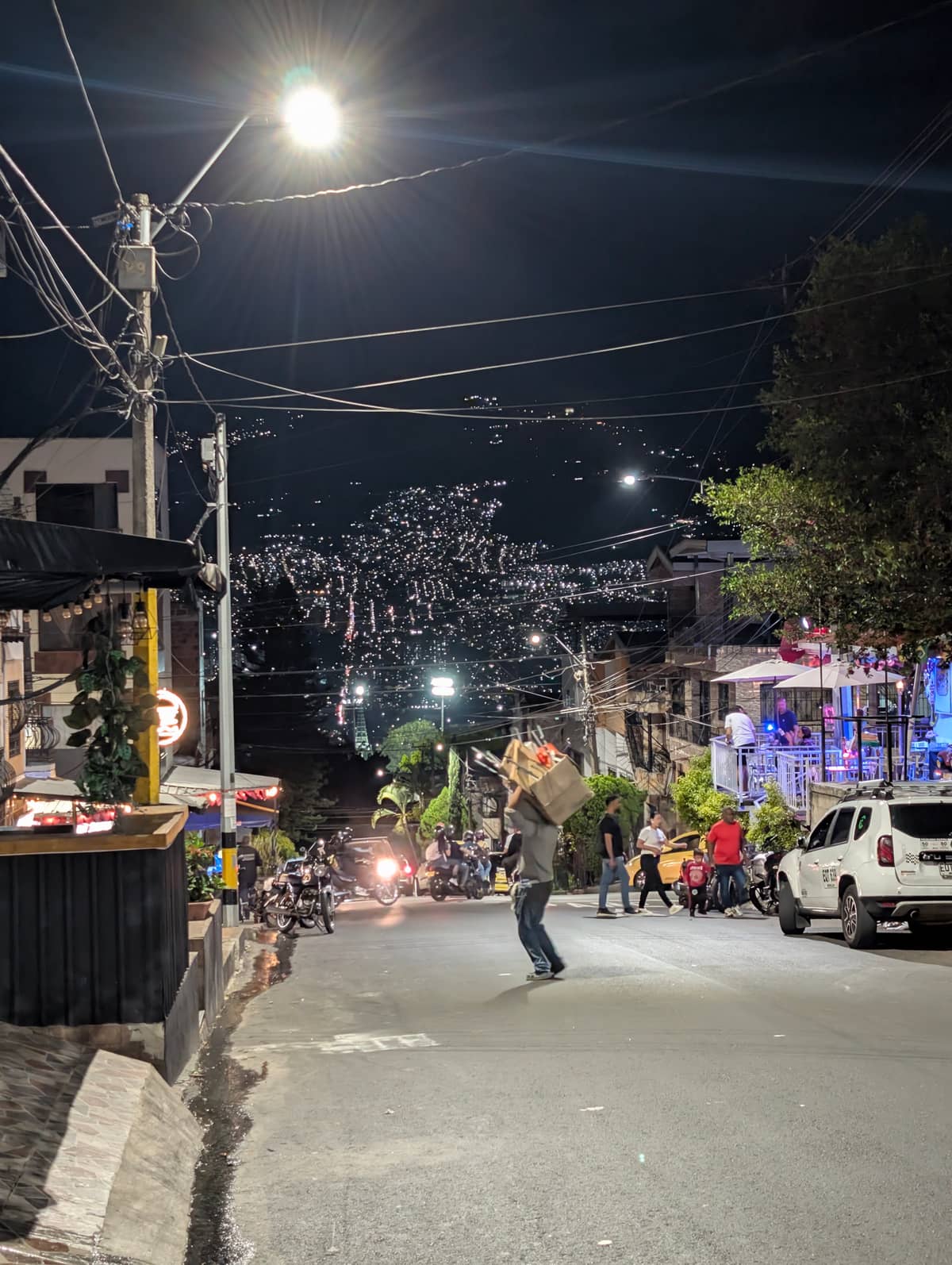
A house with almost no windows, hot rice pudding with cheese, and a slope full of lights right up to the ridge. And the only thing that made me uneasy was not what someone who has read about comuna 8 online would expect.
8 September · Article · El Poblado, Medellín
El Poblado after dark
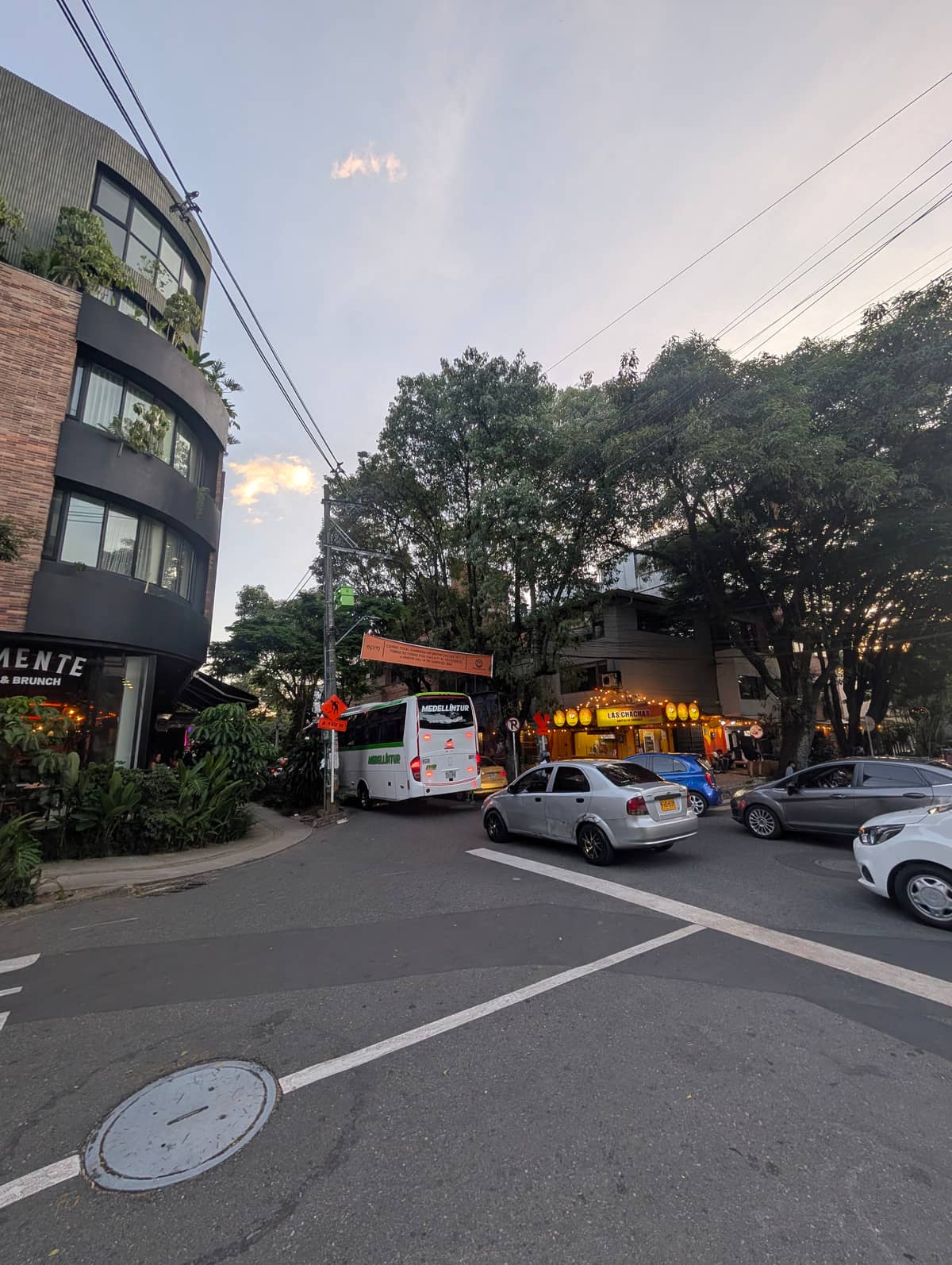
The district where Medellín was founded in 1616 and where almost everybody who flies into the city now sleeps. Provenza with lights in the trees, the singer Karol G's restaurant, a road sign saying tourist zone, and a bill that sums it all up.
8 September · Note · La Candelaria, Medellín
At a junction on Carrera 55, Spider-Man stands at a red light selling…
At a junction on Carrera 55, Spider-Man stands at a red light selling sweets between the cars. A motorbike rider behind him, a water stall beside him.

8 September · Note · Café Mattelsa, Medellín
Café Mattelsa, two hours, one coffee and a kombucha. A Czech standard…
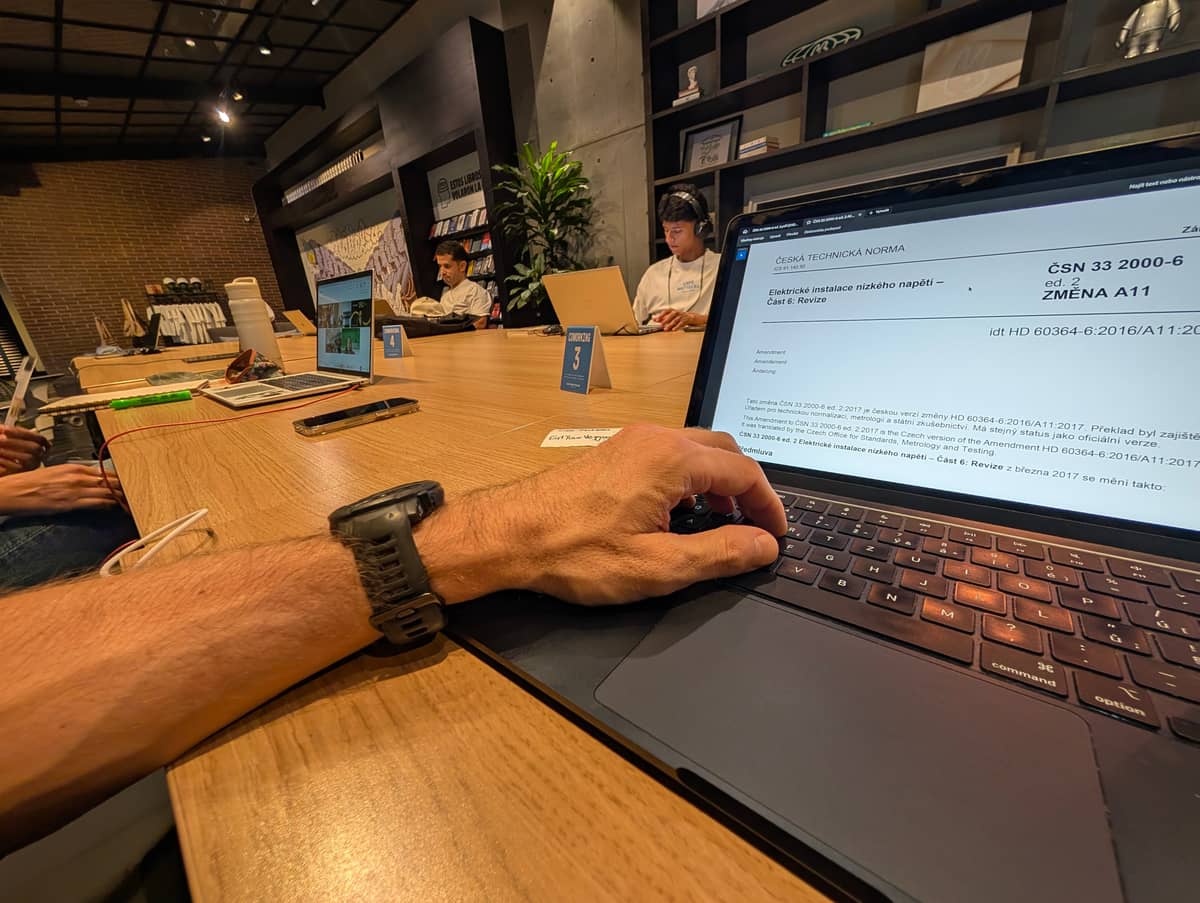
Café Mattelsa, two hours, one coffee and a kombucha. A Czech standard for electrical installations on the screen, a palm tree outside the window, people with laptops all around, and nobody making a…
7 September · Note
A pillion passenger on a motorbike carrying a large wheeled suitcase…
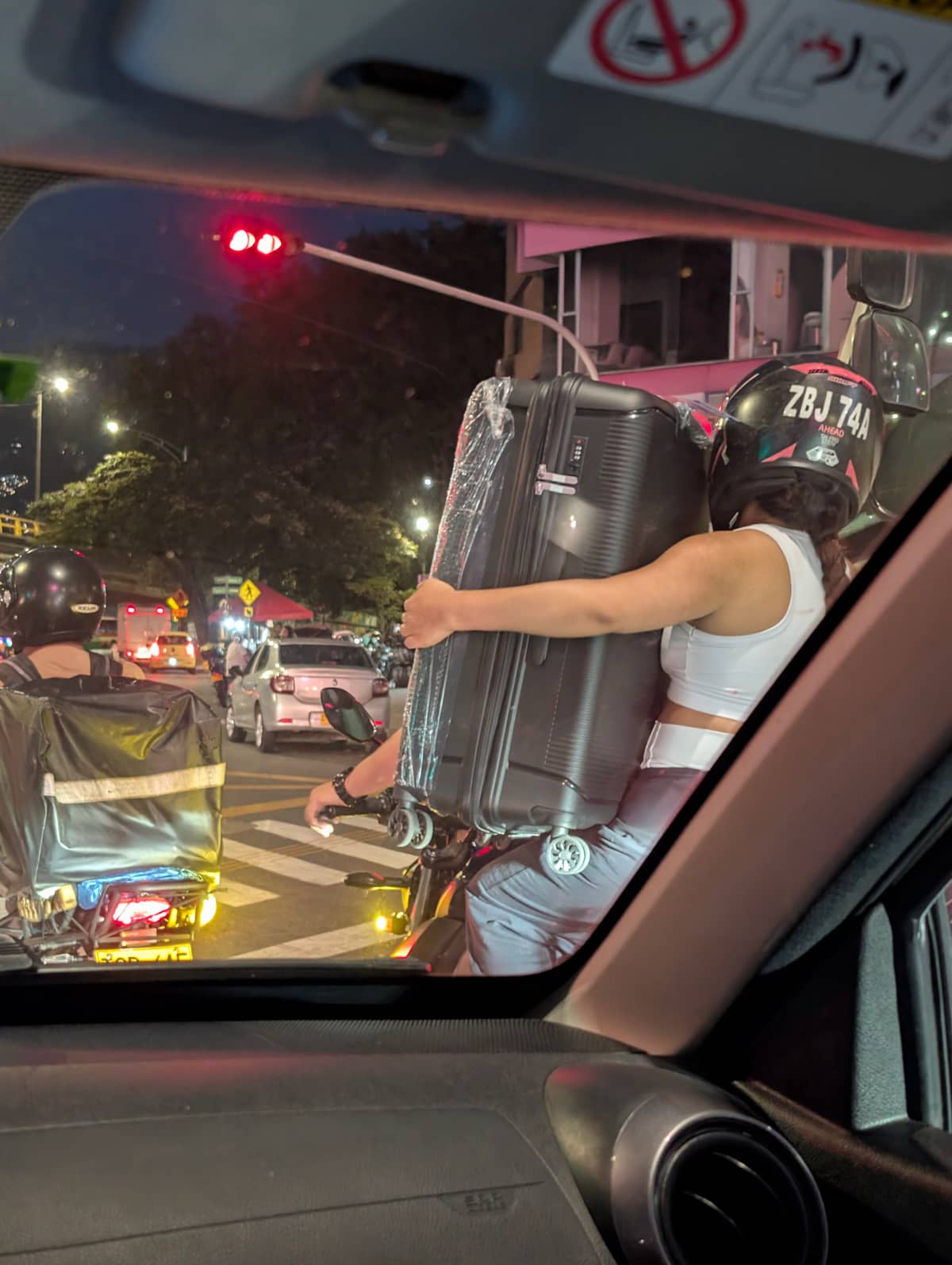
A pillion passenger on a motorbike carrying a large wheeled suitcase. One arm clamped around it, the other around the rider, knees against the tank, riding in traffic between the cars.
6 September · Article · Comuna 8, Villa Hermosa, Medellín
Up by cable car, down for an arepa
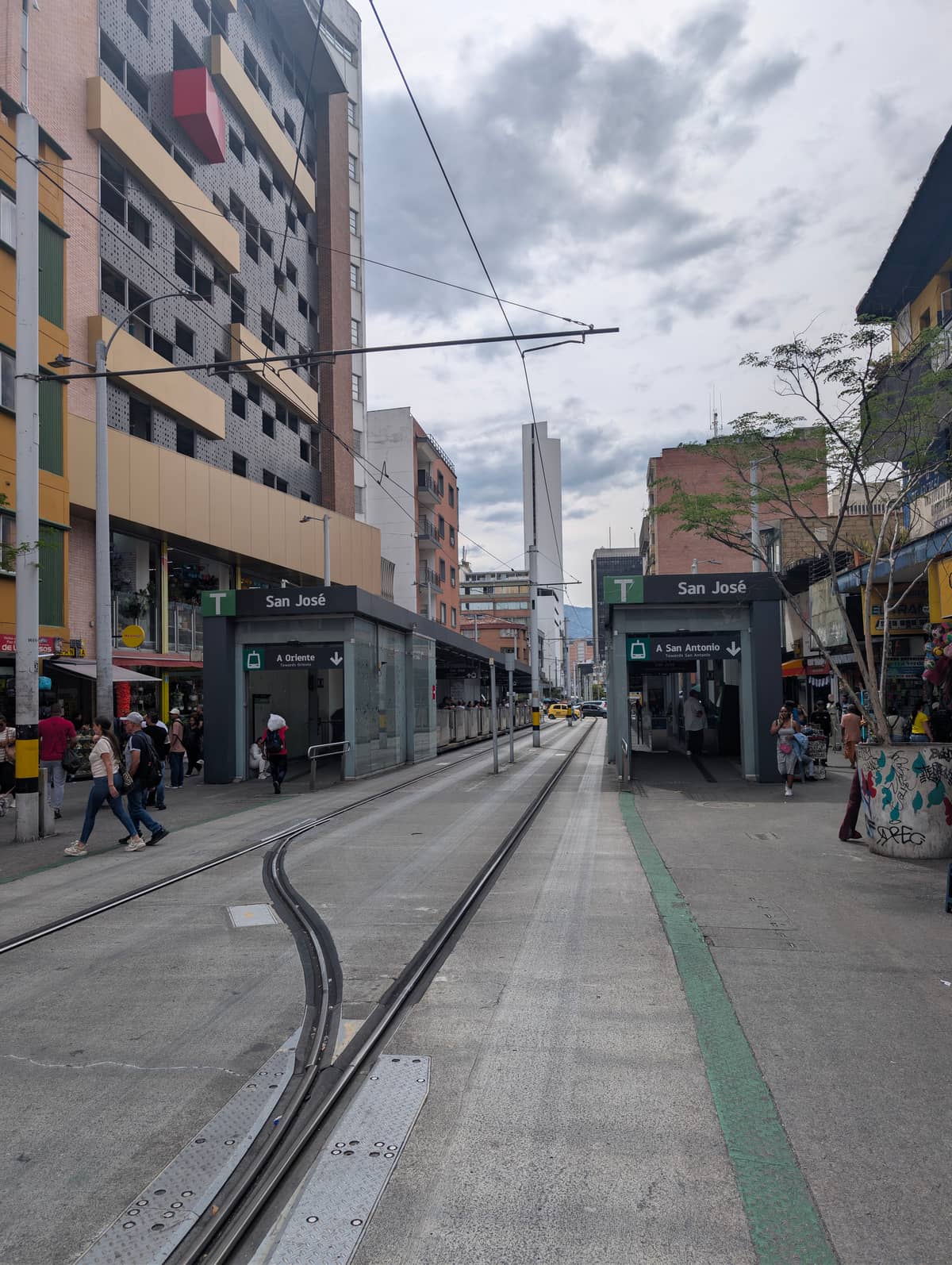
A tram on rubber tyres takes you from the centre to the edge of the city, and a cable car lifts you from there over the roofs of comuna 8. Back down there was an arepa festival, parakeets in a tree, a café in the house by the church, and a concert hall underground.
6 September · Article · La Candelaria, Medellín
El centro: the day I finally saw the city
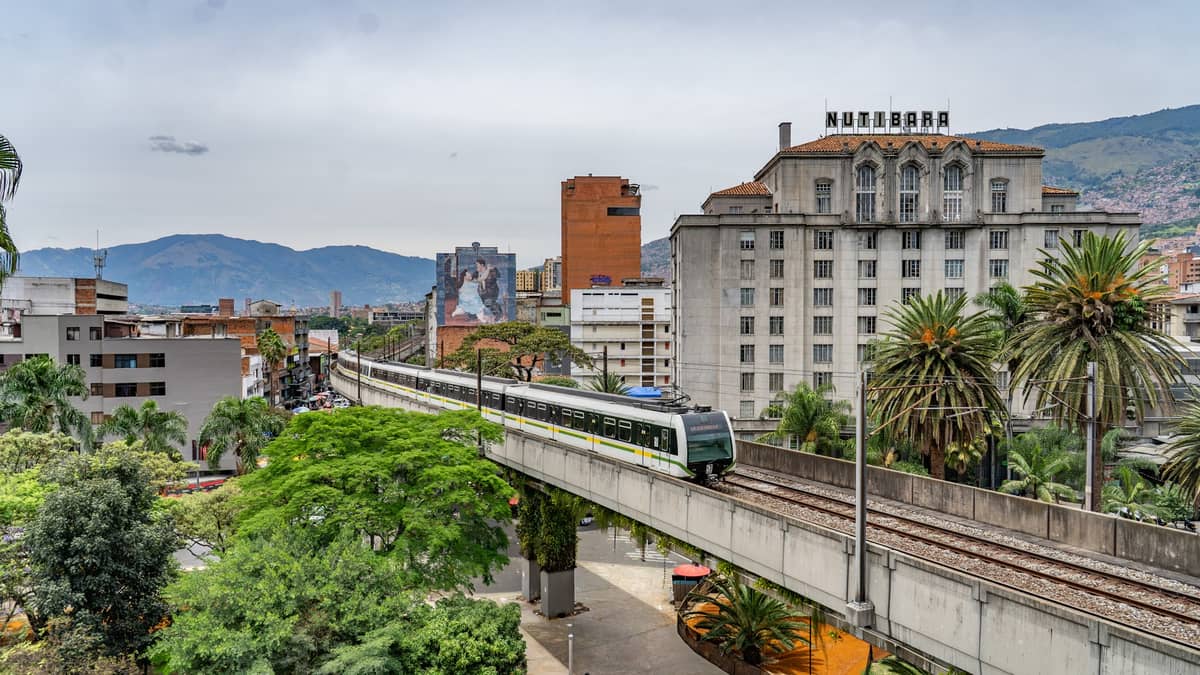
Every second person told me not to go into the centre of Medellín. I went by metro, cleaner than the one at home, and found a palace with a chequerboard facade, twenty three Botero sculptures, a cathedral made of a million bricks, and a market that has run since the seventies.
5 September · Note
The botanical garden was closed. Not for a holiday or repairs: they…
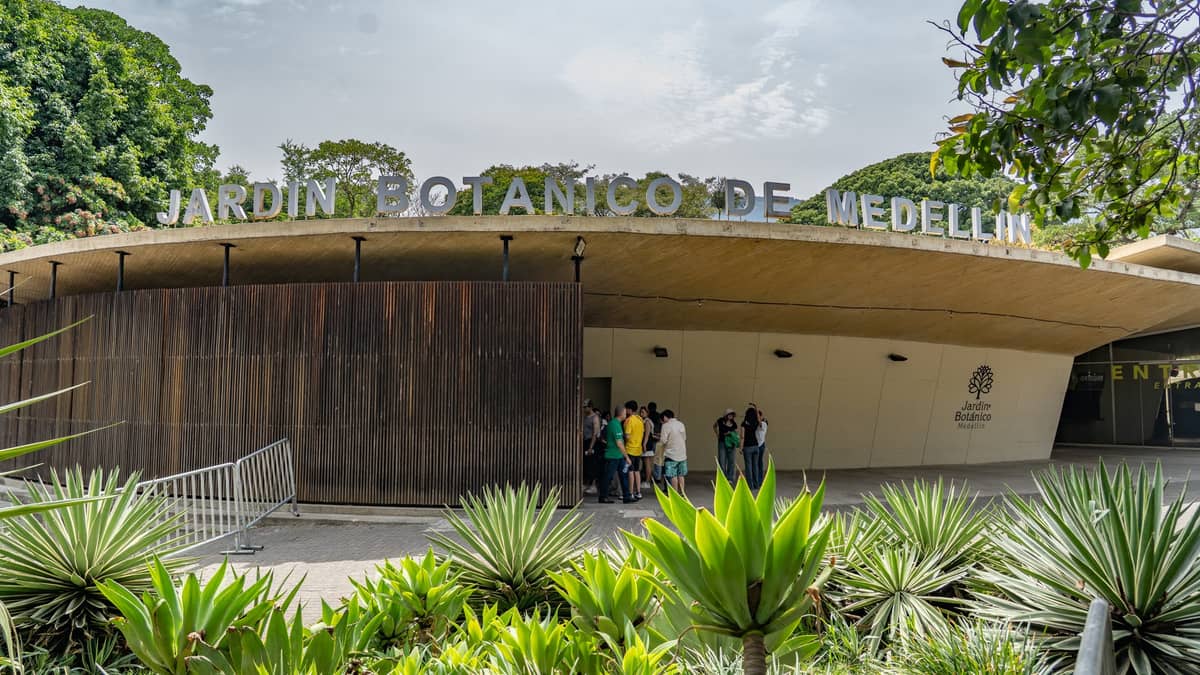
The botanical garden was closed. Not for a holiday or repairs: they are building the Fiesta del Libro y la Cultura inside it, the city's book festival, in its twentieth year and running from 11 to 20…
4 September · Article · Comuna 8, Villa Hermosa, Medellín
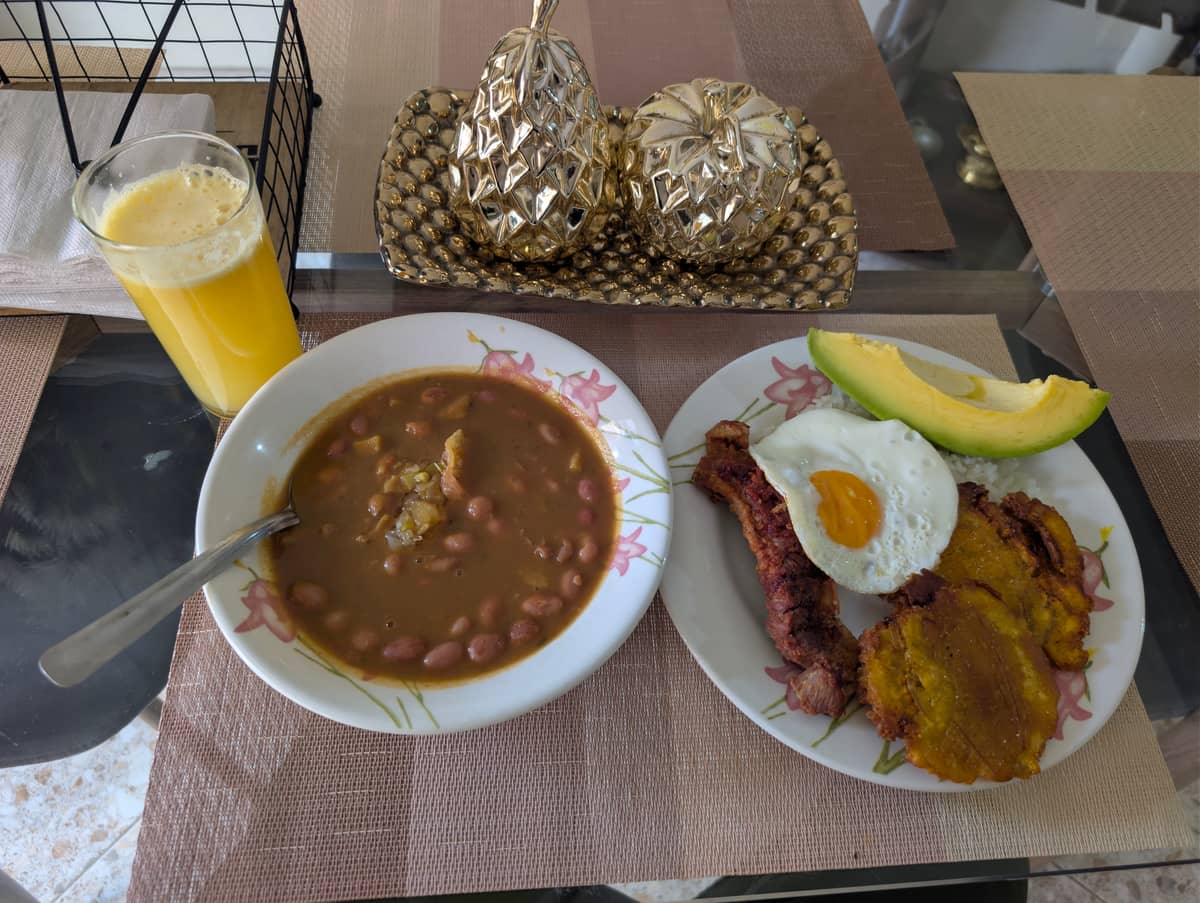
Villa Hermosa: lunch, a church and a market
Comuna 8 up close, not from the cable car. A home cooked bandeja paisa with chicharrón, the brick church of La Sagrada Familia, stalls on the pavement, and traffic that runs on eye contact. On the way back, a stop among the villas of Prado.
3 September · Article · El Poblado, Medellín
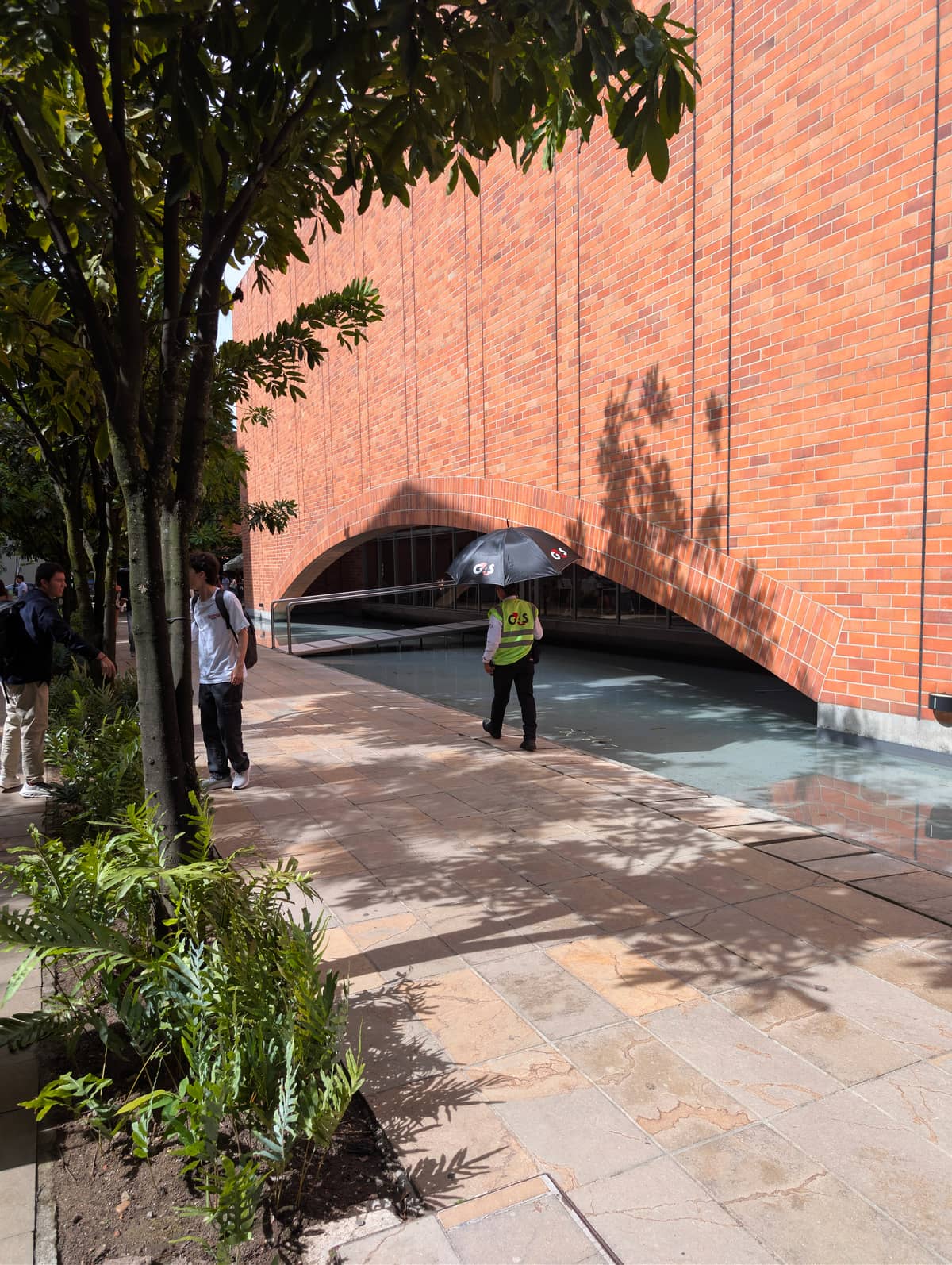
A university as a park and a cinema in a mall
The EAFIT campus, which you can simply walk into, with mango trees, water along brick walls and birds in the middle of the city. And in the evening, the oldest mall in El Poblado, the first in Colombia to have its own cinema.
3 September · Article · El Poblado, Medellín
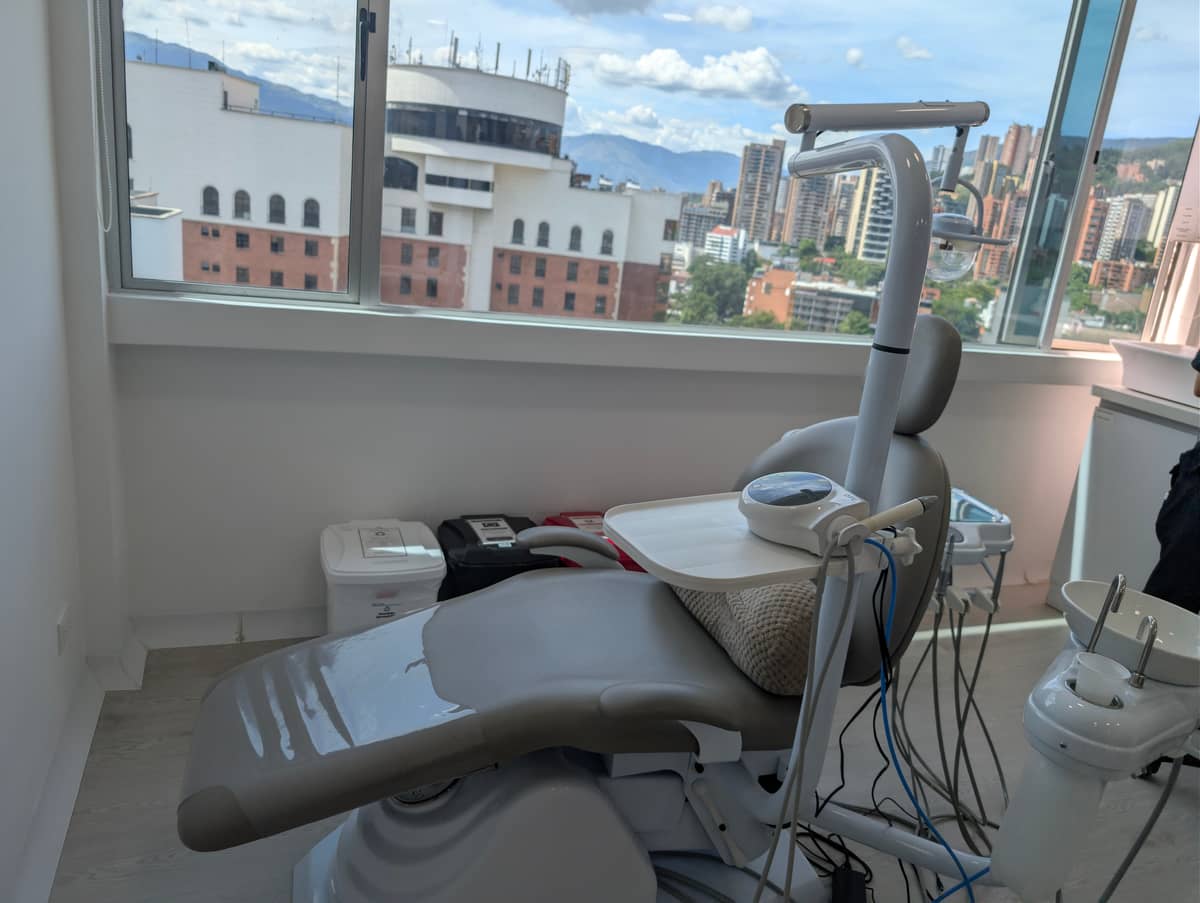
A dentist with a view
A tower full of consulting rooms in El Poblado, a restaurant on the ground floor, and a dentist's chair a metre from a glass wall with the whole Medellín valley behind it. What private care in Colombia looks like to a patient who arrived a month ago.
2 September · Note · Laureles, Medellín

2 September · Article · Laureles, Medellín
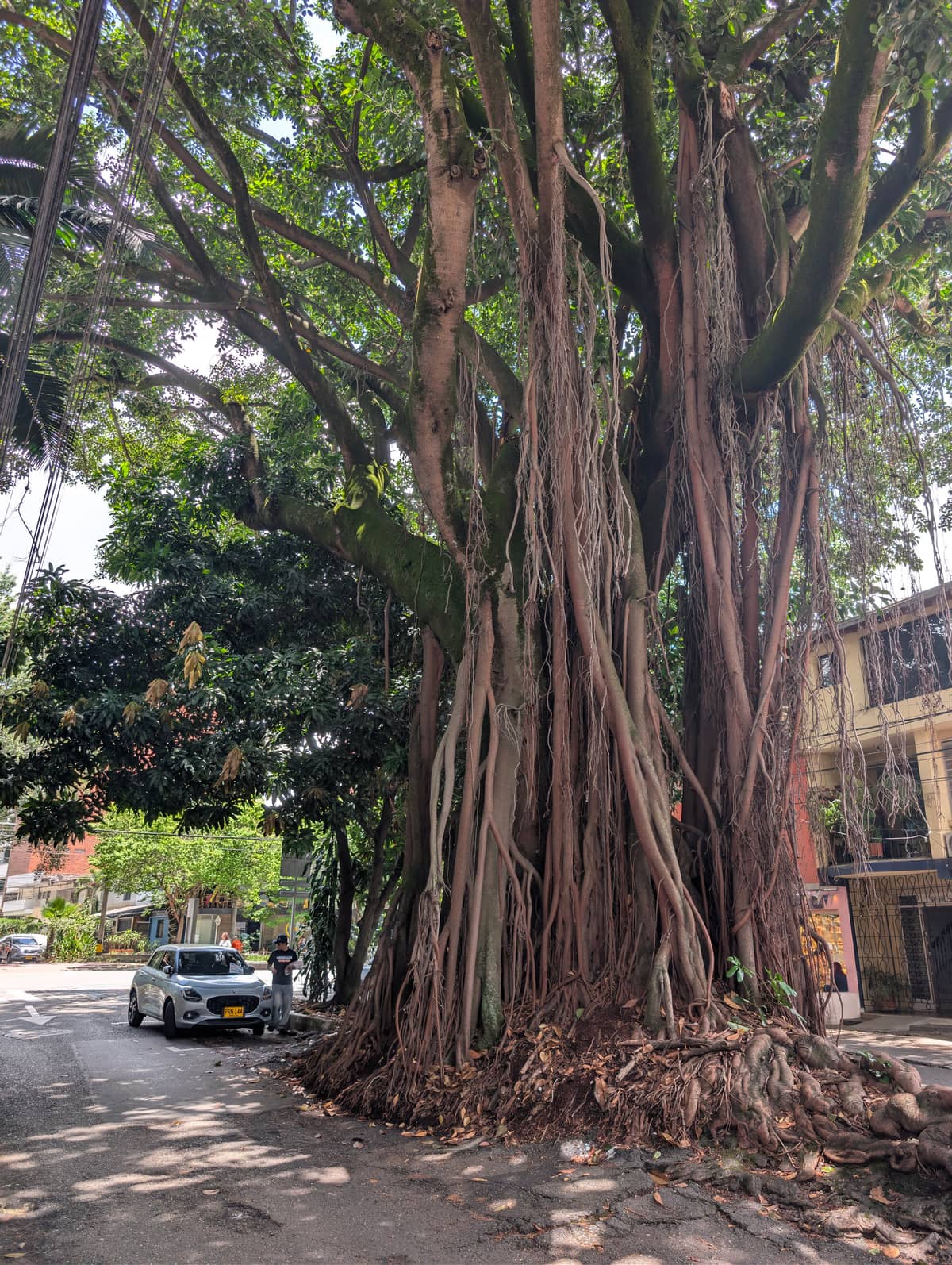
Laureles: a neighbourhood drawn in circles
A garden city from 1940 with circular streets, fig trees across the whole road, and cafés you can work from. The neighbourhood Medellín recommends to itself, and the one Time Out called the best in the world.
August
2026
1 entry
31 August · Article · Conquistadores, Medellín
Where I live: Conquistadores
A neighbourhood between the river and Laureles that nobody writes about. Dogs on every corner and clean pavements, greenery that is not an accident, a bridge to the Barefoot Park, and seventies buildings among the palms.
Questions and answers
What do you want to ask?
Ask anything about this topic. I answer, and the answer stays here so the next person who wonders the same finds it.