Practically · First month
What to sort out after arriving, and in what order?
First a SIM card, a Cívica and cash, because without a local number everything else jams. Housing short-term only; you learn a neighbourhood by living in it. Then the visa and the cédula, which the bank and the insurer both hang on, and only then a long lease. The first month costs twice what the next ones do.
Checked 1 September 2026
Most guides about moving explain how things get done. This one is about the order, because that is where people lose weeks here. Half the offices want a document you can only get at another office, which wants a third one first.
This is the order that works. It is written for someone who came to stay, not for a holiday.
Day zero: before you fly
These are much harder to arrange from Colombia than from home:
- Health insurance for the whole stay. It is mandatory for a visa application and cannot be bought retroactively.
- Move bank verification codes to an app and keep your old phone number alive. This is the single most common snag of the whole move.
- Yellow fever vaccination, at least ten days before departure. In 2026 the certificate is asked for on entry.
- Money for the first month without a local account. You will not have an account straight away, and a deposit is due before everything else.
- Scans of passport, visa and photos in the cloud. Every second office and every landlord will ask for a copy.
Week one: exist
1. The stamp in your passport and the date on it. Check how many days you were given. It is not always ninety and it counts in days, not months.
2. A SIM card. Bought against your passport and registered on the spot. Without a local number you cannot open a ride hailing account, cannot pay by Bre-B, and the bank will not deal with you. A monthly package runs about twenty thousand pesos.
3. A Cívica card for the metro. Sold at every station, it makes each ride cheaper and it also pays for the airport bus.
4. Cash and first purchases. Colombia runs on cards and cash at the same time. You will not get through the first days without a few hundred thousand pesos in your pocket.
5. Short-term housing, not a long lease. Take a month in a furnished flat and choose the neighbourhood only after you have seen it in the morning, at midday and on a Sunday evening. Sign for a year off photos and you will pay dearly to change it.
Do nothing in the first month that is hard to undo: a long lease, an annual subscription, a car. The first month is for finding out what you actually need.
Week two: understand the city
Walk three or four neighbourhoods, do not drive them. On foot you notice the slope of the streets, the noise, the shade and whether there is anywhere to buy food. Slope matters far more in Medellín than a map suggests.
Find your nearest hospital and pharmacy. It takes ten minutes and one day it will save you half an hour of panic.
Learn how to pay water, gas and electricity. Bills arrive on paper and are paid in a shop or in your banking app, not by transfer the way you are used to.
Get used to estrato. A number from one to six attached to every address decides what you pay for utilities and rubbish collection. As a tenant you cannot change it, but you should know what it means.
Weeks three and four: put down roots
Visa and cédula. Once you have the visa, you register with Migración Colombia and get the cédula de extranjería, the local ID. Without it there is no bank account and no health insurance, so it is the knot everything else hangs on.
A bank account. It wants the cédula and proof of address. With the account comes Bre-B, the QR payments absolutely everyone here uses.
Health insurance. With a visa and a cédula you join an EPS. Anyone who wants a specialist quickly buys private top-up cover on top.
A long-term lease. Only now, once you know where you want to live and have the documents. Expect a deposit and expect to be asked for a guarantor or rent insurance.
One social thing a week. A Spanish class, a language exchange, a running group, anything. It is the only item on this list nobody ticks off in time, and the one that decides most whether you last here.
What can wait, and nobody tells you
- A car. In Medellín it is mostly a nuisance, and buses cover the rest of the country.
- Furniture. Furnished flats are normal here and cheap.
- Permanent residency. That is a matter of years, not months.
- Shipping your things. Most of what you would send costs less to buy here than to transport.
Budget for the first month
Without numbers this reads like advice from nowhere, so a rough shape for one person arriving and setting up:
- short-term housing for a month, more expensive than a long lease, count on double
- deposit and first rent at once, the moment you sign
- phone, transport, food, the ordinary running costs
- a reserve for paperwork: fees, copies, a notary, a translator, photos
Concrete amounts live in the guide about costs and in the price log, where they are kept with a date and a place. The rule here is simpler: the first month costs twice what the following ones do.
The most common first-month mistakes
- A long lease signed in week one. You learn a neighbourhood by living in it for a few days.
- Putting off the SIM card. Without a number everything else jams.
- Relying on English. It lasts three days, then it starts getting in the way.
- Not reading the day count on the stamp. Overstaying means a fine and paperwork.
- Living only among foreigners. The fastest route to leaving after a year with the same Spanish and not one local friend.
What it costs
All prices- Pošta, 8.6 kg balík, 230 km70 000 COPabout 22 USD2 September
What I wrote about it
September
2026
17 entries
10 September · Article
Driving in Medellín: the day of the week your car stays home
The last digit of your number plate keeps the car off the streets one day a week, from five in the morning to eight in the evening, across the whole valley. Plus the licence that expires after six months, a fine over six hundred thousand pesos, and road death figures that make me uneasy.
10 September · Article · La Candelaria, Medellín
No water after eight in the evening. What is going on in Medellín
Three hundred thousand people in six communes have had water every other day since late August. The city broke its temperature records in May, Ideam expects a strong El Niño into March, and the grid operator warns that power may not stretch through December. What the rule says, why it landed on the hillsides, and what it means for a trip.
10 September · Article · La Casa del Alimento, Medellín
A lunch where the meat dries on a washing line
A Colombian lunch is not one dish, it is a whole set for one price. Two mains, two desserts, two coffees and a lemonade came to 146,000 pesos. And in that restaurant's yard, beef hangs drying.

10 September · Article · Conquistadores, Medellín
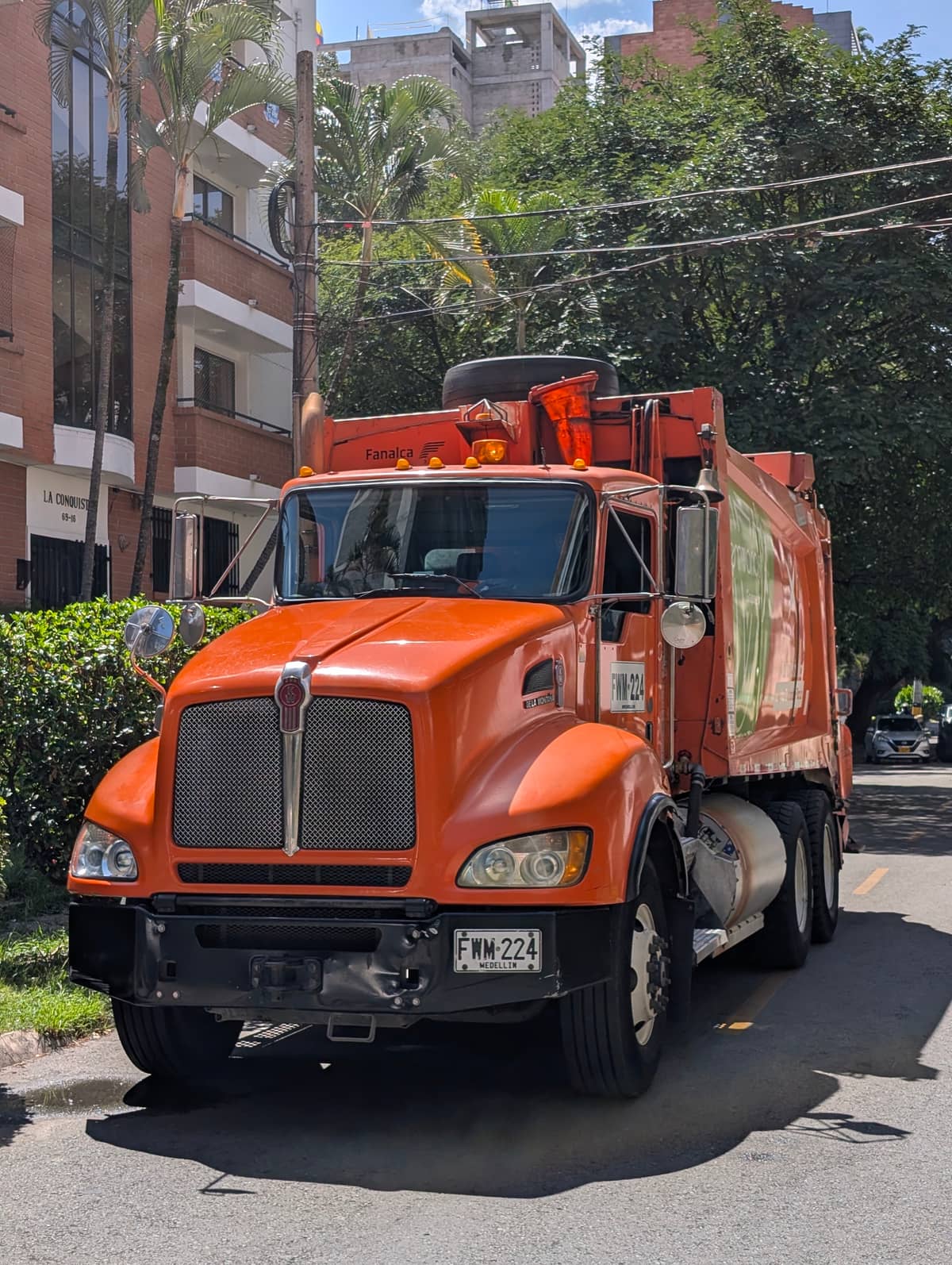
The bin men of Medellín
A garbage truck with a slogan saying this city is a little silver cup. Who runs it, where the waste goes, why the landfill has eight years left, and how the people who open bags on the street come to be paid out of the water bill.
10 September · Article · Comuna 8, Villa Hermosa, Medellín
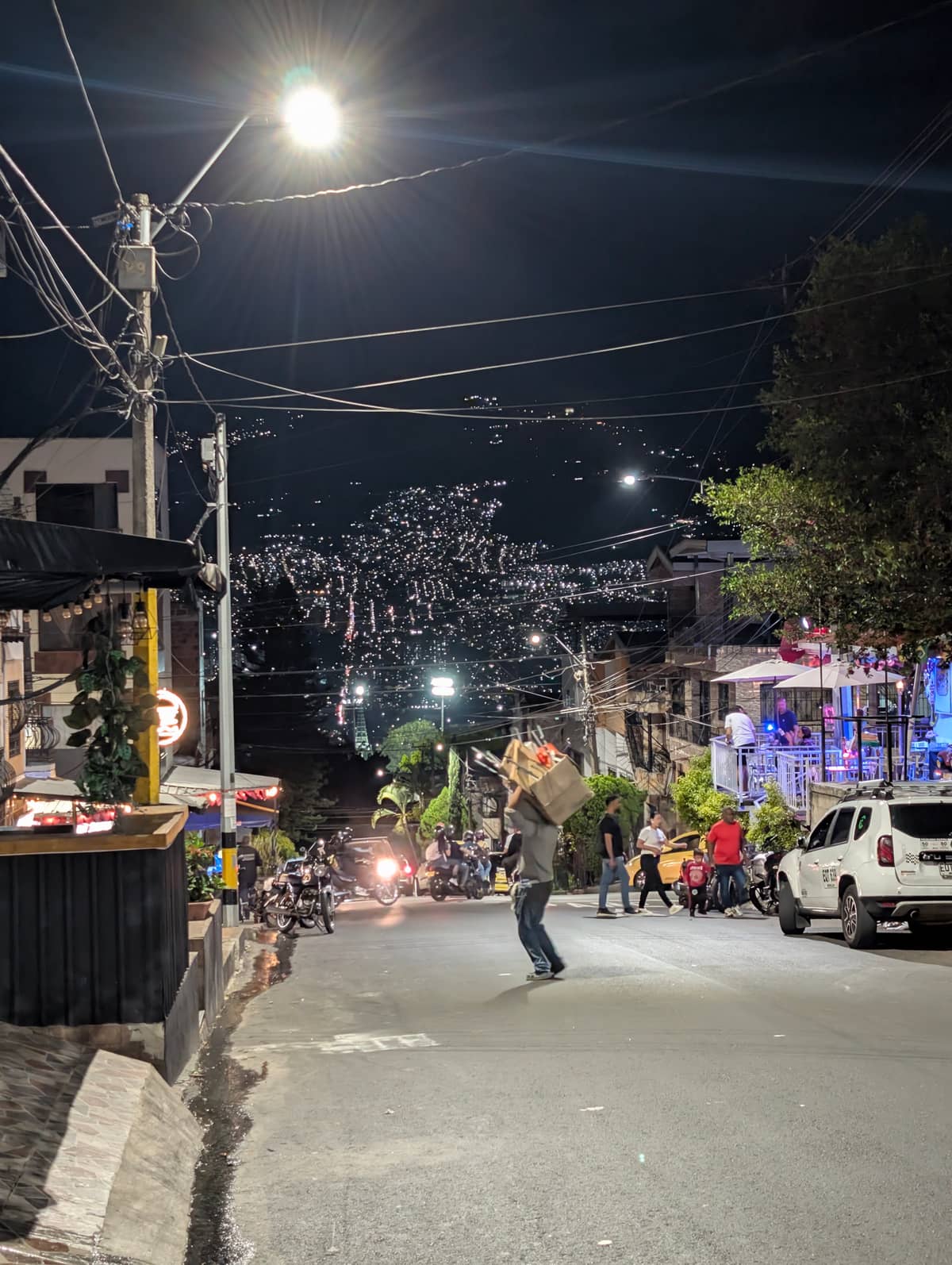
Villa Hermosa after dark
A house with almost no windows, hot rice pudding with cheese, and a slope full of lights right up to the ridge. And the only thing that made me uneasy was not what someone who has read about comuna 8 online would expect.
8 September · Article · El Poblado, Medellín
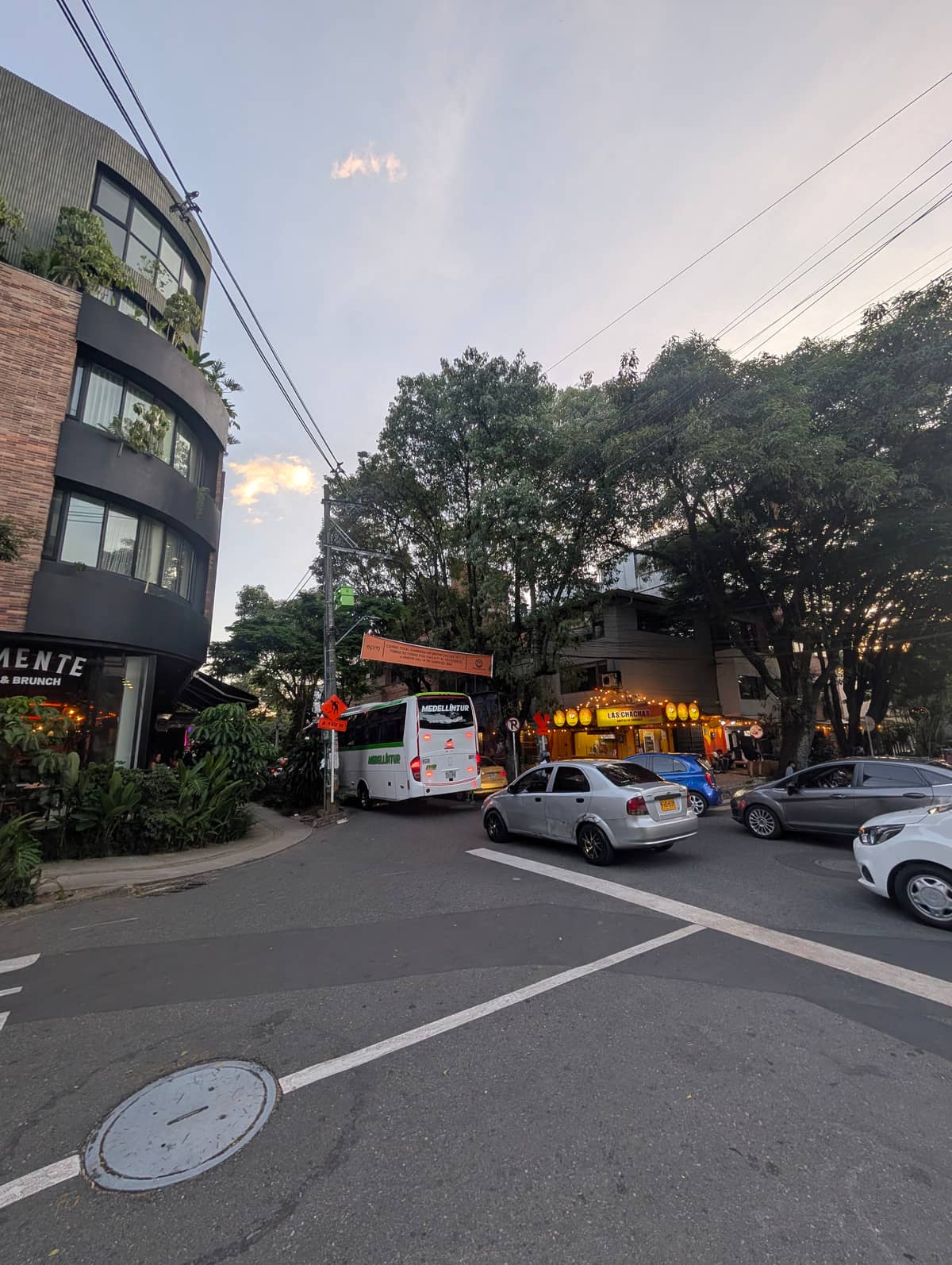
El Poblado after dark
The district where Medellín was founded in 1616 and where almost everybody who flies into the city now sleeps. Provenza with lights in the trees, the singer Karol G's restaurant, a road sign saying tourist zone, and a bill that sums it all up.
8 September · Note · La Candelaria, Medellín
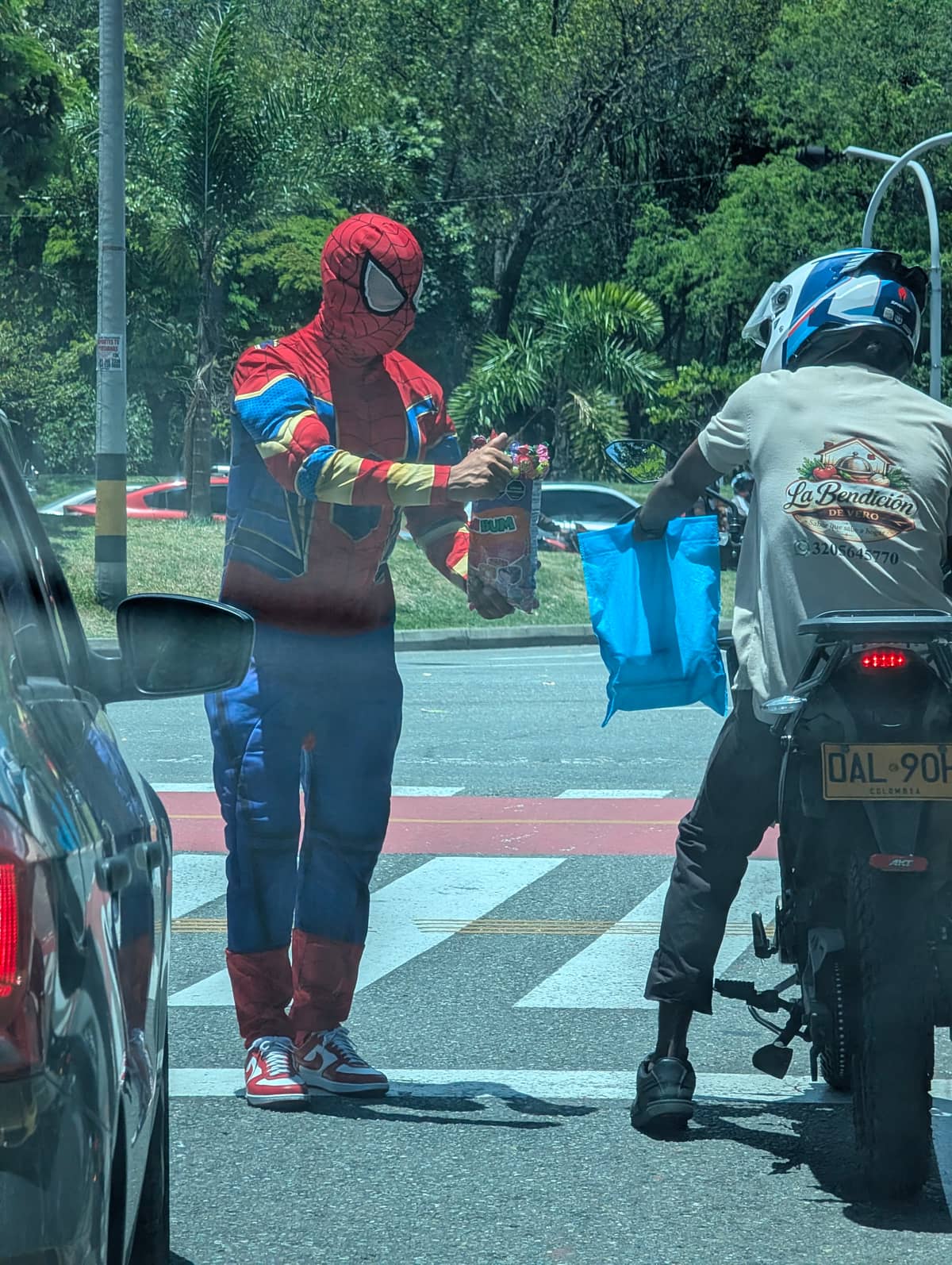
At a junction on Carrera 55, Spider-Man stands at a red light selling…
At a junction on Carrera 55, Spider-Man stands at a red light selling sweets between the cars. A motorbike rider behind him, a water stall beside him.
8 September · Note · Café Mattelsa, Medellín
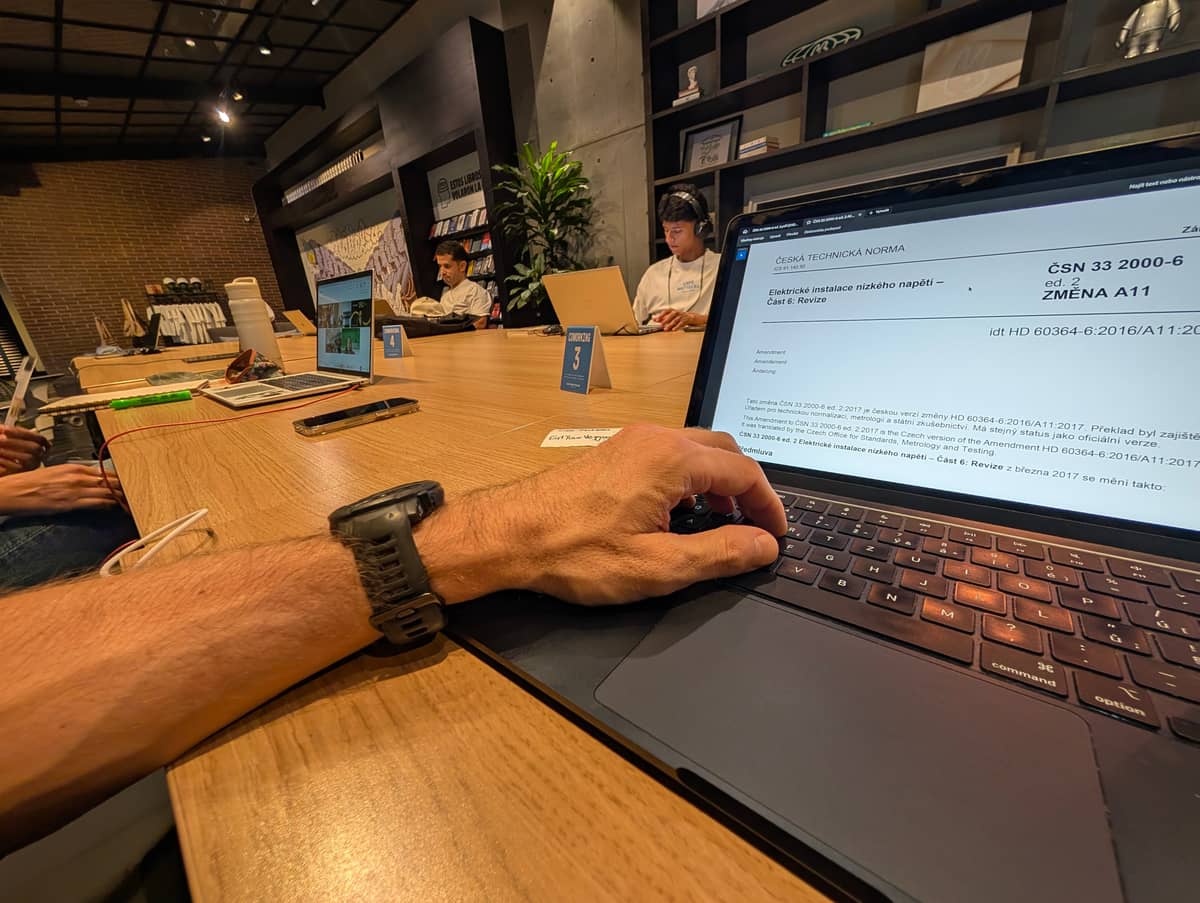
Café Mattelsa, two hours, one coffee and a kombucha. A Czech standard…
Café Mattelsa, two hours, one coffee and a kombucha. A Czech standard for electrical installations on the screen, a palm tree outside the window, people with laptops all around, and nobody making a…
7 September · Note
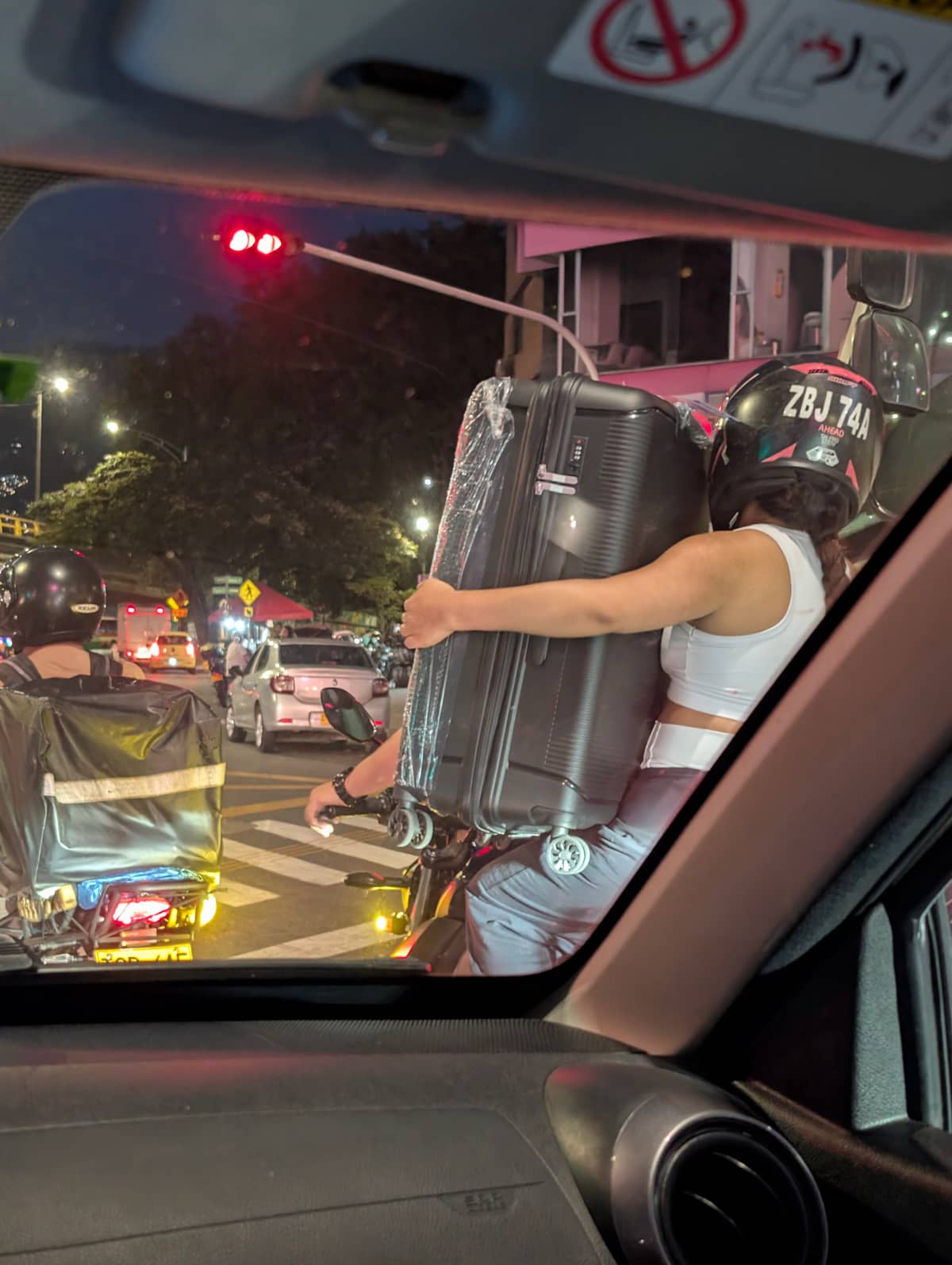
A pillion passenger on a motorbike carrying a large wheeled suitcase…
A pillion passenger on a motorbike carrying a large wheeled suitcase. One arm clamped around it, the other around the rider, knees against the tank, riding in traffic between the cars.
6 September · Article · Comuna 8, Villa Hermosa, Medellín
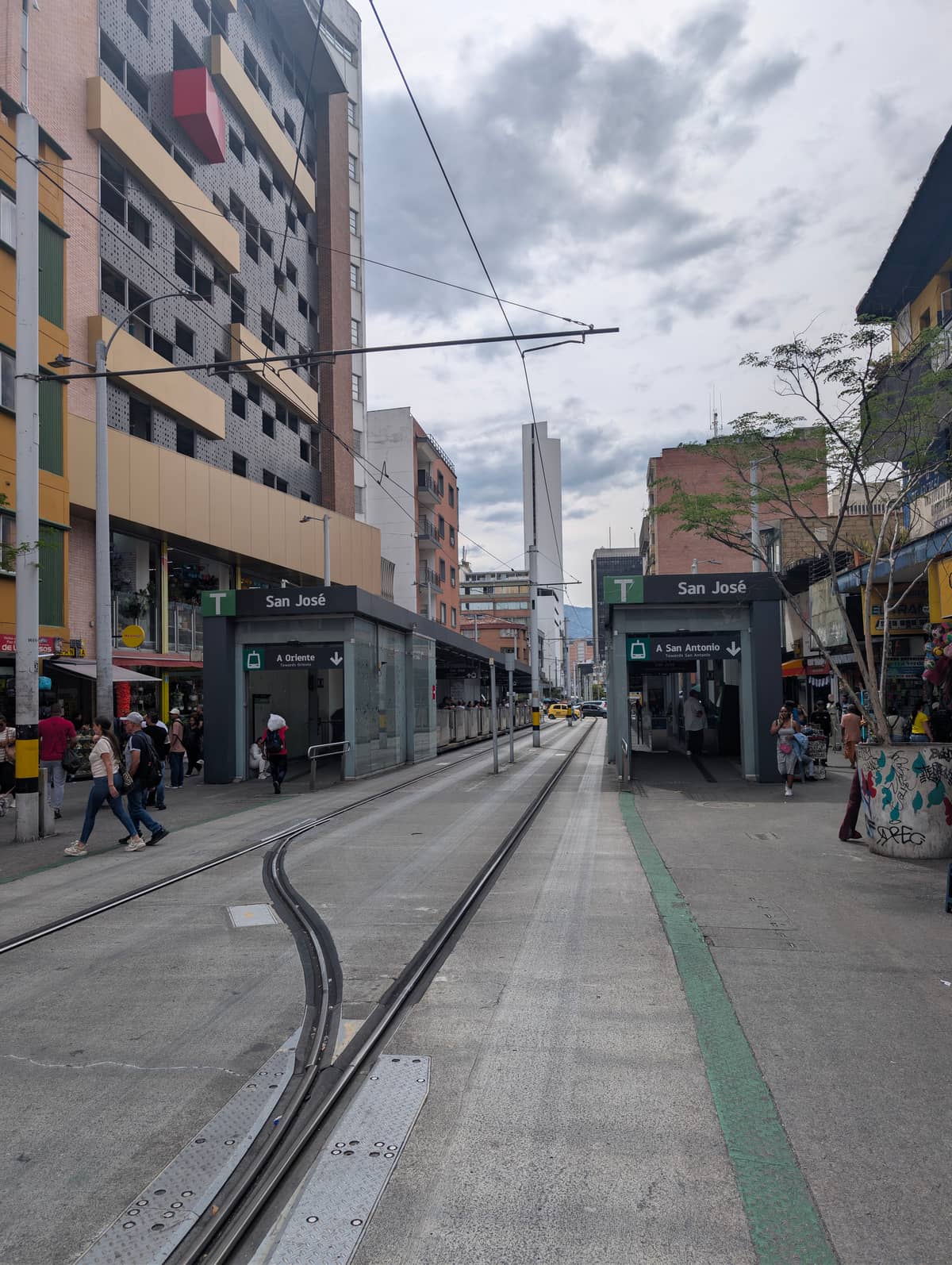
Up by cable car, down for an arepa
A tram on rubber tyres takes you from the centre to the edge of the city, and a cable car lifts you from there over the roofs of comuna 8. Back down there was an arepa festival, parakeets in a tree, a café in the house by the church, and a concert hall underground.
6 September · Article · La Candelaria, Medellín
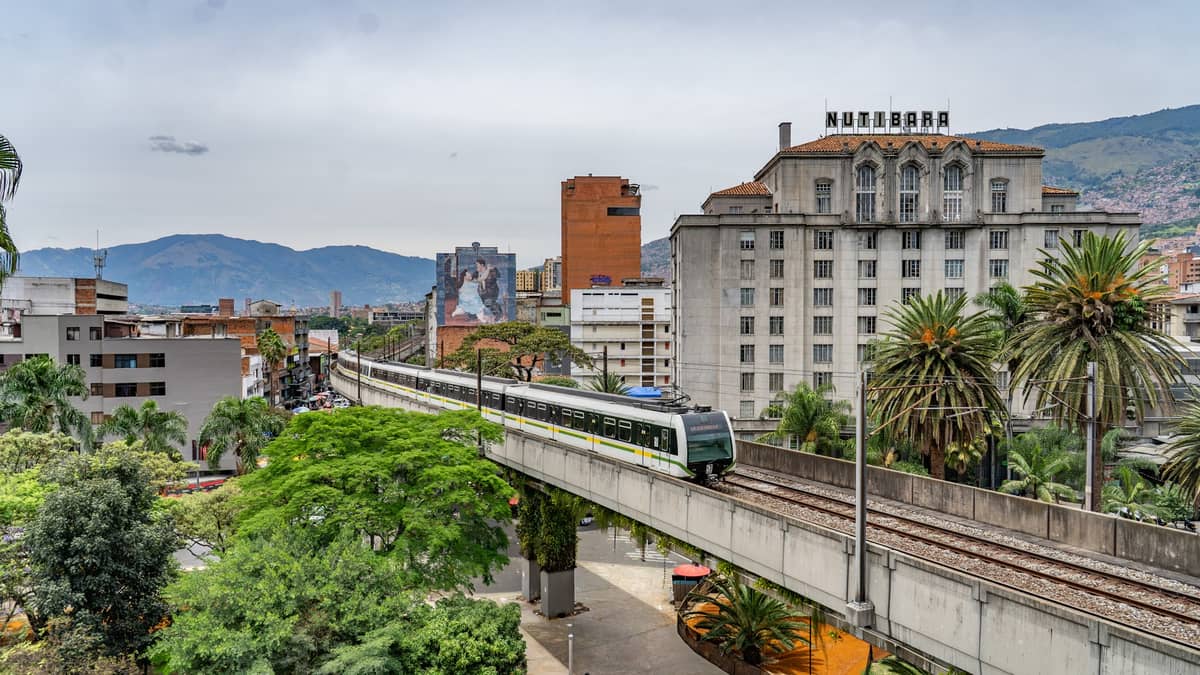
El centro: the day I finally saw the city
Every second person told me not to go into the centre of Medellín. I went by metro, cleaner than the one at home, and found a palace with a chequerboard facade, twenty three Botero sculptures, a cathedral made of a million bricks, and a market that has run since the seventies.
5 September · Note
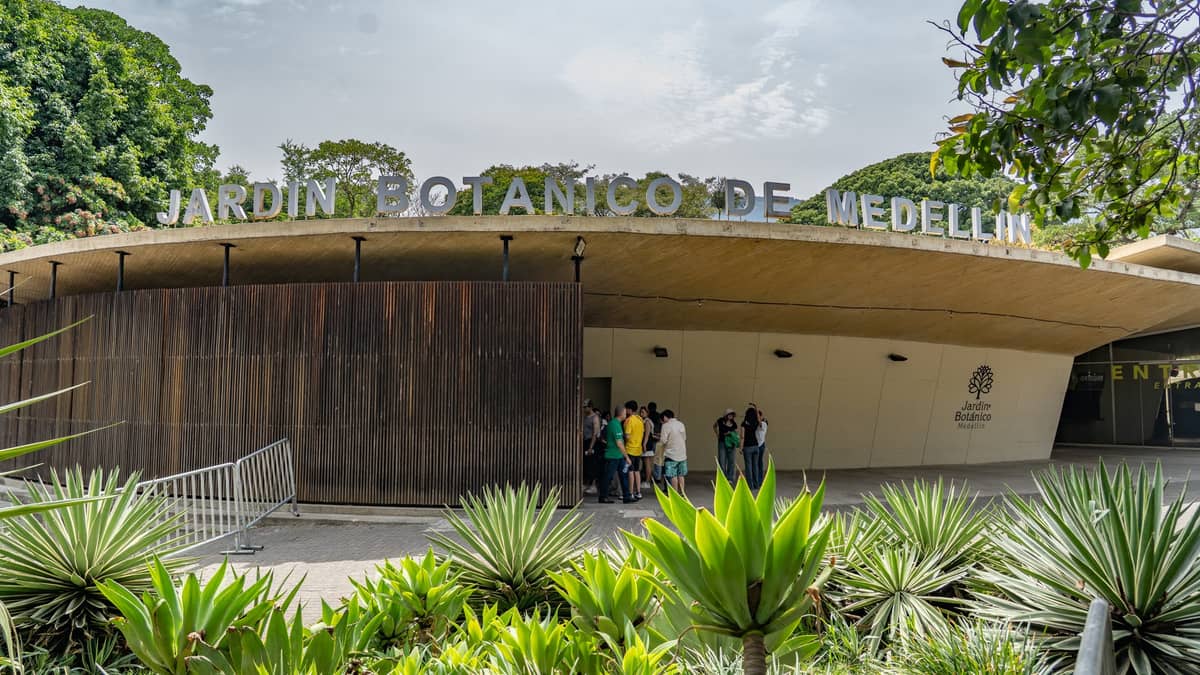
The botanical garden was closed. Not for a holiday or repairs: they…
The botanical garden was closed. Not for a holiday or repairs: they are building the Fiesta del Libro y la Cultura inside it, the city's book festival, in its twentieth year and running from 11 to 20…
4 September · Article · Comuna 8, Villa Hermosa, Medellín
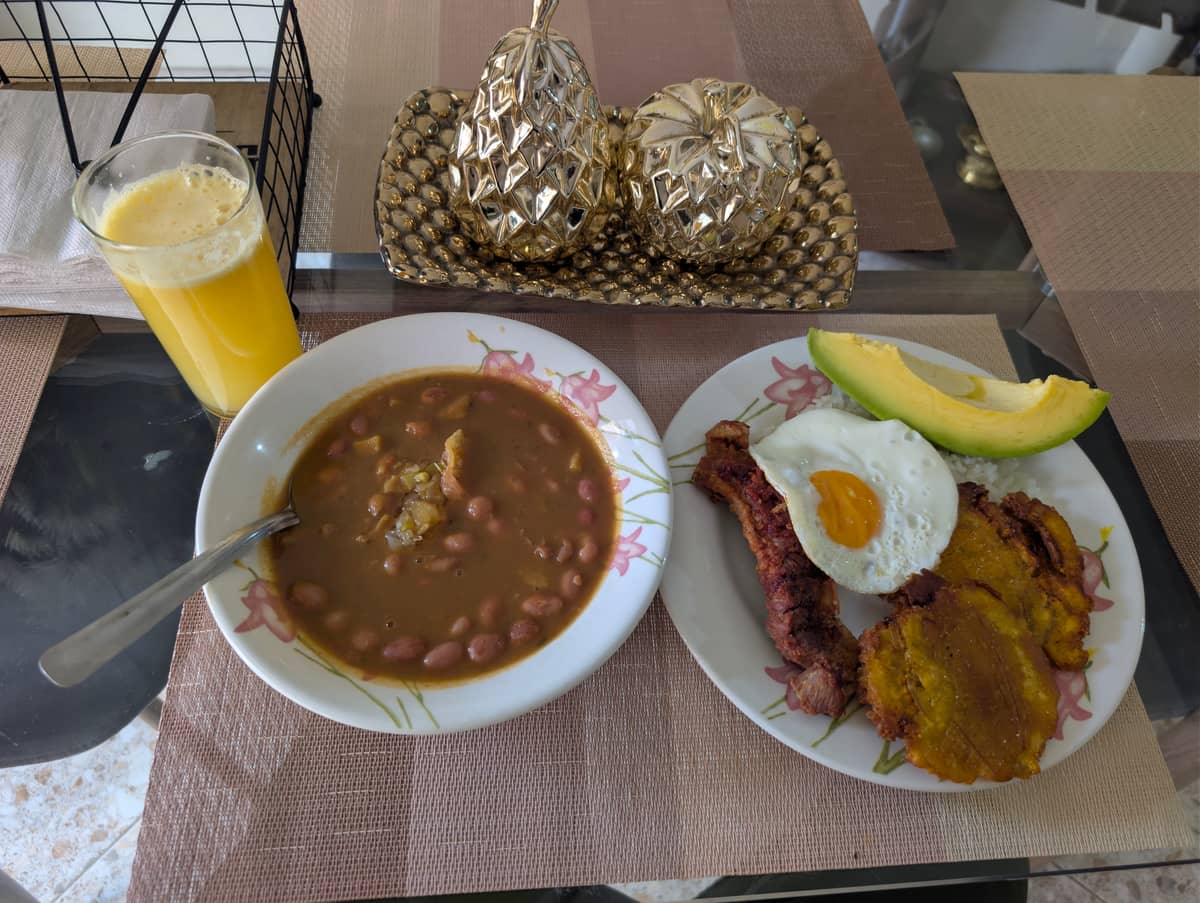
Villa Hermosa: lunch, a church and a market
Comuna 8 up close, not from the cable car. A home cooked bandeja paisa with chicharrón, the brick church of La Sagrada Familia, stalls on the pavement, and traffic that runs on eye contact. On the way back, a stop among the villas of Prado.
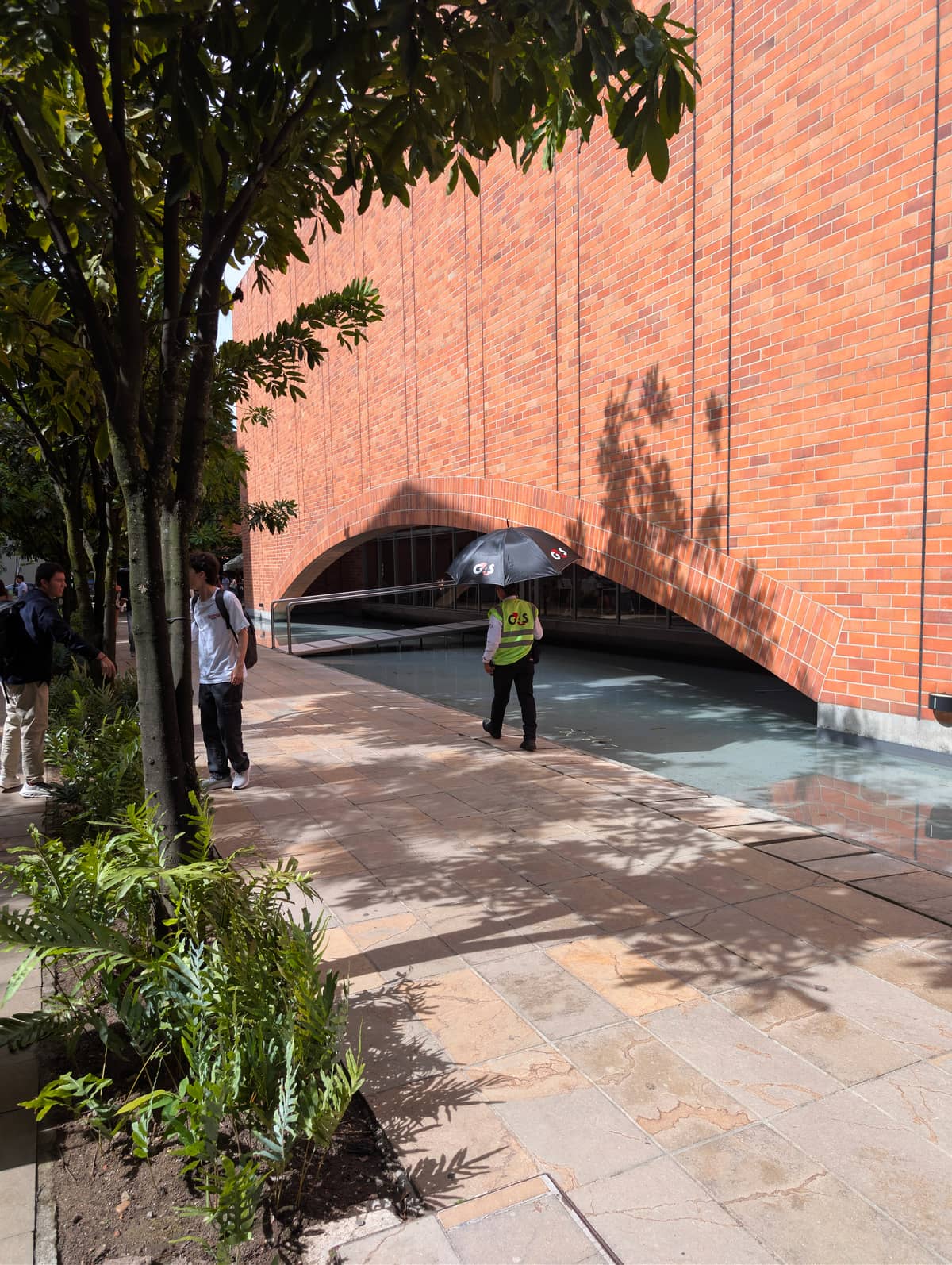
3 September · Article · El Poblado, Medellín
A university as a park and a cinema in a mall
The EAFIT campus, which you can simply walk into, with mango trees, water along brick walls and birds in the middle of the city. And in the evening, the oldest mall in El Poblado, the first in Colombia to have its own cinema.
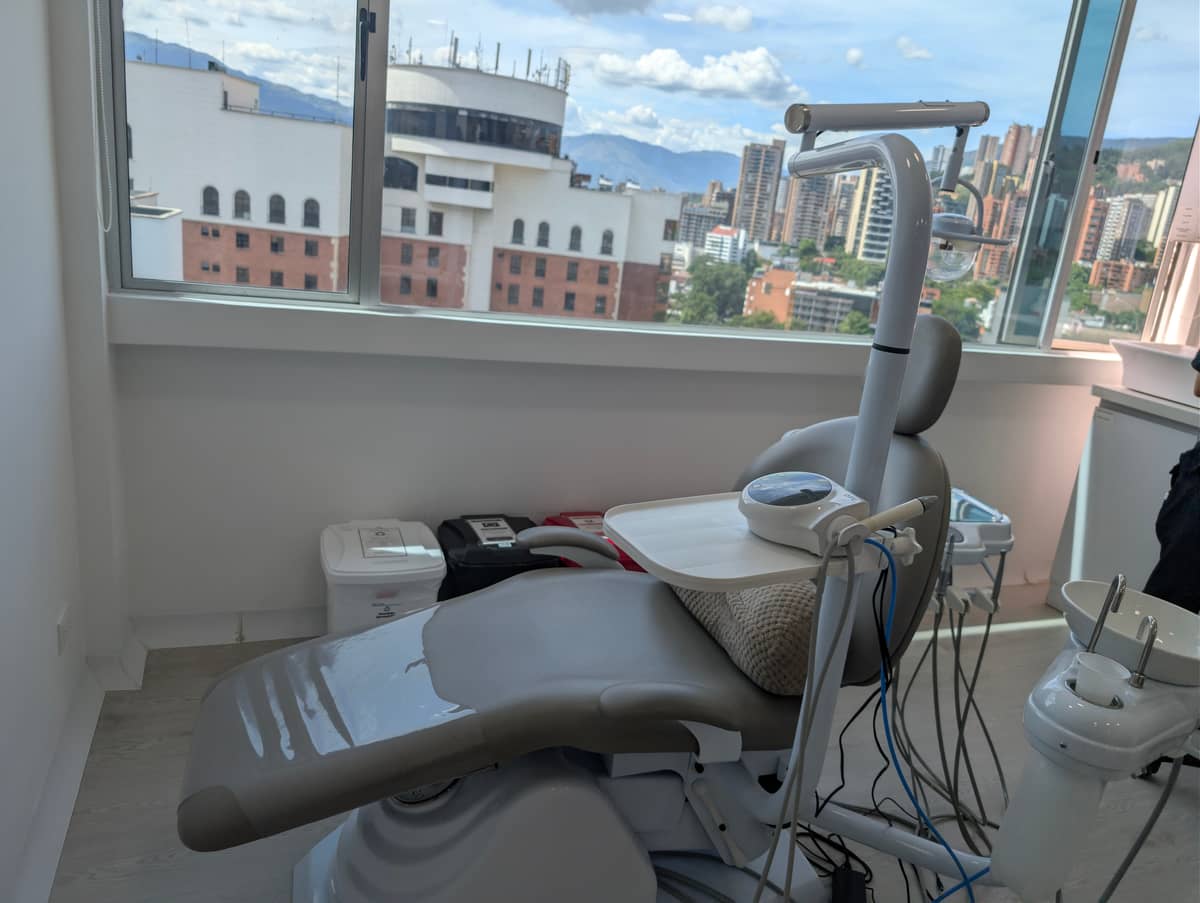
3 September · Article · El Poblado, Medellín
A dentist with a view
A tower full of consulting rooms in El Poblado, a restaurant on the ground floor, and a dentist's chair a metre from a glass wall with the whole Medellín valley behind it. What private care in Colombia looks like to a patient who arrived a month ago.
2 September · Note · Laureles, Medellín

2 September · Article · Laureles, Medellín
Laureles: a neighbourhood drawn in circles
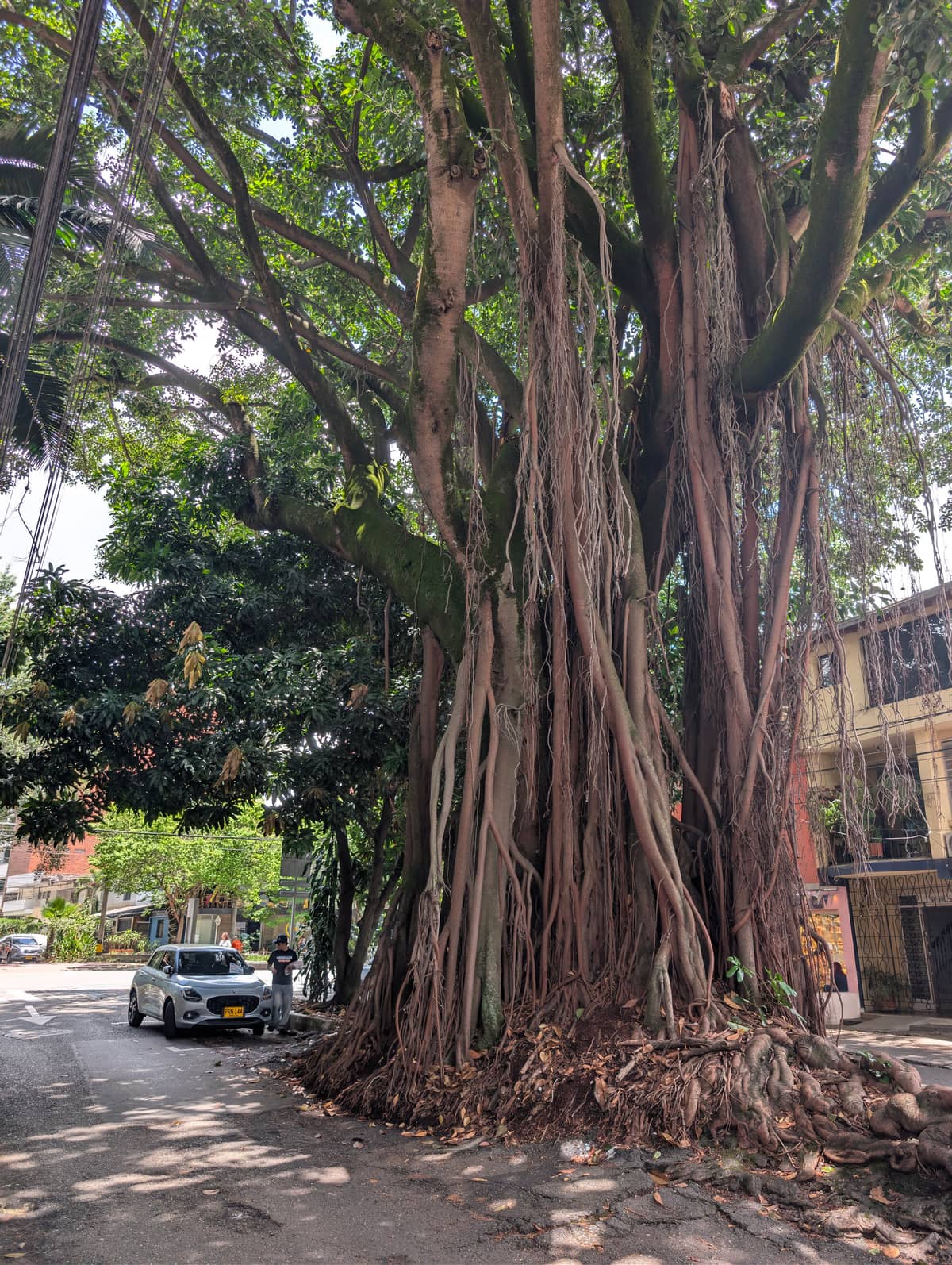
A garden city from 1940 with circular streets, fig trees across the whole road, and cafés you can work from. The neighbourhood Medellín recommends to itself, and the one Time Out called the best in the world.
August
2026
1 entry
31 August · Article · Conquistadores, Medellín
Where I live: Conquistadores
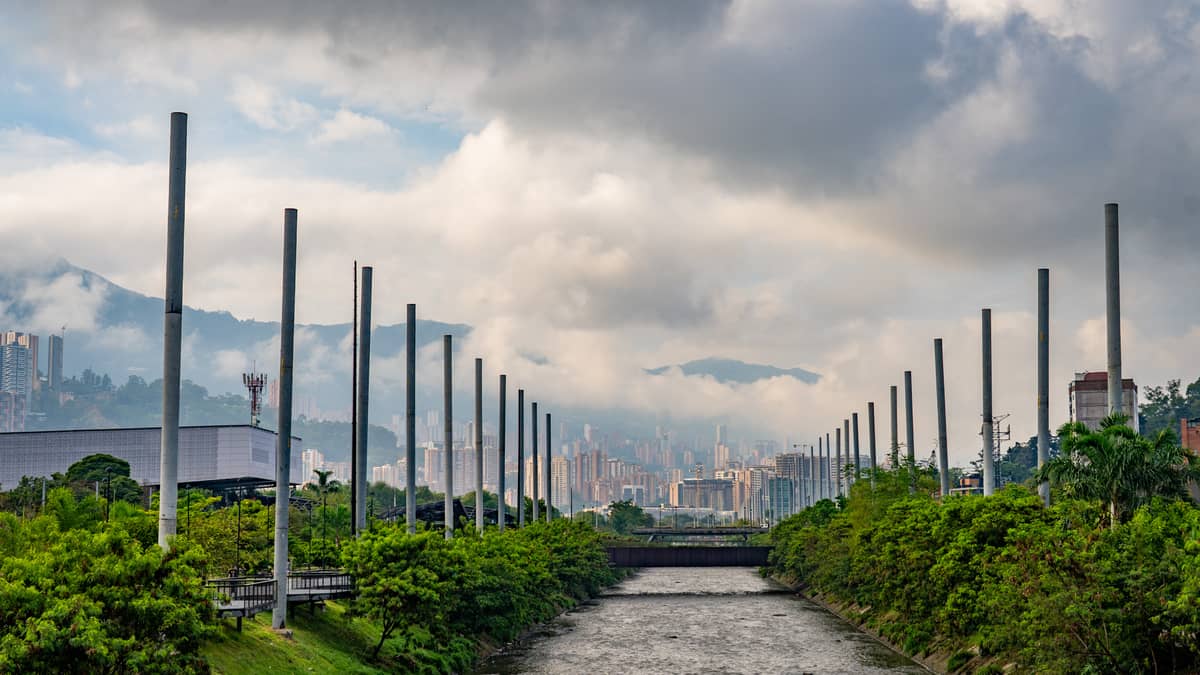
A neighbourhood between the river and Laureles that nobody writes about. Dogs on every corner and clean pavements, greenery that is not an accident, a bridge to the Barefoot Park, and seventies buildings among the palms.
Frequently asked
What should I sort out on the very first day?
A SIM card against your passport, a Cívica card for the metro, and cash. Without a local number the bank, ride hailing and payment apps are all blocked, so it is the first knot to untie. And check straight away how many days the stamp in your passport gave you.
Should I rent a flat right after arriving?
No. Take a month in a furnished place and choose the neighbourhood by how it feels in the morning, at midday and on a Sunday evening. In Medellín the slope of the street also decides a lot and a map will not show it. A long lease signed in week one is the most expensive mistake of the move.
Why does the cédula de extranjería matter so much?
Because everything else hangs on it. Without it there is no bank account and no health insurance. You apply for it at Migración Colombia once the visa is issued, and it is the knot worth untying as early as possible.
How much more does the first month cost?
Roughly double. Short-term housing costs more than a lease, the deposit and first rent land at once, and on top of that goes a reserve for paperwork: fees, copies, a notary, translations and photos. Concrete amounts are in the guide about costs and in the price log, kept with a date and a place.
What can safely wait?
A car, furniture, permanent residency and shipping your belongings. In Medellín a car is mostly a nuisance, furnished flats are normal, residency is a matter of years, and most things cost less to buy here than to ship.
Questions and answers
What do you want to ask?
Ask anything about this topic. I answer, and the answer stays here so the next person who wonders the same finds it.