Neighbourhood · Medellín · Colombia · 1495 m a.s.l.
La Candelaria
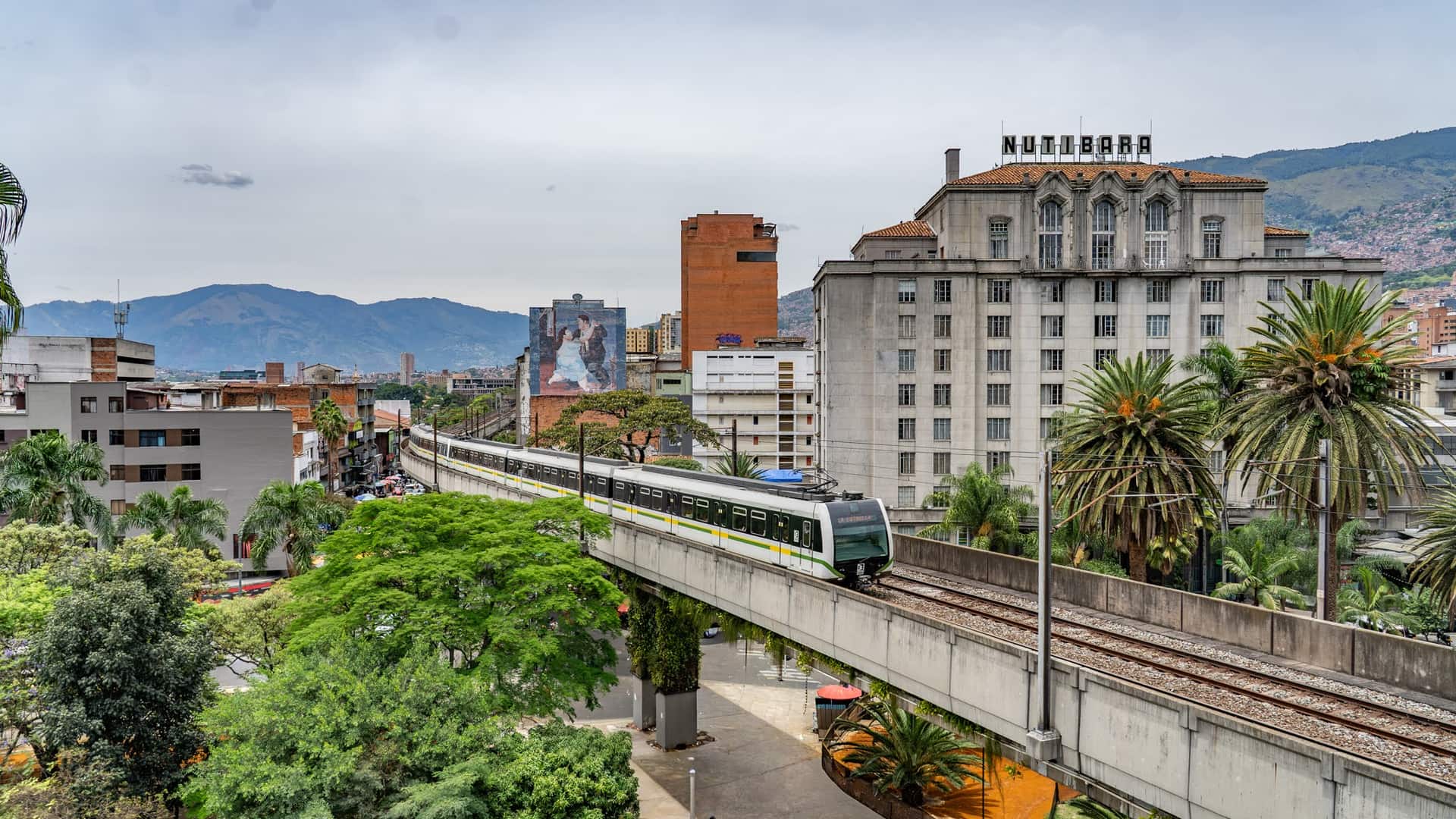
The metro viaduct over the centre. The train runs at second floor height, so you can look the district over before you set foot in it.
The original Medellín. Comuna 10, La Candelaria, what everybody here calls el centro and what a visitor staying in El Poblado is usually talked out of before they even set off.
It is the densest part of the city: government offices, the university, shops, markets, banks, churches, and with them hundreds of thousands of people a day who come in for work and shopping. There is more life in one square kilometre here than in the rest of the city put together.
What stands here
Plaza Botero, with twenty three bronzes by Fernando Botero that you are allowed to touch, and that everybody does touch. Around it the Museo de Antioquia and the Palacio de la Cultura Rafael Uribe Uribe, two buildings you can spend half a day in for almost nothing.
A little further on Parque Bolívar with a cathedral made of a million bricks, the Plazuela de San Ignacio with the university cloister, and the Parque de las Luces with three hundred concrete poles. Above all of it rises the Edificio Coltejer, a skyscraper shaped like a needle.
The metro runs on a viaduct straight through the centre, so you can look the whole district over from a train window before you set foot in it.
What it is like
Loud, packed, fast, and cleaner than you would expect. Stalls every few metres, music from three directions, fruit sellers, cafés sixty years old, and among them people who simply work here.
It is not a district for an evening stroll, and by day you behave the way you would in any big city: phone in your pocket, backpack on your front, watch left at home. Nothing more than that.
A bit of history
Medellín started here. The settlement in the Aburrá valley was granted town status in 1675, and Parque Berrío has been its centre ever since; the La Candelaria basilica on its edge is among the oldest churches in the city.
Through the nineteenth and early twentieth century the centre became the commercial and industrial heart of Antioquia. The railway arrived, the Guayaquil market stood where the Parque de las Luces is today and drew farmers from the whole region, and warehouses and hotels grew up around it.
In the 1920s the Belgian architect Agustín Goovaerts brought European architecture here: he began the seat of the provincial government, today's Palacio de la Cultura, and also built the Teatro Junín and the Hotel Europa. In 1972 the Edificio Coltejer joined the skyline, then the tallest building in Latin America.
Then came the fall. The railway closed in the sixties, the market moved out in the nineties, and the centre, above all the Guayaquil area, sank into years Medellín does not enjoy talking about.
The turn came around the millennium. The museum moved into the former municipal palace in 2000, Plaza Botero followed a year later, the Parque de las Luces in 2005, and since 1995 the metro has run through the middle of it all. None of that turned the centre into a shop window, but people go there again.
Entries from here
Photos from here
34 frames