Viewpoint · Guatapé · Colombia · 2135 m a.s.l.
Piedra del Peñol
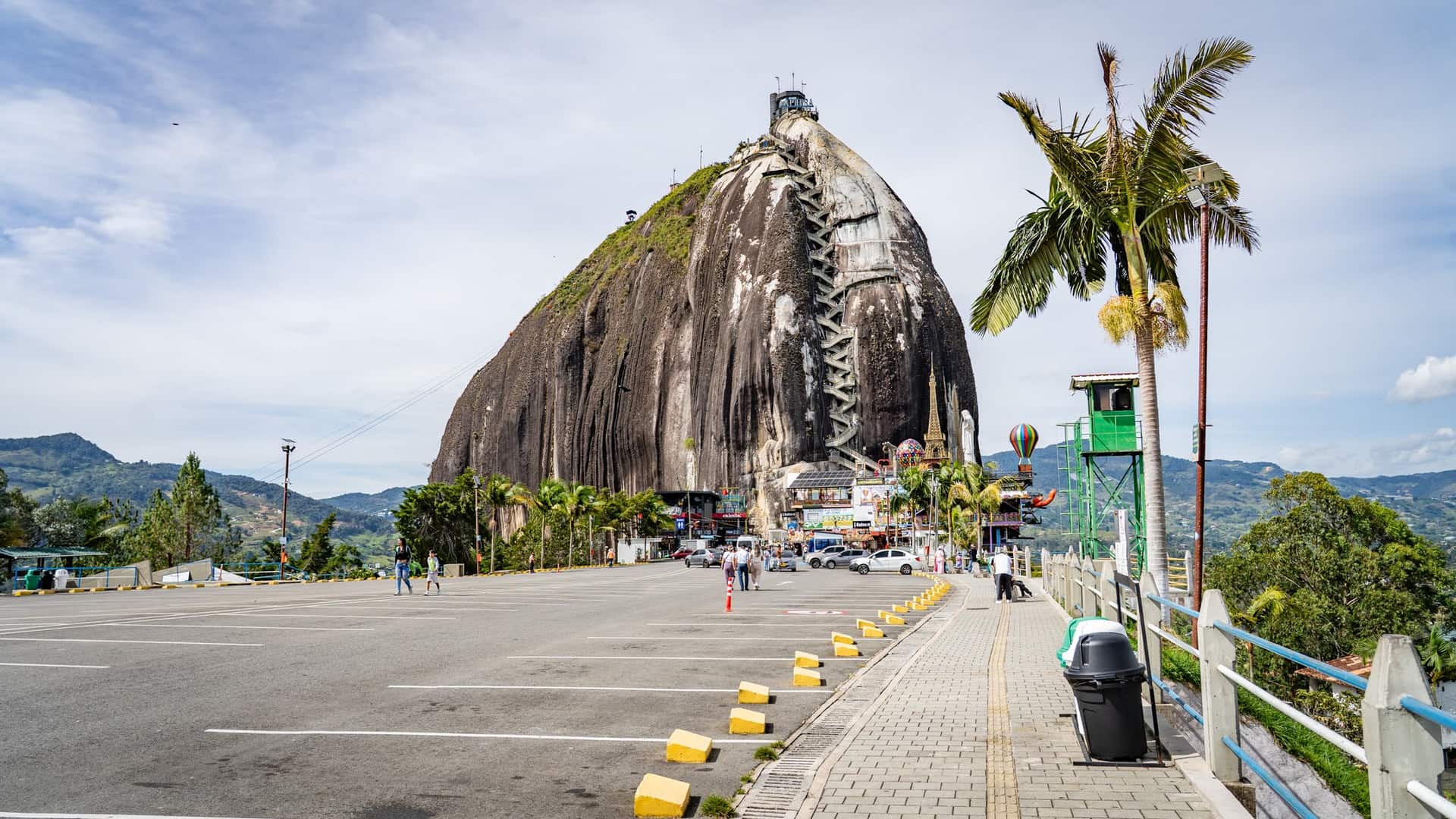
The rock from the car park. Two hundred metres of stone in the middle of the countryside.
A single lump of rock, two hundred metres high, standing in a green landscape full of water. A crack runs up the face and a staircase runs up the crack; at the top there is a viewpoint, a restaurant and stalls.
The view is extraordinary. From up there the reservoir breaks into a hundred inlets and islands, and you can see how one dam project drowned an entire district.
The area around the rock is a funfair. An Eiffel tower made of tubes, a giant statue, inflatable rides, ice cream sellers. Anybody who came for the rock spends a while looking for it.
The climb is two hundred and twenty metres of ascent, and that is the number that matters. The top step has 740 painted on it, the concrete steps number about 715, and you come down a different, narrower staircase.
A bit of history
The rock is older than anything around it. It is the exposed remnant of an igneous body geologists call the Antioquia batholith; the stone formed tens of millions of years ago deep underground and stayed standing when the softer ground around it washed away.
The indigenous people of the region treated it as a sacred place and the Spanish recorded it as a landmark. For a long time nobody got to the top, because the walls are smooth and steep.
Then, in July 1954, a local man, Luis Eduardo Villegas López, tried it with two neighbours. The story goes that the parish priest provoked them by remarking that toads do not climb stones. They went up on planks nailed into the crack and it took them five days. The wooden stairs lasted until 1970, when concrete ones replaced them.
A huge GI is painted on the face. It was meant to say GUATAPÉ, but neighbouring El Peñol objected that the rock belonged to them, and the painting stopped at the second letter. The argument over whose rock it is has never been settled.
The water below the rock is man made. The Peñol and Guatapé reservoir began filling in 1970 and reached its final level in 1979; it is the largest regulating reservoir in Colombia, and its power stations still feed the country.
Entries from here
Photos from here
18 frames