Practically · Transport
How do you get around in Colombia?
There are no passenger trains; you travel by bus or you fly. In Medellín the metro and a Cívica card cover everything, the airport bus costs 20,000 pesos against a 132,000 peso taxi, intercity buses leave from two different terminals, and a car only pays off in the mountains.
Checked 1 September 2026
Colombia is a country without passenger trains. What runs on rails in Europe runs on a road here or flies, and the difference between a good route and a bad one is measured in hours.
Medellín shows it best: inside the city there is a metro that works like a European one, and beyond the city limits begins a country where the timetable is written on a sign and departure happens when the bus is full.
In the city
The metro. Two rail lines, a tram, six cable cars and buses feeding into them. Line A runs along the valley floor from north to south, line B heads west. Since January 2026 a ride costs 3,820 pesos with a Cívica card and 4,400 without one; transfers between metro, tram and cable car are included. It runs from five in the morning to eleven at night, shorter on Sundays.
It is clean, punctual and at rush hour so packed you cannot raise an arm. People in Medellín are proud of the metro and it shows: nobody eats, drinks or shouts in it.
The cable cars are not an attraction, they are transport into the hills. The exception is line L to Arví, which is touristic and charged separately.
Buses go everywhere the metro does not reach, and without an app they are hard to read: signs behind the windscreen instead of line numbers. You pay the driver, in coins.
Uber, DiDi, Cabify. Formally a grey area, in practice used by the whole city. After dark it is the sensible way home. The driver may ask you to sit in the front so it looks like a lift from a friend.
A taxi flagged in the street is cheaper and less predictable; a running meter is not a given.
Motorbike taxis exist and are the fastest way to move in rush hour. They are also the fastest way to end up in hospital; there is usually one helmet and the driver is wearing it.
Cívica: the card that makes everything easier
Cívica is the transport card and comes in two forms. The registered one is issued against an ID, can be blocked and carries discounts. The bearer one you buy on the spot, and it is what everybody staying briefly uses.
- Buy and top it up at any metro station, at a window or a machine.
- Without a card you pay six hundred pesos more per ride, which pays for itself within days at two rides a day.
- It also pays for the airport bus, which half of all visitors do not know.
To the airport, and which one
Medellín has two airports and this is the most common source of confusion.
José María Córdova (MDE) is the big international one, near Rionegro, about 35 kilometres out of town, uphill, 40 to 60 minutes depending on traffic.
Olaya Herrera (EOH) sits inside the city, next to the Terminal del Sur, and handles domestic flights on smaller aircraft. Confuse the two and you miss your flight.
Getting to MDE:
- By bus for 20,000 pesos, or 14,000 with a Cívica card. It leaves from San Diego, from the Hotel Nutibara and from the terminals. The cheapest option and in ordinary traffic almost as quick as a taxi.
- By taxi on the official 2026 tariff: 132,000 pesos for a standard car, 134,100 for an electric one and 143,100 for a luxury one. The price is fixed, so there is nothing to haggle over and no meter.
- By Uber, usually a little cheaper than a taxi, though the airport has its own rules and drivers are reluctant.
- By shared car (colectivo), which lands between the bus and the taxi.
Practical advice: allow two hours from Medellín to MDE, not one. The road to Rionegro can surprise you.
Intercity buses
The bus is the backbone of long distance travel in Colombia. Comfortable, cheap and surprisingly punctual.
Medellín has two terminals and you need to know which one you leave from:
- Terminal del Norte serves the north and east: Guatapé, Santa Fe de Antioquia, the Caribbean coast, Bogotá. It is on line A, Caribe station.
- Terminal del Sur serves the south and west: Jardín, the coffee region, Cali, Pereira, Manizales. It sits by the Olaya Herrera airport.
Prices as of summer 2026, one way:
- Guatapé around 20,000 pesos, departures roughly every half hour, two hours on the road.
- Jardín around 25,000 pesos, three hours.
- Bogotá ten hours on a night bus, on the order of a hundred thousand.
How it works:
- Tickets are bought at the terminal at the operator's window, or in advance through redBus. For popular routes at the weekend, buy ahead; otherwise turning up is enough.
- Departures follow the timetable, though smaller operators leave when the bus is full.
- The air conditioning is set to freezer. A hoodie is not a suggestion.
- Mountain roads wind. If you are prone to motion sickness, sit at the front and stay off your phone.
Domestic flights
Over longer distances a plane is often cheaper than the bus and always faster. Bogotá, Cartagena, Santa Marta, Cali, San Andrés.
- Avianca, Latam, Wingo, Satena and smaller carriers fly. Booked ahead it is surprisingly cheap; booked the day before it is a multiple.
- Luggage is usually extra, and on the cheapest fares even a cabin bag is paid for.
- Medellín departures use both airports, so check whether your ticket says MDE or EOH.
By car
You do not need a car in the city and you do not want one downtown. Outside the city it is a different question.
When to rent one: for a loop around Antioquia, for trips into the mountains, with children and luggage. When not to: for a journey to one town with a direct bus, and never merely out of habit from home.
What to know:
- Pico y placa. On weekdays, depending on the last digit of the plate, you may not drive into parts of the city at peak hours. It applies to rentals too, and the fine reaches the owner, meaning the rental company, and then you.
- Tolls (peajes) are frequent on main roads and often cash only. Keep change.
- An SUV for the mountains. It is not about comfort but about whether you arrive. Off the main roads the surface turns to dirt.
- Do not drive at night. Not because of robbery, but because on unlit bends without barriers you meet a lorry in your lane.
- Driving habits. Motorbikes between lanes, overtaking on bends, headlight flashes that mean both hello and warning. I wrote about it separately and I have not changed my mind since.
What it costs
| What | How much | |---|---| | Metro ride with Cívica | 3,820 pesos | | Airport bus | 20,000, or 14,000 with Cívica | | Airport taxi (2026 tariff) | 132,000 | | Uber across town | 10,000 to 30,000 | | Bus to Guatapé | around 20,000 | | Bus to Jardín | around 25,000 |
Prices from my own journeys go into the records below the text; those carry a date and count for more than this table.
What to watch
Keep your phone in your pocket on a rush hour metro. It is not a dangerous place, it is a crowded place, and that is exactly what pickpockets want.
Keep your luggage with you at the terminal. Not because there is more theft there, but because it is the one place where your hands are full and your head elsewhere.
Call a taxi, do not flag one. The app knows the driver; the street does not.
And last: leave slack. Mountain roads do not have a timetable in our sense. Plan a connection to the minute and you are planning a missed connection.
What I wrote about it
September
2026
17 entries
10 September · Article
Driving in Medellín: the day of the week your car stays home
The last digit of your number plate keeps the car off the streets one day a week, from five in the morning to eight in the evening, across the whole valley. Plus the licence that expires after six months, a fine over six hundred thousand pesos, and road death figures that make me uneasy.
10 September · Article · La Candelaria, Medellín
No water after eight in the evening. What is going on in Medellín
Three hundred thousand people in six communes have had water every other day since late August. The city broke its temperature records in May, Ideam expects a strong El Niño into March, and the grid operator warns that power may not stretch through December. What the rule says, why it landed on the hillsides, and what it means for a trip.
10 September · Article · La Casa del Alimento, Medellín
A lunch where the meat dries on a washing line
A Colombian lunch is not one dish, it is a whole set for one price. Two mains, two desserts, two coffees and a lemonade came to 146,000 pesos. And in that restaurant's yard, beef hangs drying.

10 September · Article · Conquistadores, Medellín
The bin men of Medellín
A garbage truck with a slogan saying this city is a little silver cup. Who runs it, where the waste goes, why the landfill has eight years left, and how the people who open bags on the street come to be paid out of the water bill.
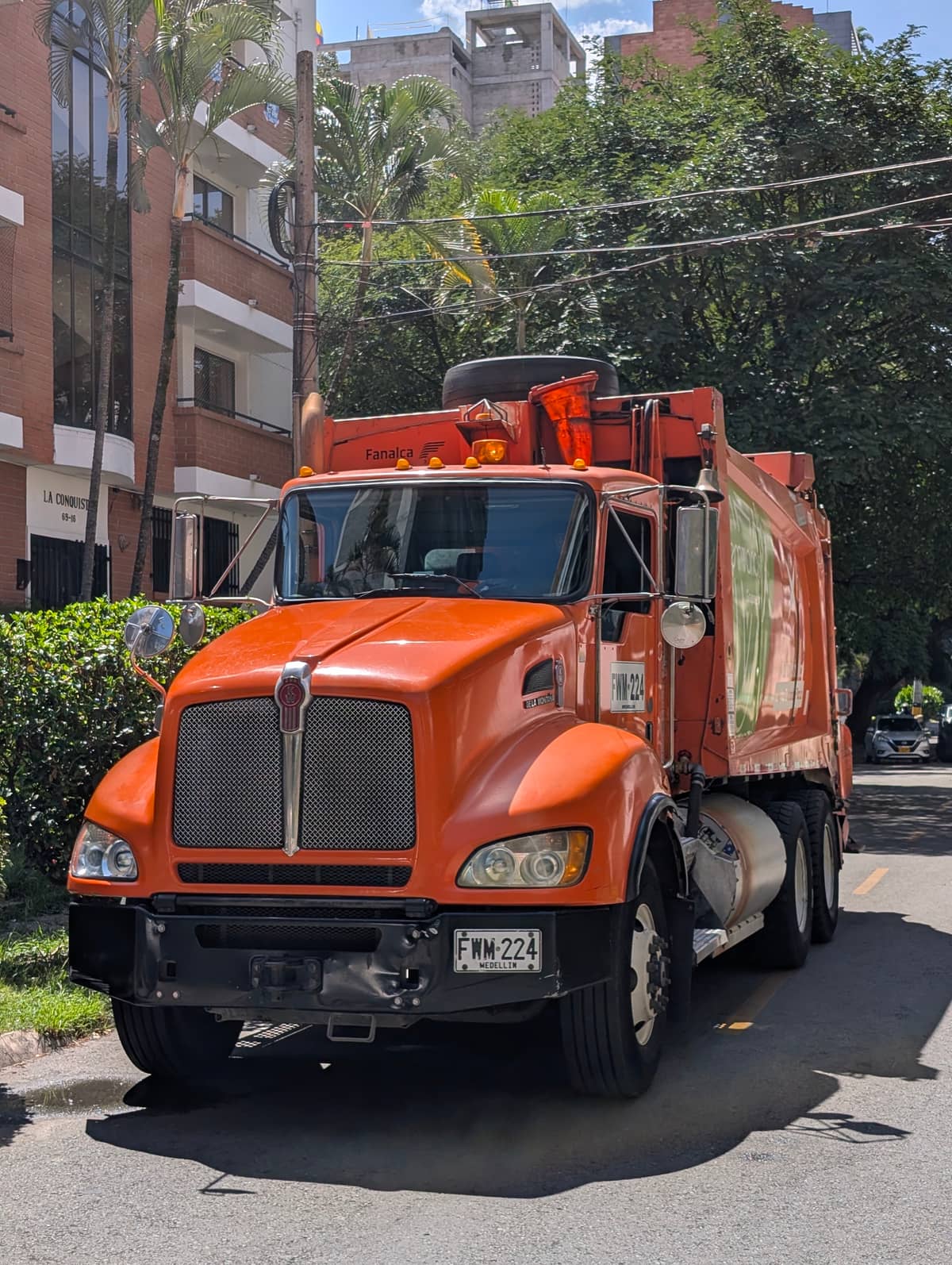
10 September · Article · Comuna 8, Villa Hermosa, Medellín
Villa Hermosa after dark
A house with almost no windows, hot rice pudding with cheese, and a slope full of lights right up to the ridge. And the only thing that made me uneasy was not what someone who has read about comuna 8 online would expect.
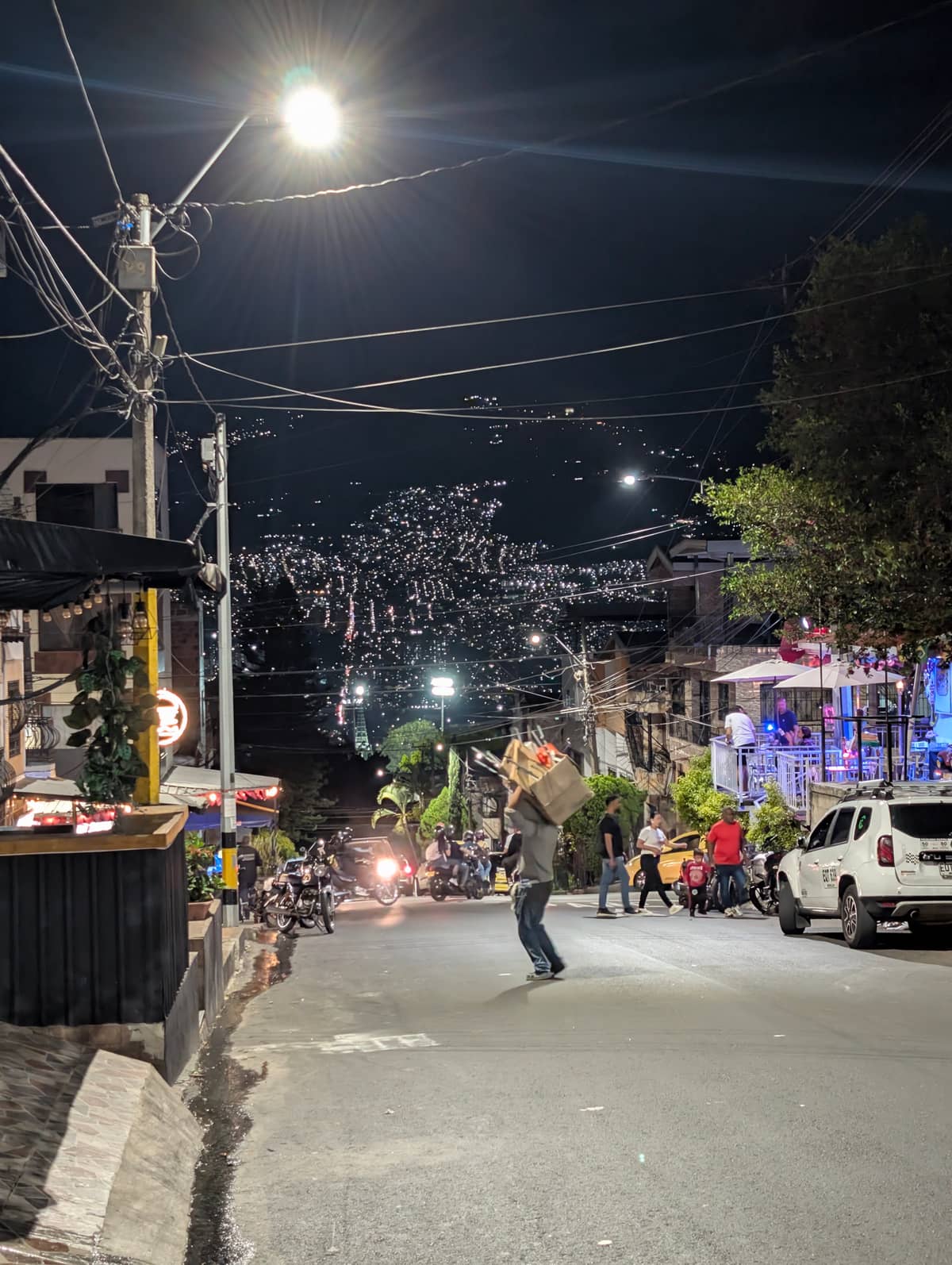
8 September · Article · El Poblado, Medellín
El Poblado after dark
The district where Medellín was founded in 1616 and where almost everybody who flies into the city now sleeps. Provenza with lights in the trees, the singer Karol G's restaurant, a road sign saying tourist zone, and a bill that sums it all up.
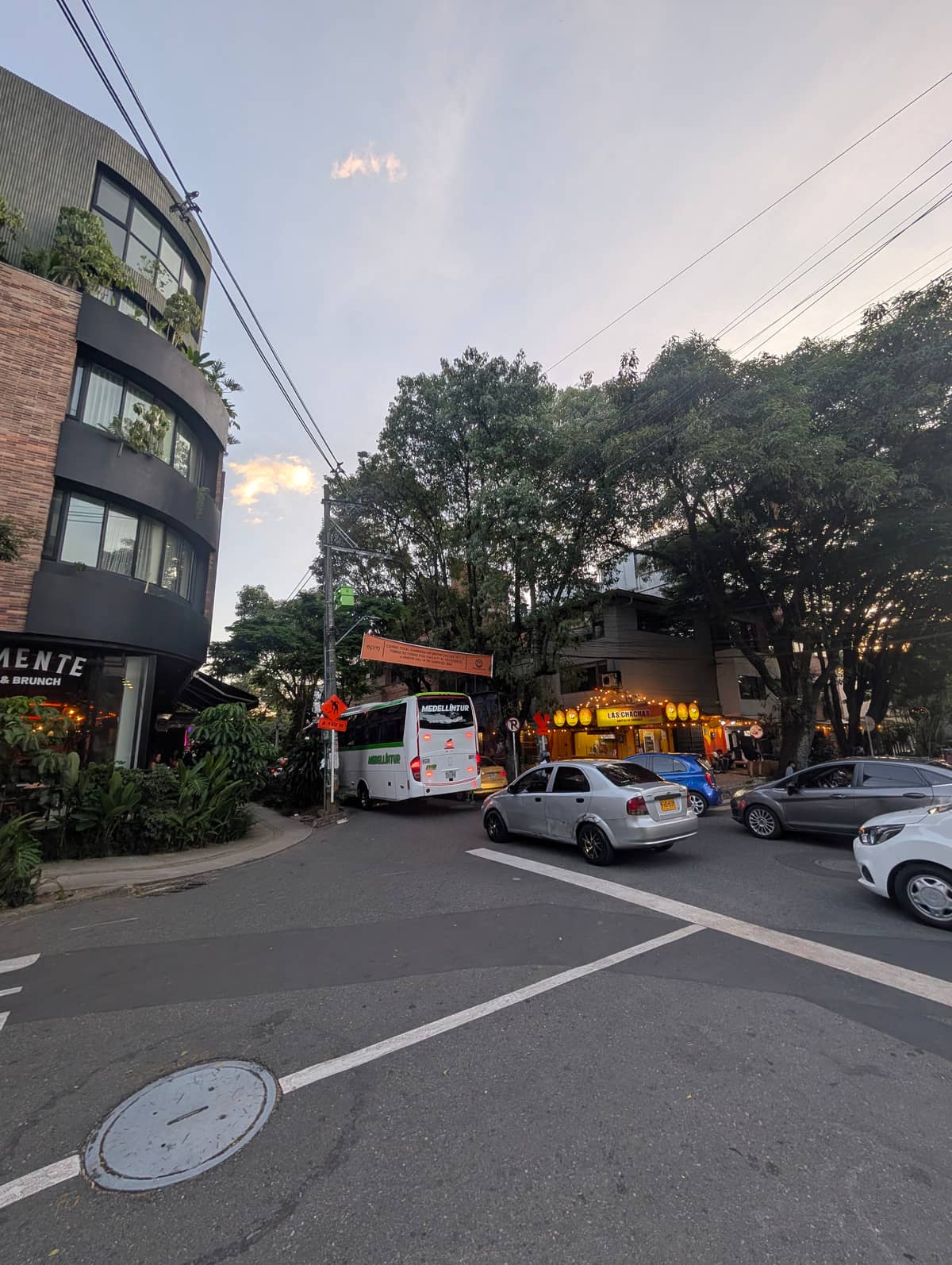
8 September · Note · La Candelaria, Medellín
At a junction on Carrera 55, Spider-Man stands at a red light selling…
At a junction on Carrera 55, Spider-Man stands at a red light selling sweets between the cars. A motorbike rider behind him, a water stall beside him.
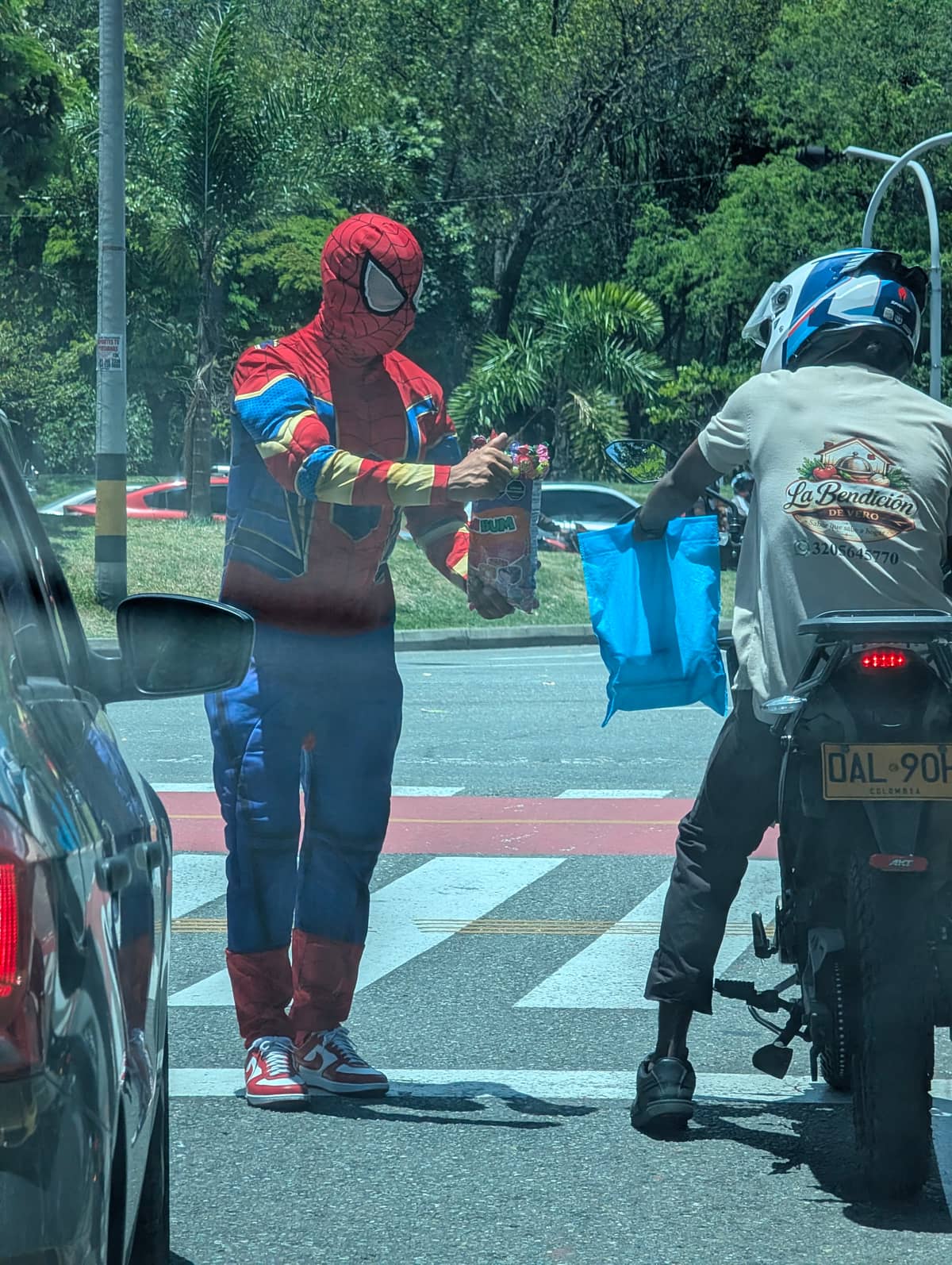
8 September · Note · Café Mattelsa, Medellín
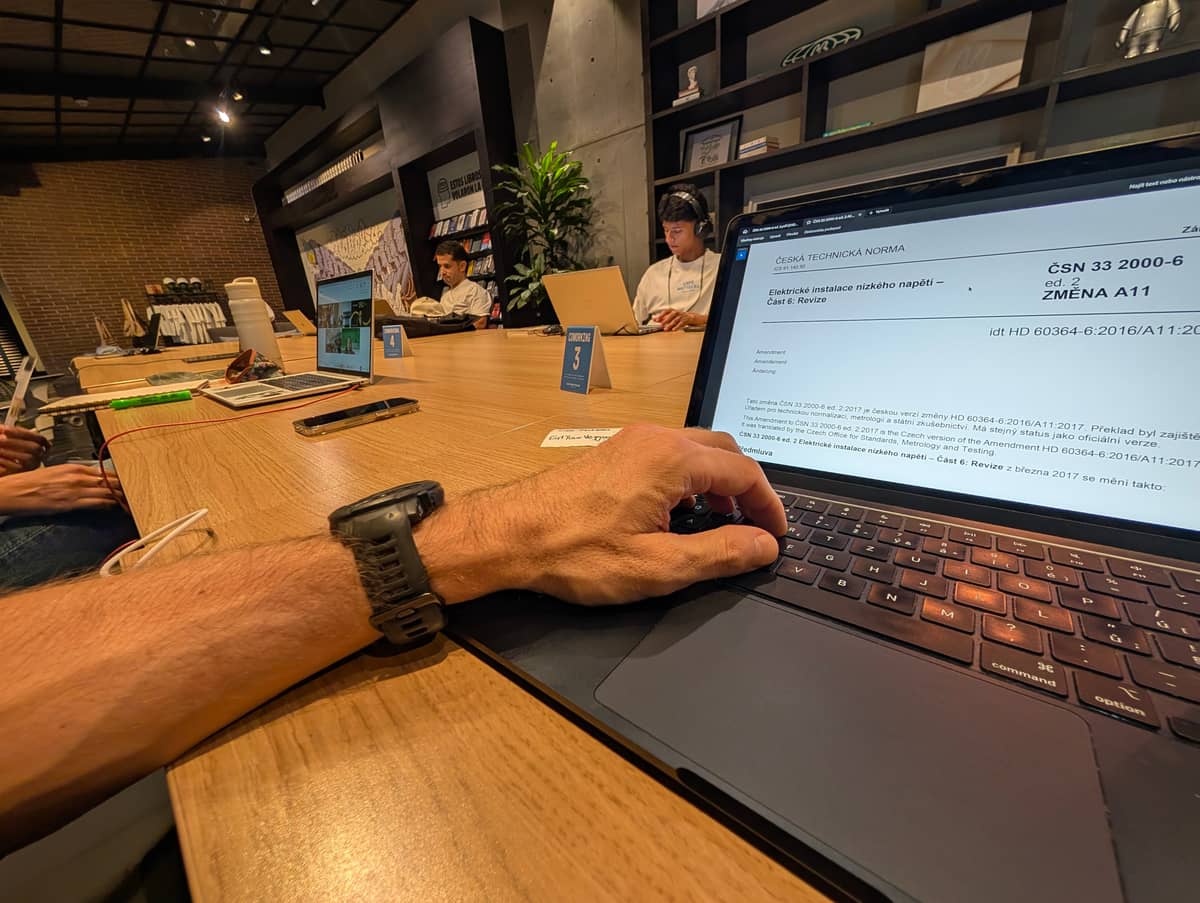
Café Mattelsa, two hours, one coffee and a kombucha. A Czech standard…
Café Mattelsa, two hours, one coffee and a kombucha. A Czech standard for electrical installations on the screen, a palm tree outside the window, people with laptops all around, and nobody making a…
7 September · Note
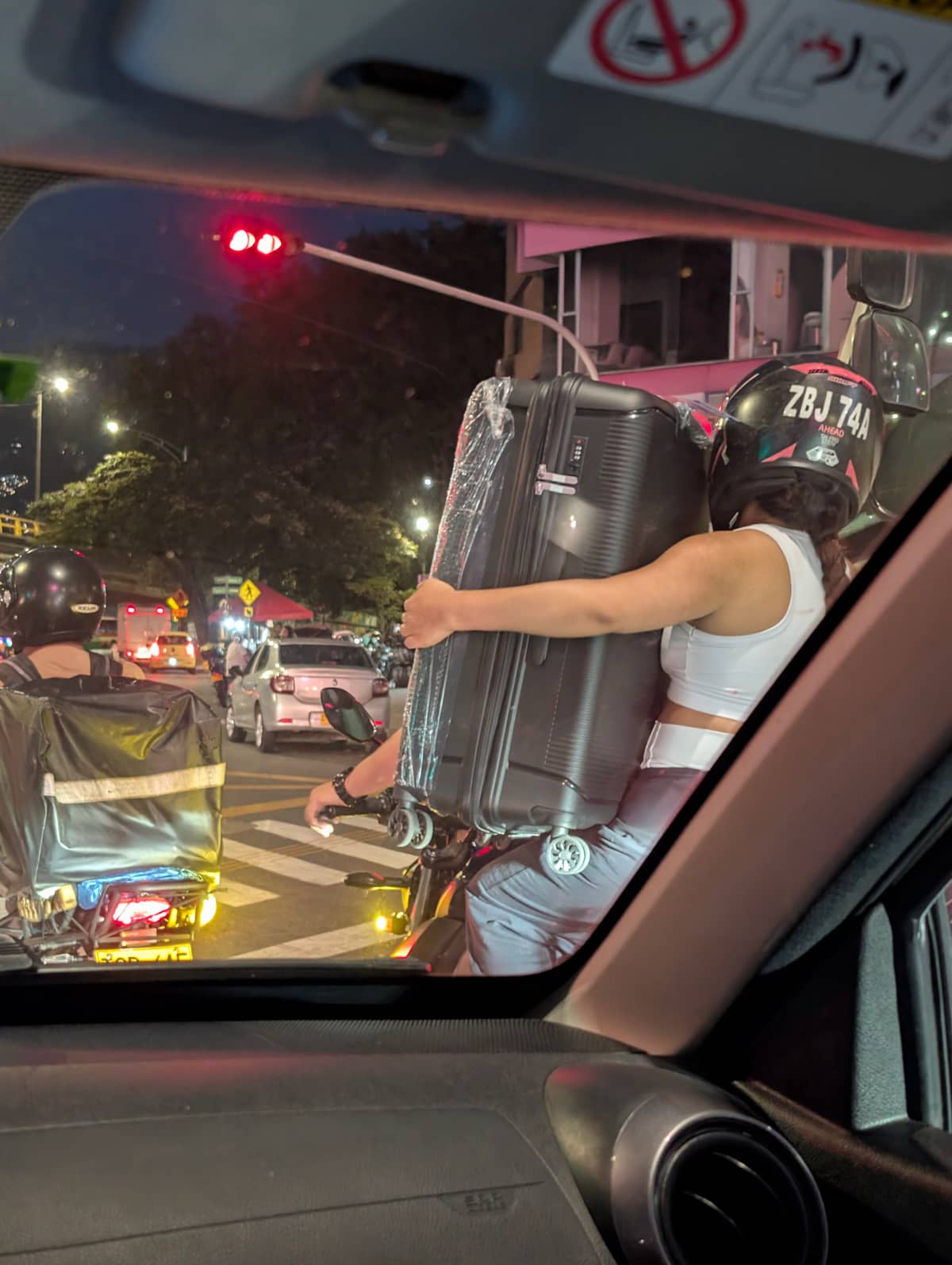
A pillion passenger on a motorbike carrying a large wheeled suitcase…
A pillion passenger on a motorbike carrying a large wheeled suitcase. One arm clamped around it, the other around the rider, knees against the tank, riding in traffic between the cars.
6 September · Article · Comuna 8, Villa Hermosa, Medellín
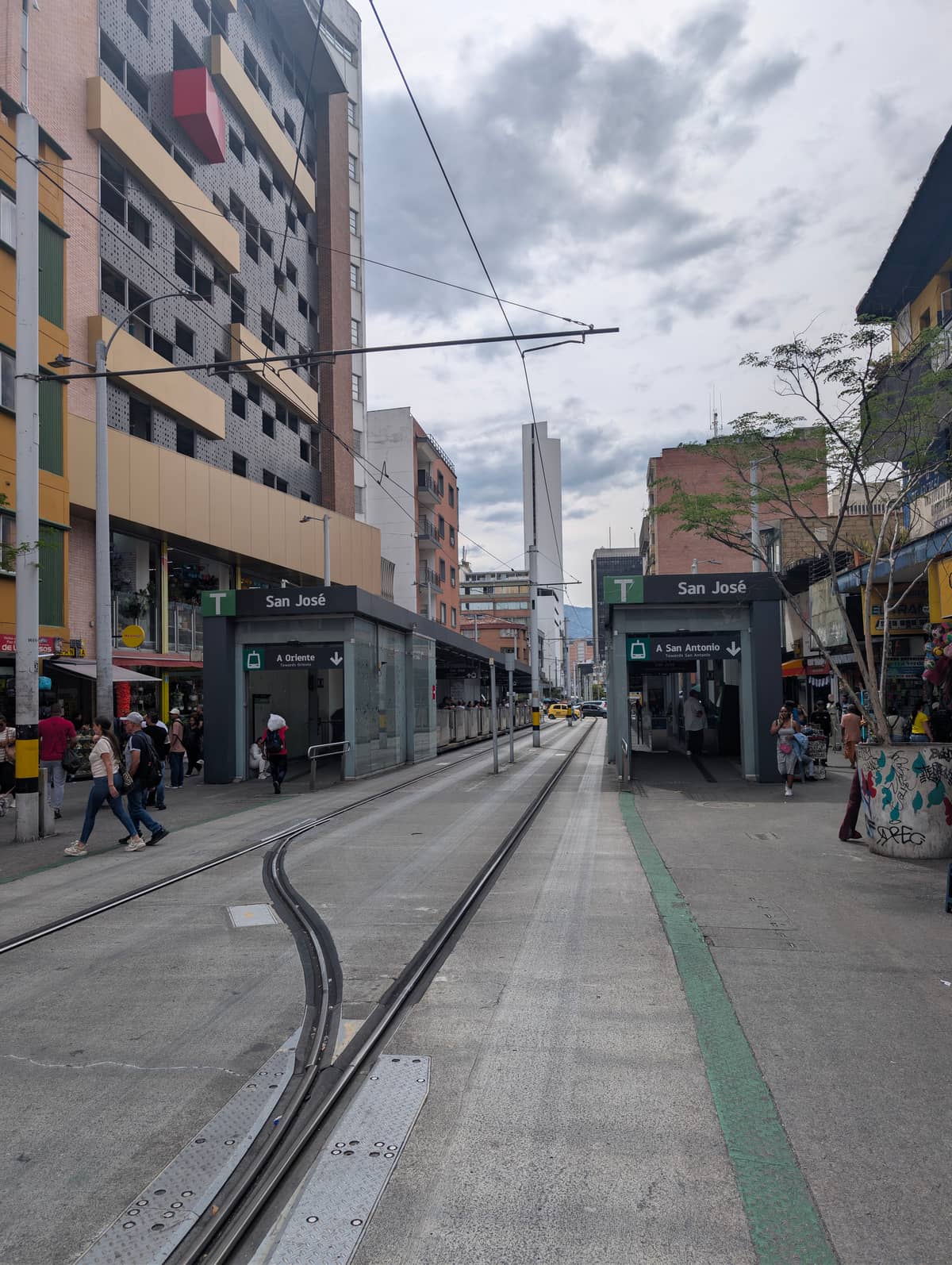
Up by cable car, down for an arepa
A tram on rubber tyres takes you from the centre to the edge of the city, and a cable car lifts you from there over the roofs of comuna 8. Back down there was an arepa festival, parakeets in a tree, a café in the house by the church, and a concert hall underground.
6 September · Article · La Candelaria, Medellín
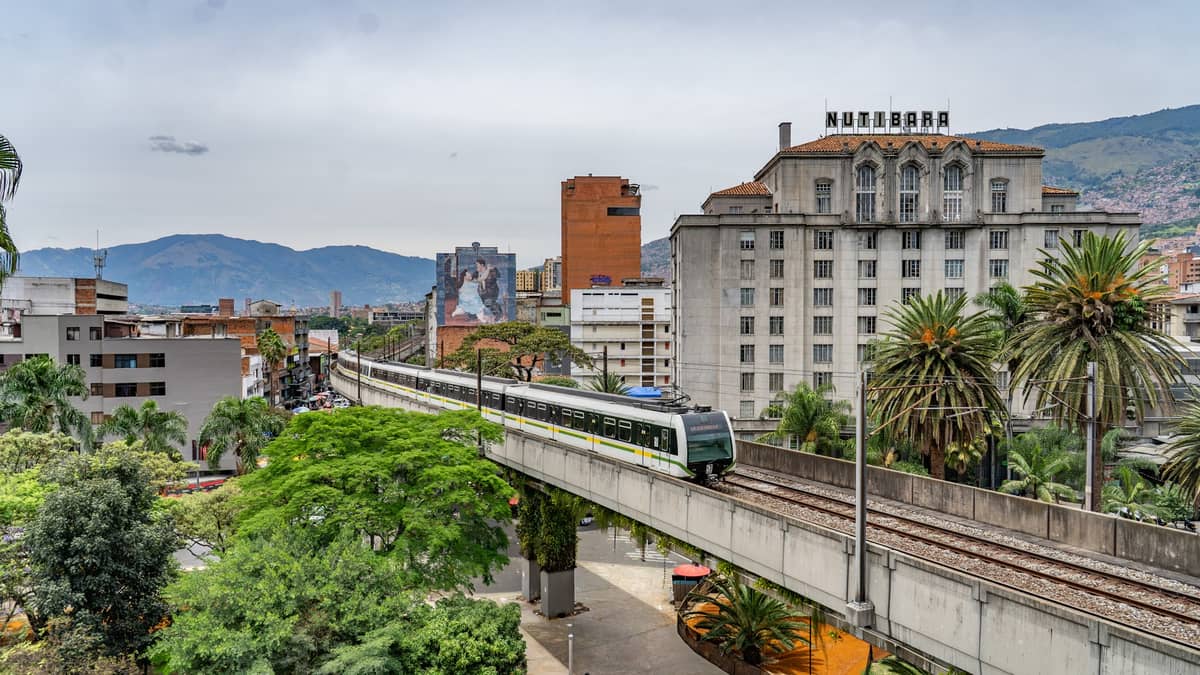
El centro: the day I finally saw the city
Every second person told me not to go into the centre of Medellín. I went by metro, cleaner than the one at home, and found a palace with a chequerboard facade, twenty three Botero sculptures, a cathedral made of a million bricks, and a market that has run since the seventies.
5 September · Note
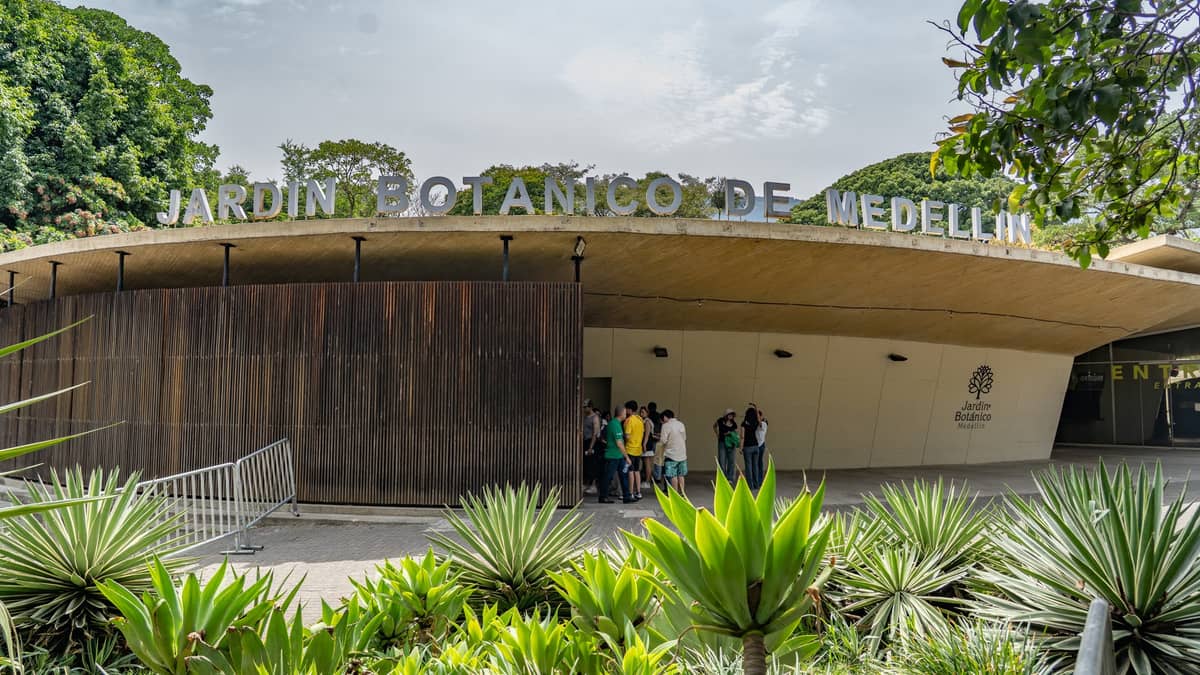
The botanical garden was closed. Not for a holiday or repairs: they…
The botanical garden was closed. Not for a holiday or repairs: they are building the Fiesta del Libro y la Cultura inside it, the city's book festival, in its twentieth year and running from 11 to 20…
4 September · Article · Comuna 8, Villa Hermosa, Medellín
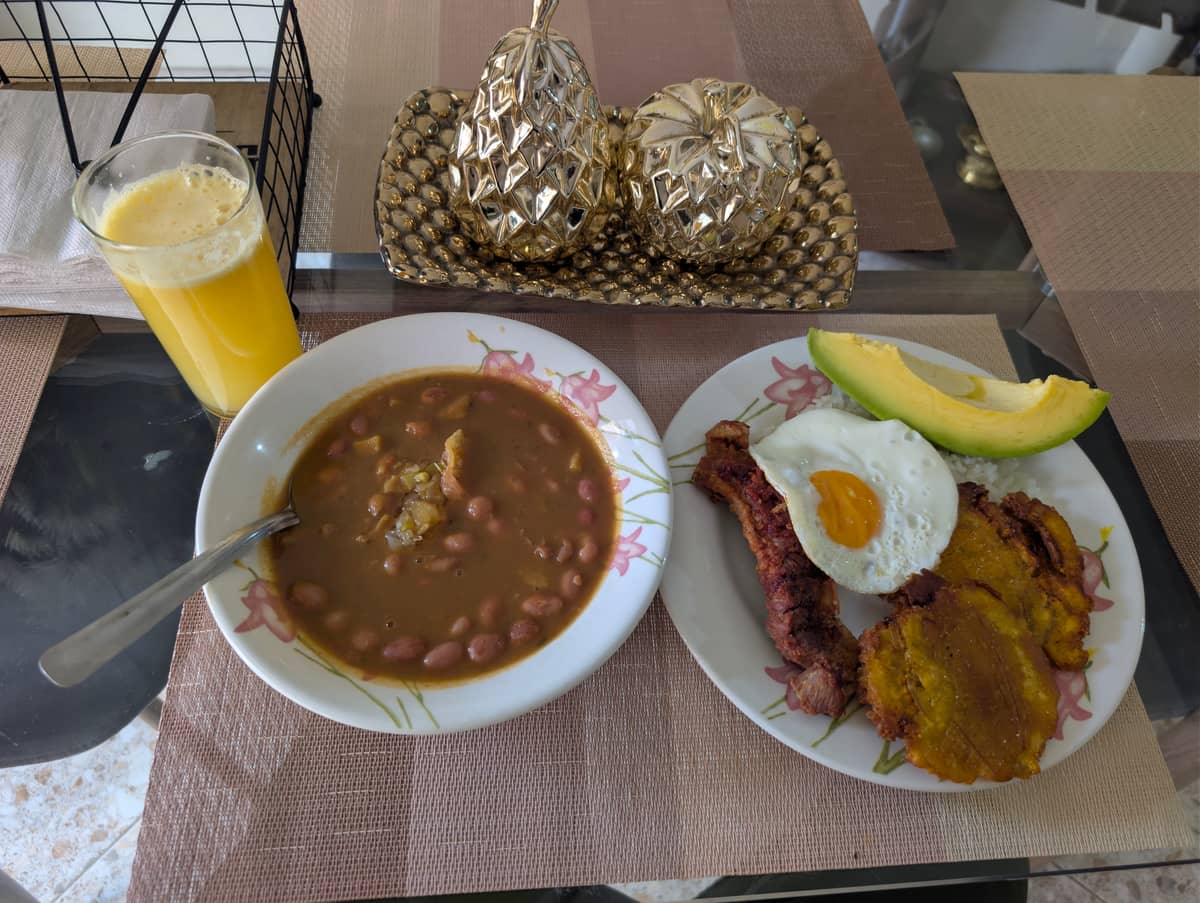
Villa Hermosa: lunch, a church and a market
Comuna 8 up close, not from the cable car. A home cooked bandeja paisa with chicharrón, the brick church of La Sagrada Familia, stalls on the pavement, and traffic that runs on eye contact. On the way back, a stop among the villas of Prado.
3 September · Article · El Poblado, Medellín
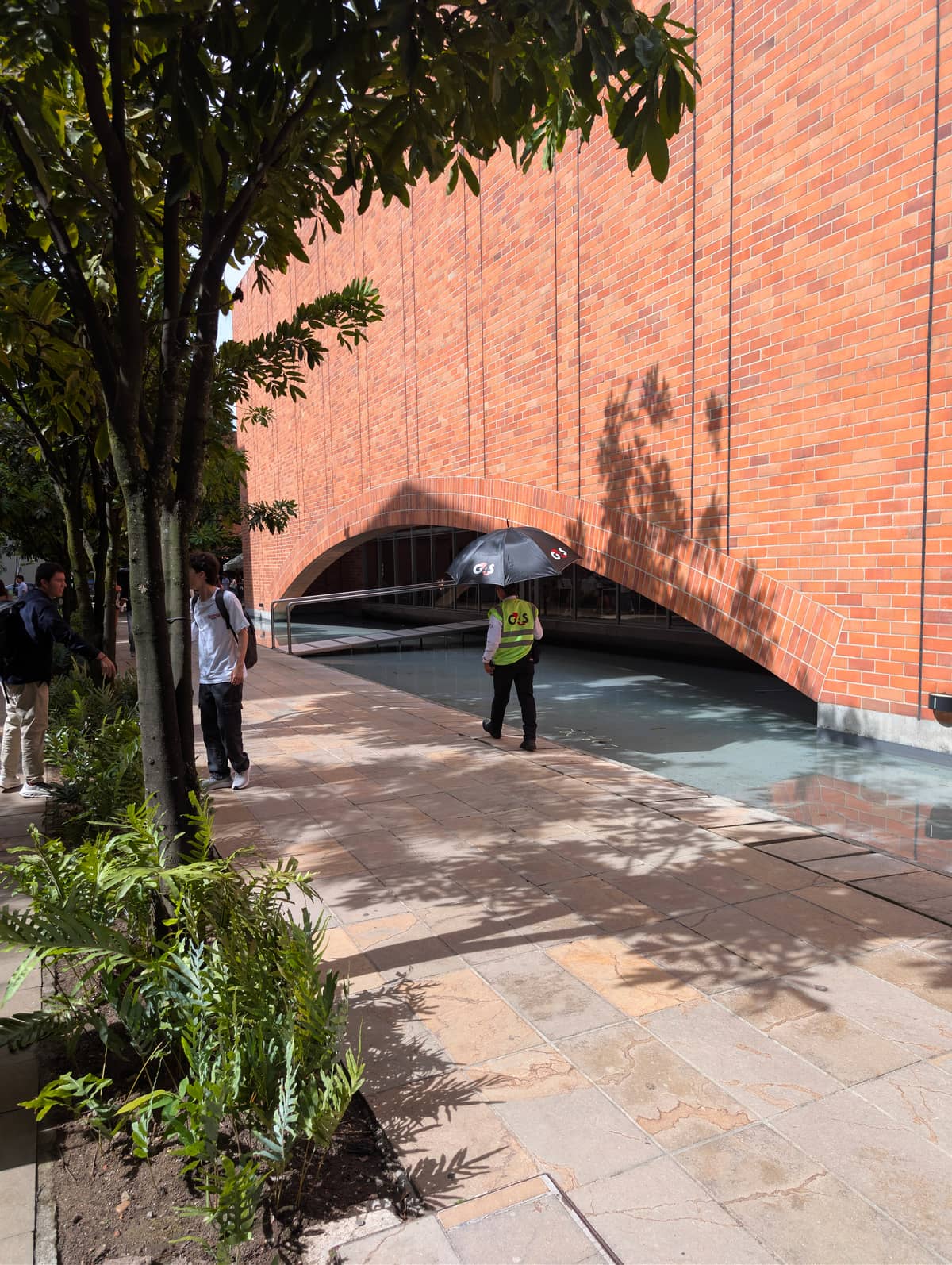
A university as a park and a cinema in a mall
The EAFIT campus, which you can simply walk into, with mango trees, water along brick walls and birds in the middle of the city. And in the evening, the oldest mall in El Poblado, the first in Colombia to have its own cinema.
3 September · Article · El Poblado, Medellín
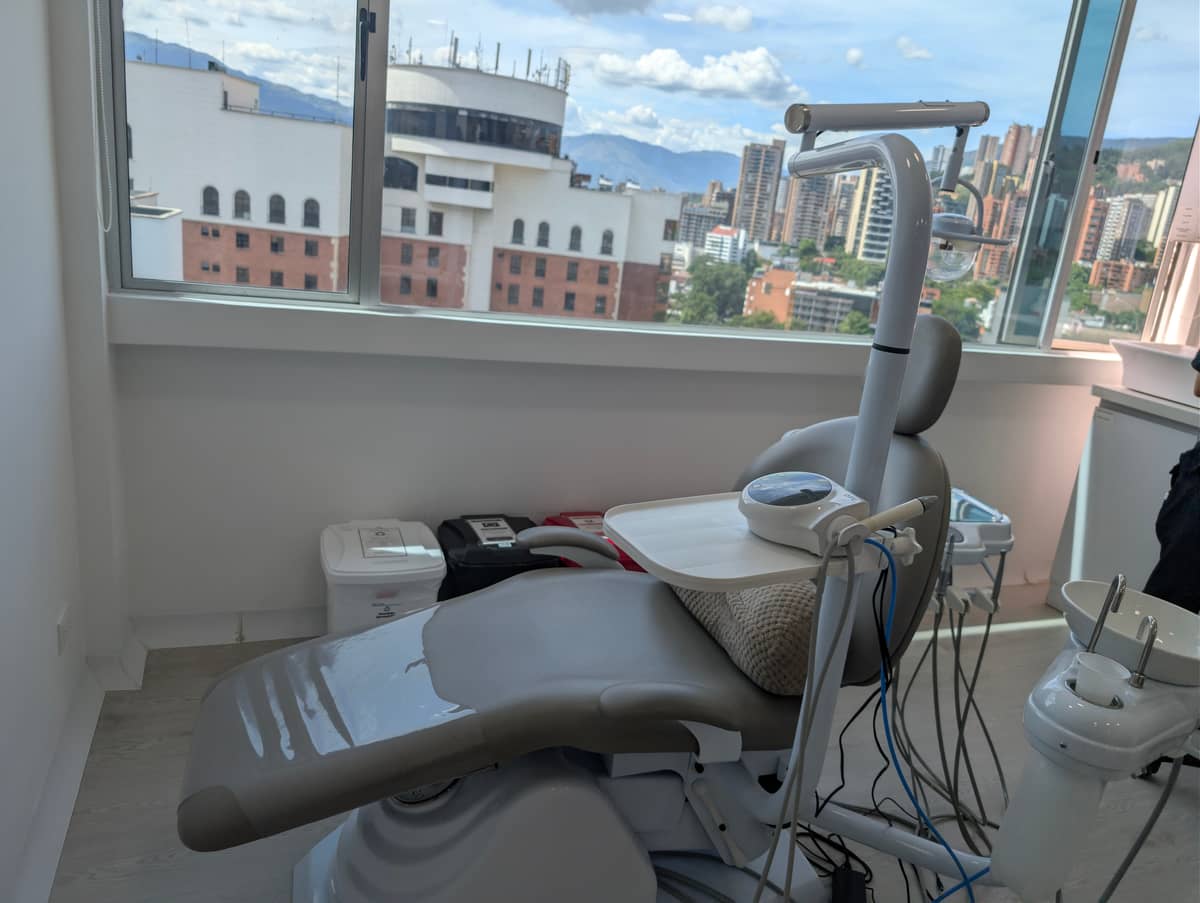
A dentist with a view
A tower full of consulting rooms in El Poblado, a restaurant on the ground floor, and a dentist's chair a metre from a glass wall with the whole Medellín valley behind it. What private care in Colombia looks like to a patient who arrived a month ago.
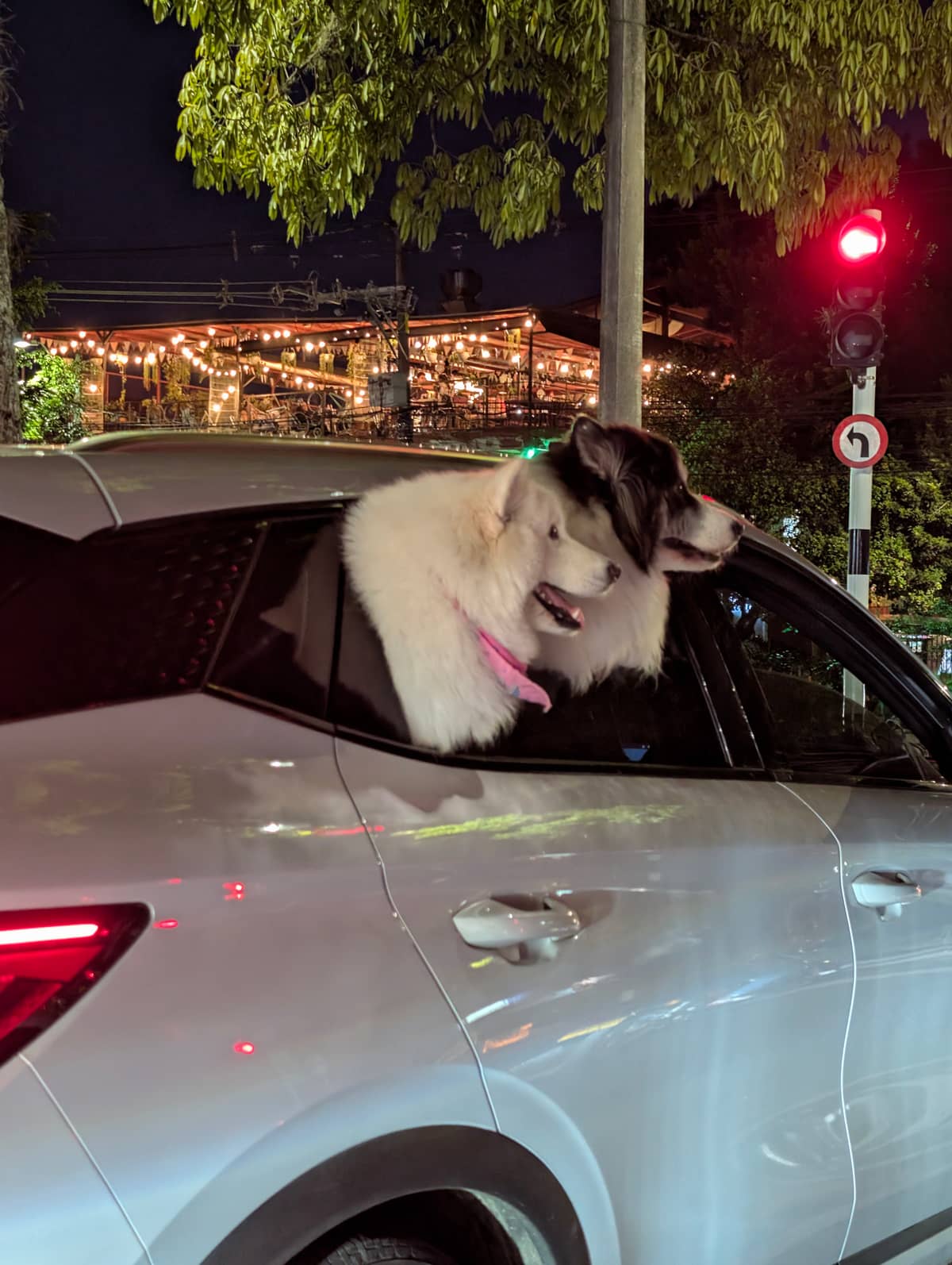
2 September · Note · Laureles, Medellín
2 September · Article · Laureles, Medellín
Laureles: a neighbourhood drawn in circles
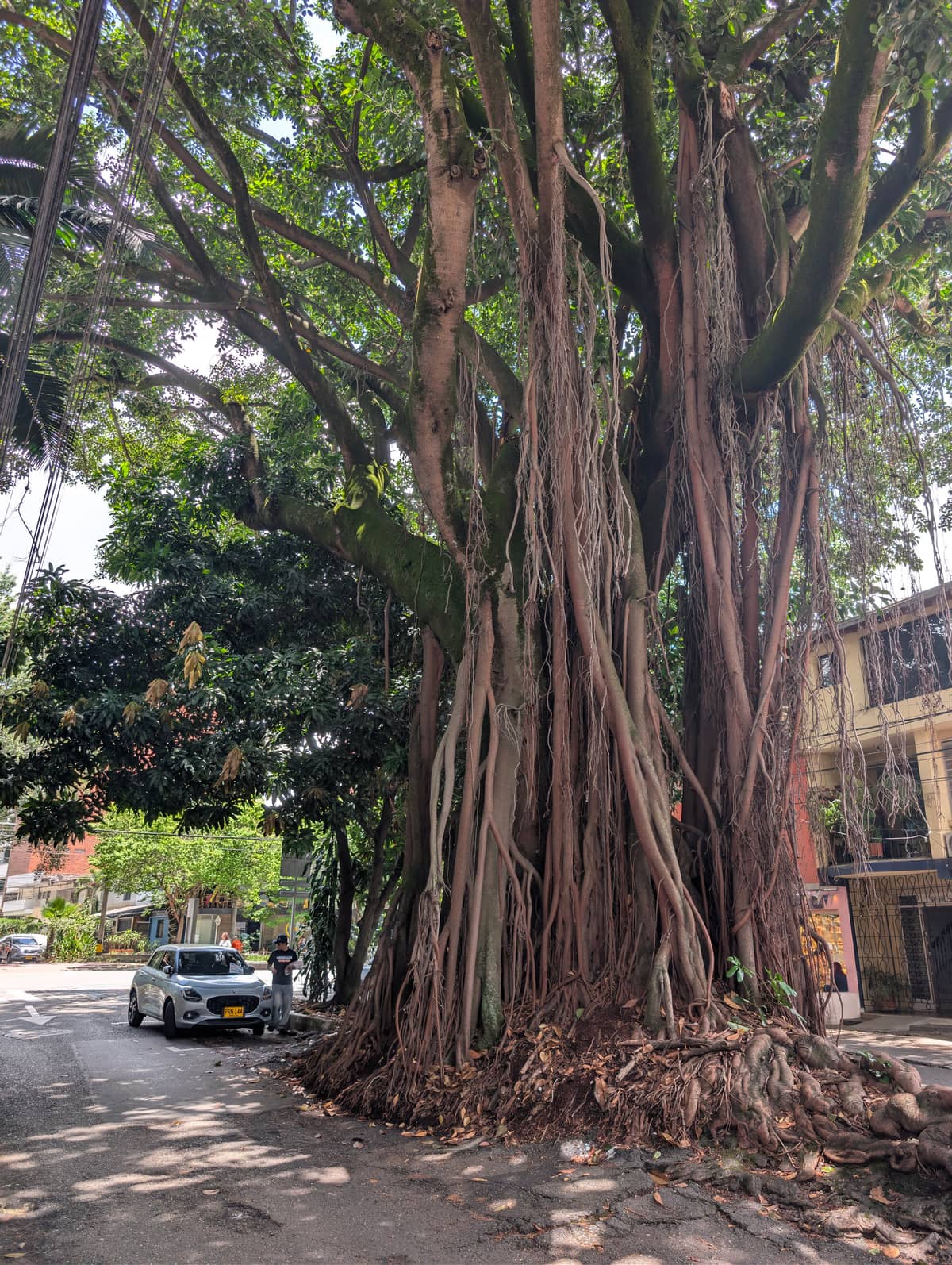
A garden city from 1940 with circular streets, fig trees across the whole road, and cafés you can work from. The neighbourhood Medellín recommends to itself, and the one Time Out called the best in the world.
August
2026
2 entries
31 August · Article · Conquistadores, Medellín
Where I live: Conquistadores
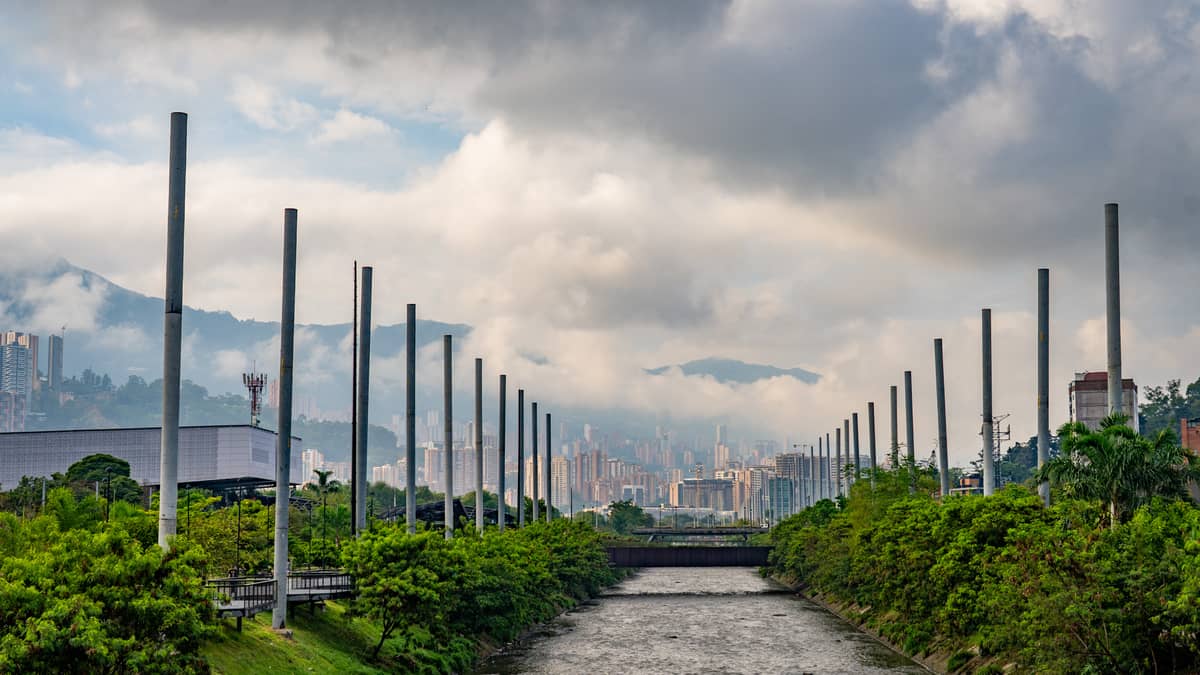
A neighbourhood between the river and Laureles that nobody writes about. Dogs on every corner and clean pavements, greenery that is not an accident, a bridge to the Barefoot Park, and seventies buildings among the palms.
26 August · Note
Traffic and driving
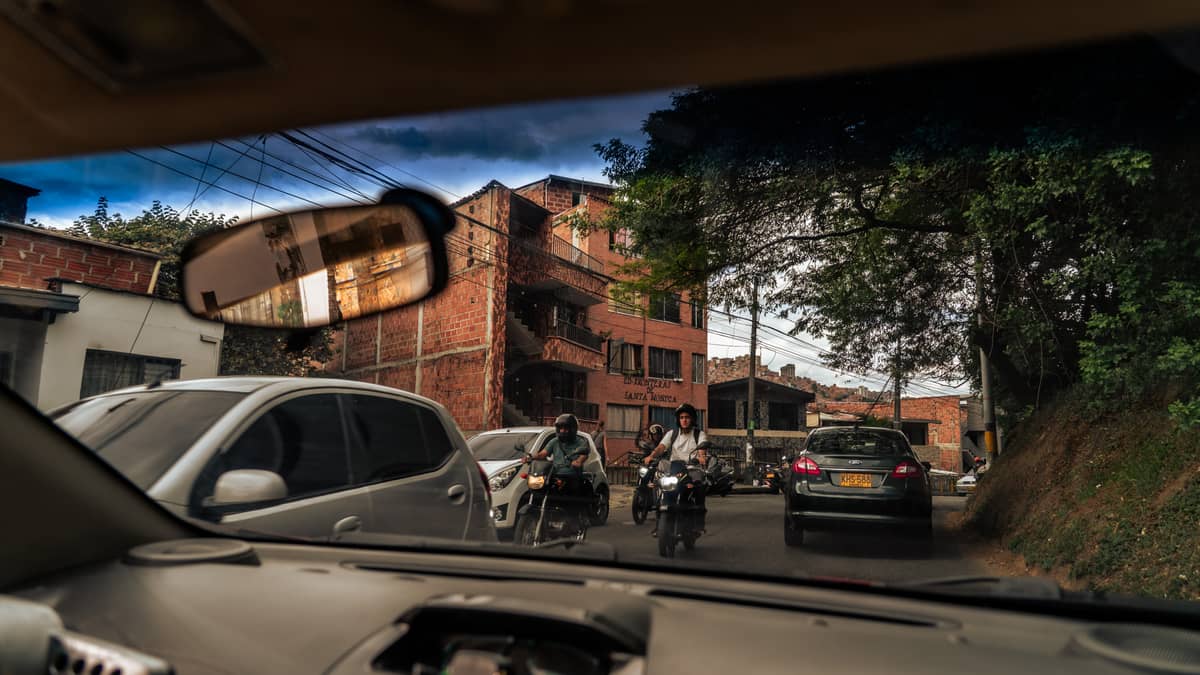
Have you driven around southern Italy, Rome, Naples or Sicily? Maybe a few Greek islands? Have you seen the traffic in Armenia, Turkey or Egypt? And did it seem insane by our standards?
Frequently asked
What is the cheapest way from the airport into Medellín?
The bus, at 20,000 pesos, or 14,000 with a Cívica card. It runs between José María Córdova airport and the city, stopping at San Diego and the Hotel Nutibara. A taxi costs a flat 132,000 pesos on the 2026 official tariff, roughly nine times more.
Do I need a Cívica card for a one week stay?
It pays for itself from the second day. A bearer card is sold at any station, a ride with it costs 3,820 instead of 4,400 pesos, and it also pays for the airport bus. The registered version only matters for discounts and for blocking it if you lose it.
Which terminal do buses to Guatapé and Jardín leave from?
Guatapé leaves from the Terminal del Norte, by Caribe metro station, roughly every half hour for 20,000 pesos. Jardín leaves from the Terminal del Sur by Olaya Herrera airport; three hours and around 25,000 pesos.
Is Uber legal in Colombia?
Formally it is a grey area; in practice the whole city uses it, and after dark it is the sensible way home. If the driver asks you to sit in the front, that is not politeness but caution.
Is renting a car in Medellín worth it?
Not in the city. The metro, Uber and buses cover everything and parking downtown is a punishment. For trips around Antioquia yes, but take an SUV, remember pico y placa, the peak hour ban by last digit of the plate, and do not drive at night.
How long does it take to reach the airport from Medellín?
Forty to sixty minutes depending on traffic, uphill through Rionegro. Allow two hours including slack: the road can jam, and a flight missed to save half an hour is an expensive saving.
Questions and answers
What do you want to ask?
Ask anything about this topic. I answer, and the answer stays here so the next person who wonders the same finds it.