Practically · Food and groceries
Where do you shop, and what does food cost?
Fruit at the market, dry goods at a D1 or Ara discounter, one big monthly run to Éxito. The measured basket came to 147,771 pesos in Medellín in 2026 and lunch in a local restaurant costs 15,000 to 25,000. Anything imported is expensive, and a libra means half a kilo.
Checked 1 September 2026
Food here is cheap if you shop like a local, and surprisingly expensive if you try to buy what you ate at home. The gap between the two is tens of percent on the same basket.
This is about where things are bought, what they cost, and what to stop looking for.
Four kinds of shop and what each is for
Hard discounters: D1 and Ara. Small shops on every corner, own brands, a few hundred lines and the lowest prices in the country. On basics like rice, pasta, oil or eggs the gap against a big chain runs twenty to thirty percent. This is where you buy dry goods and household stuff.
Big chains: Éxito, Jumbo, Olímpica. Everything under one roof, including imports, electronics and a meat counter. Dearer, but the only place for things Europeans treat as ordinary: hard cheese, decent coffee to brew at home (yes, really), olive oil, wholegrain bread.
Carulla is the premium arm of Éxito. Nicer, pricier, and everywhere in Poblado. Shop there out of habit and you pay nearly double the discounter.
Markets. The Plaza Minorista downtown is the wholesale market with the lowest fruit and vegetable prices in the city. Sunday mercados campesinos in the parks cost more than the minorista and are far more pleasant. Go in the morning, with cash and your own bag.
The corner tienda. A small shop for one beer, three eggs and bread. Dearer per item, and open when nothing else is.
What a week of groceries costs
The best available yardstick is the basic basket, 23 staple items measured monthly in seven cities. In Medellín it came to 147,771 pesos in 2026, among the cheapest of the cities compared; the national average was 148,567 and it fell 1.8% year on year.
Translated into practice for one person who cooks at home and skips imports:
- a weekly shop of roughly 100,000 to 150,000 pesos, with fruit and vegetables from the market and the rest from a discounter
- around 500,000 to 700,000 a month, more with meat and a few bottles of wine
- lunch out at 15,000 to 25,000 pesos for a menú del día: soup, a main and a juice
The prices I record myself live in the price log with a date and a place, not in an article. An article goes stale; the log does not.
What is cheap and what is not
Cheap: tropical fruit, bananas, avocado, eggs, chicken, rice, beans, panela, coffee at the market, fresh juices, lunch in a local restaurant.
Middling: beef, fish away from the coast, milk, yoghurt, beer from a shop.
Expensive: hard cheese, butter, European style charcuterie, wholegrain bread, muesli, olive oil, wine, imported chocolate, anything labelled importado. Alcohol other than aguardiente and beer is dear, because it is heavily taxed.
The fastest way to double your spending here is trying to eat the way you did at home. The second fastest is buying everything at Carulla.
Weights, units and prices
- A libra is half a kilo, and markets and counters price in it. A price "per pound" therefore looks half as attractive as it is.
- Prices are quoted in thousands. Cinco mil is five thousand pesos, about a euro.
- You do not haggle over a few hundred pesos, but on a bigger purchase you can ask for a ñapa, a little extra thrown in.
- Cards work anywhere with a counter and a till. At markets, stalls and street food it is cash, or Bre-B, the QR payment everyone uses.
Fruit you cannot buy at home
This is the part that makes the market worth visiting even if you do not cook:
- Guanábana, a huge green spiky thing with creamy flesh; best as a juice with milk.
- Lulo, sour and yellow-green, makes the most refreshing drink I know.
- Maracuyá and granadilla are relatives: the first sour, for juice, the second sweet, eaten with a spoon.
- Tomate de árbol, the tamarillo, tastes like a tomato that decided to be a fruit.
- Pitahaya, the yellow dragon fruit, works reliably on your digestion; one a day is plenty.
- Uchuva, the physalis, is sold by the kilo and ends up in yoghurt.
- Mangostán, zapote, borojó, mamoncillo are the next level; buy them from a seller who will tell you how to eat them.
Eating out without overpaying
Menú del día is the best value there is: soup, a main with rice, beans and meat, a juice, sometimes dessert, for 15,000 to 25,000 pesos. Served at midday and gone by three.
Corrientazo is the same word for the same meal in an even plainer place.
Restaurants in Poblado cost three times that and the food tends to be international. Nothing wrong with it, it is just not the price of Colombia.
Delivery apps charge more than the restaurant does, plus a delivery fee. Convenient, as long as you know you are paying a markup twice.
What I would tell myself after a year of shopping
- Split the shop across three places. Fruit and vegetables at the market, dry goods at D1 or Ara, one big monthly run to Éxito for what the others do not carry.
- Do not buy imports out of habit. Most of what you miss has a cheaper and better local equivalent.
- Learn three local staples. Panela instead of sugar, arracacha instead of potatoes, plátano as a side. Cheap, everywhere, and good.
- Take your own bag and small notes to the market. Very few sellers can change a fifty thousand peso note.
- Write your prices down. After three months you will see where the money actually goes, and it will surprise you.
What it costs
All prices- Arroz sofrito with prawns per a set lunch68 000 COPabout 21 USD10 September
- Grilled tilapia per a set lunch56 000 COPabout 18 USD10 September
- Ginger lemonade per a glass9 000 COPabout 3 USD10 September
- Agraz per a 250 g punnet15 900 COPabout 5 USD10 September
- Gold pineapple per 500 g3 100 COPabout 1 USD10 September
- Hass avocado per 500 g5 750 COPabout 2 USD10 September
- Large avocado per a piece6 400 COPabout 2 USD10 September
- Bacardí Añejo per a 700 ml bottle67 200 COPabout 21 USD10 September
- Bananas per 500 g1 740 COPabout 1 USD10 September
- Blueberries per a 125 g punnet7 760 COPabout 2 USD10 September
- Potatoes (papa capira) per 500 g2 210 COPabout 1 USD10 September
- Broccoli per 500 g4 420 COPabout 1 USD10 September
What I wrote about it
September
2026
17 entries
10 September · Article
Driving in Medellín: the day of the week your car stays home
The last digit of your number plate keeps the car off the streets one day a week, from five in the morning to eight in the evening, across the whole valley. Plus the licence that expires after six months, a fine over six hundred thousand pesos, and road death figures that make me uneasy.
10 September · Article · La Candelaria, Medellín
No water after eight in the evening. What is going on in Medellín
Three hundred thousand people in six communes have had water every other day since late August. The city broke its temperature records in May, Ideam expects a strong El Niño into March, and the grid operator warns that power may not stretch through December. What the rule says, why it landed on the hillsides, and what it means for a trip.
10 September · Article · La Casa del Alimento, Medellín
A lunch where the meat dries on a washing line
A Colombian lunch is not one dish, it is a whole set for one price. Two mains, two desserts, two coffees and a lemonade came to 146,000 pesos. And in that restaurant's yard, beef hangs drying.

10 September · Article · Conquistadores, Medellín
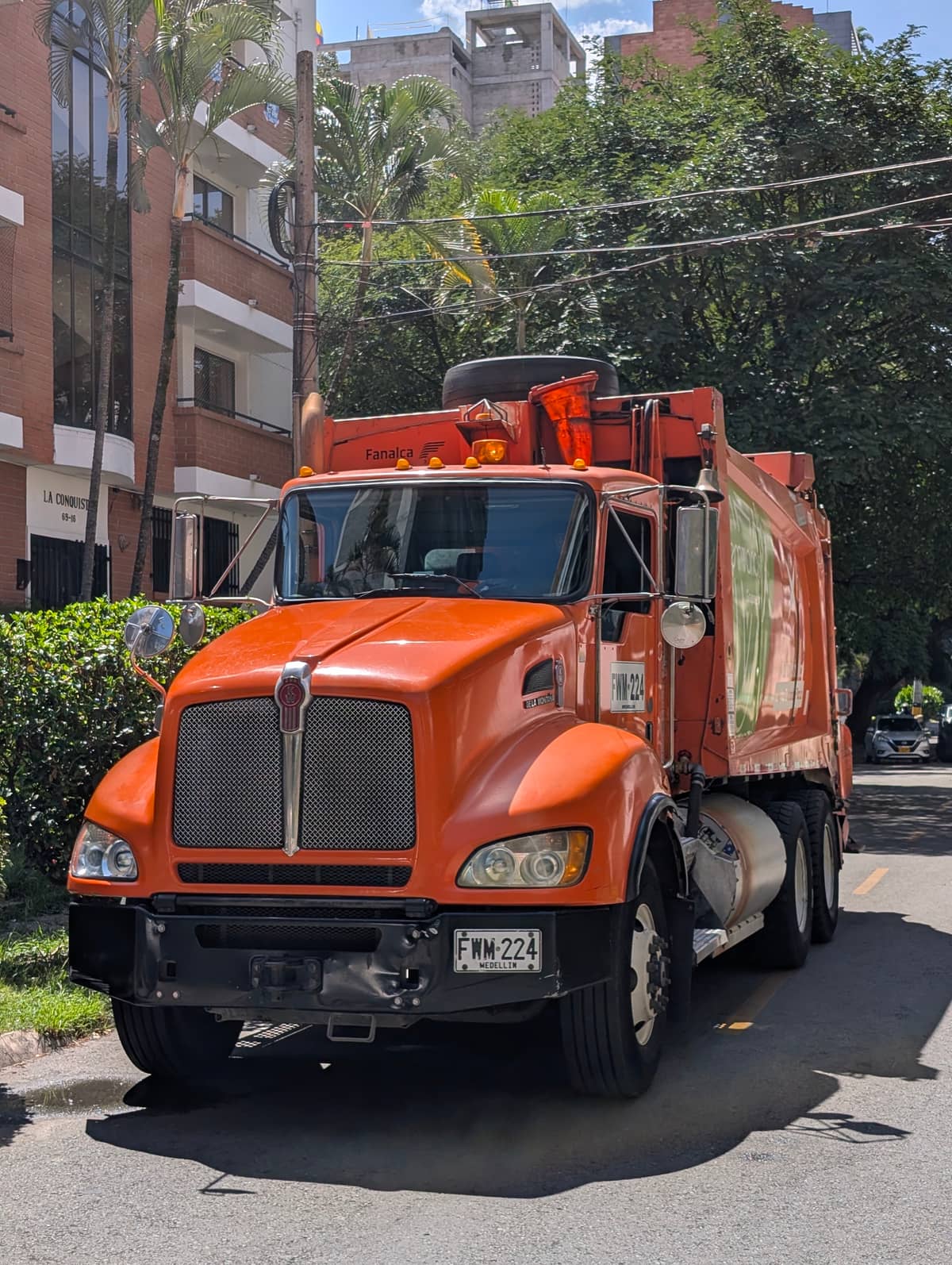
The bin men of Medellín
A garbage truck with a slogan saying this city is a little silver cup. Who runs it, where the waste goes, why the landfill has eight years left, and how the people who open bags on the street come to be paid out of the water bill.
10 September · Article · Comuna 8, Villa Hermosa, Medellín
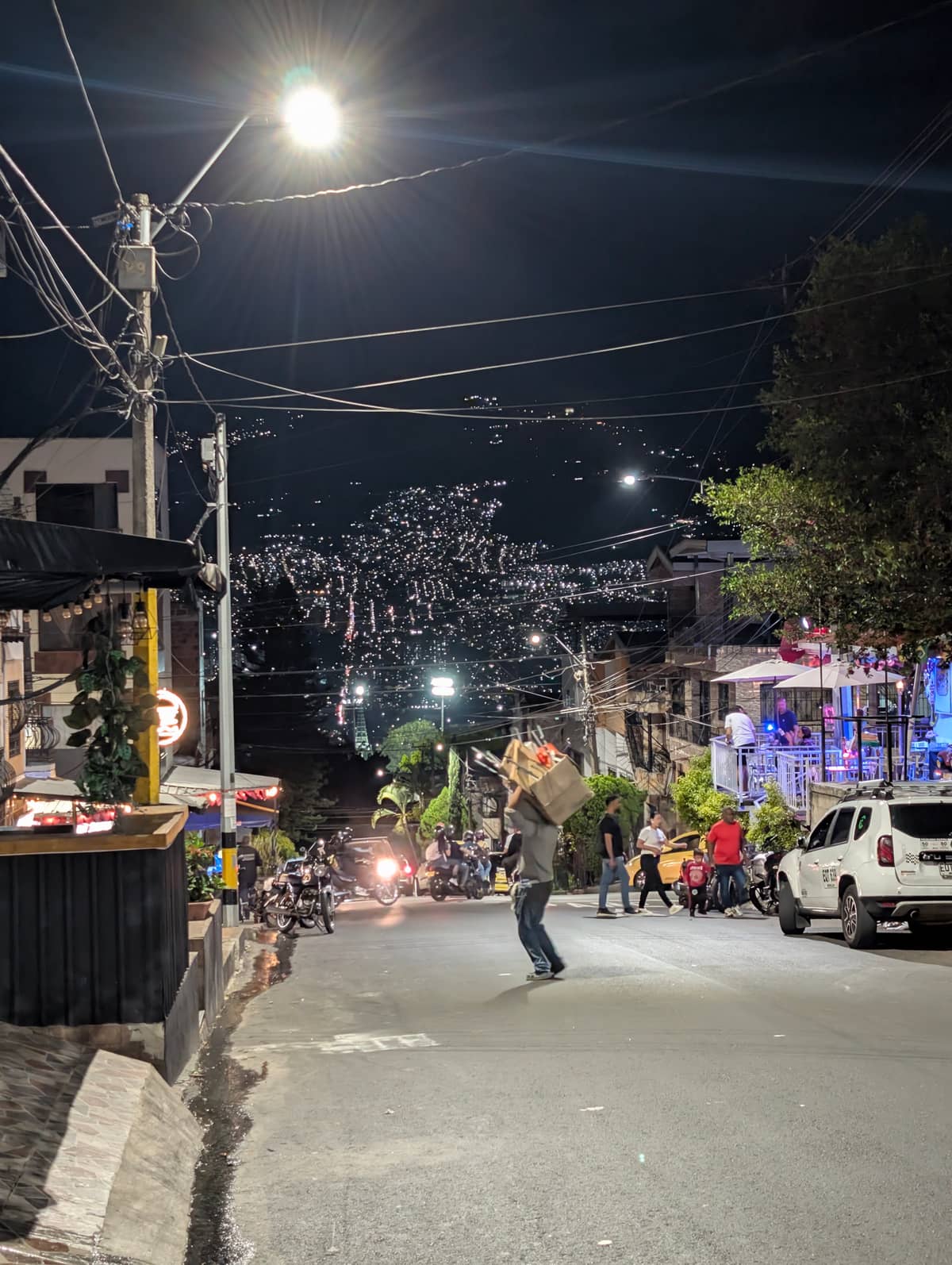
Villa Hermosa after dark
A house with almost no windows, hot rice pudding with cheese, and a slope full of lights right up to the ridge. And the only thing that made me uneasy was not what someone who has read about comuna 8 online would expect.
8 September · Article · El Poblado, Medellín
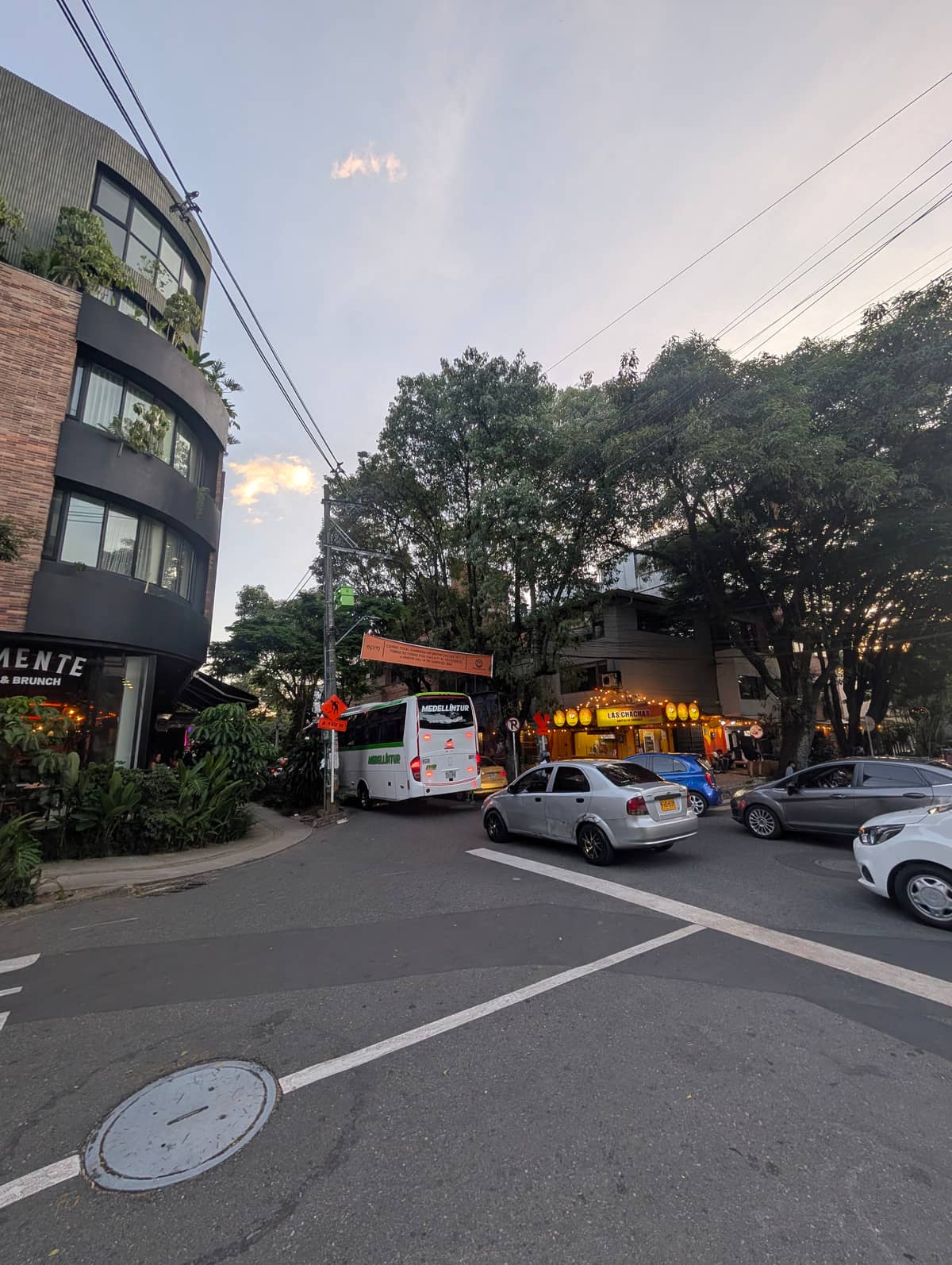
El Poblado after dark
The district where Medellín was founded in 1616 and where almost everybody who flies into the city now sleeps. Provenza with lights in the trees, the singer Karol G's restaurant, a road sign saying tourist zone, and a bill that sums it all up.
8 September · Note · La Candelaria, Medellín
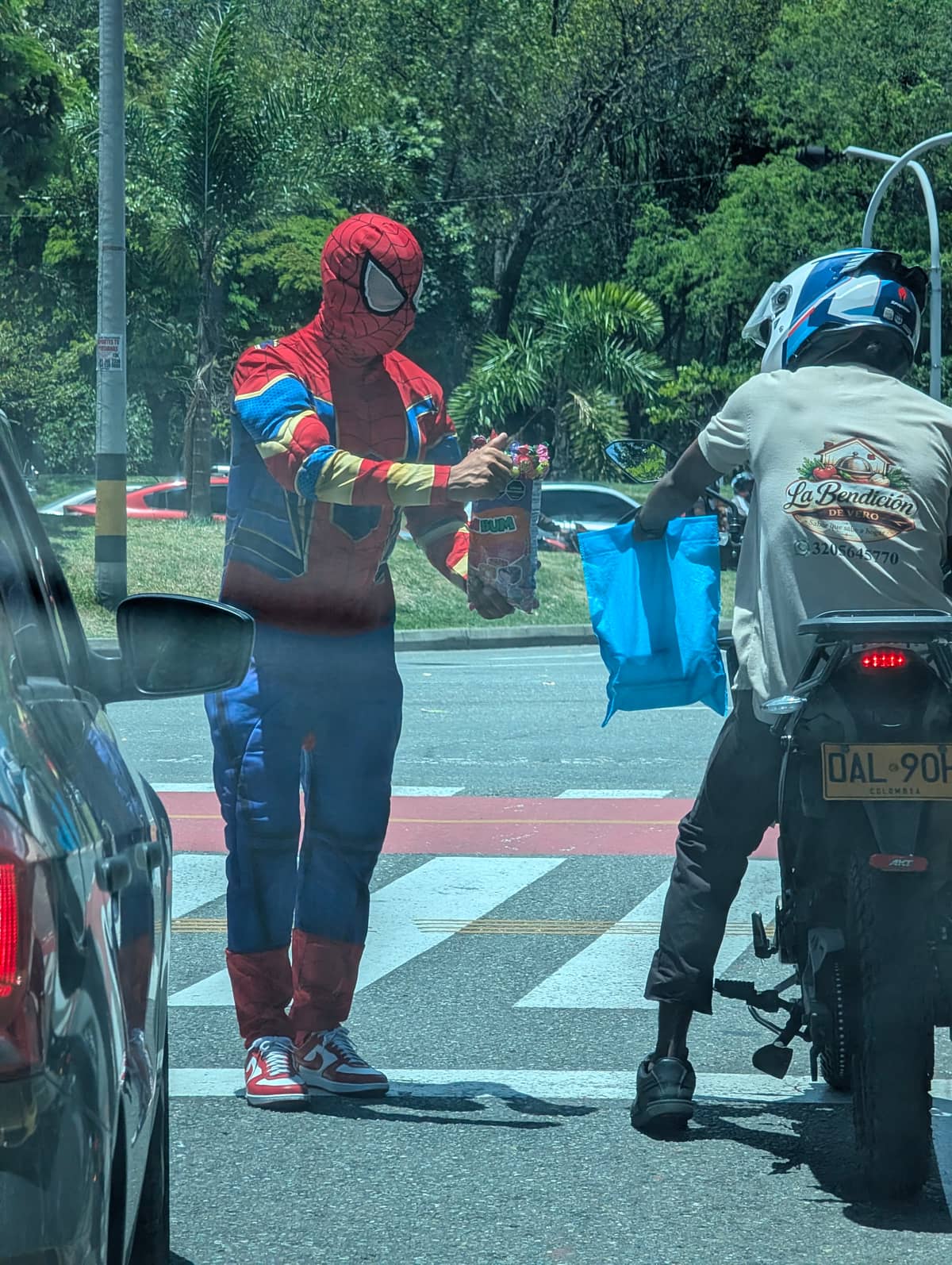
At a junction on Carrera 55, Spider-Man stands at a red light selling…
At a junction on Carrera 55, Spider-Man stands at a red light selling sweets between the cars. A motorbike rider behind him, a water stall beside him.
8 September · Note · Café Mattelsa, Medellín
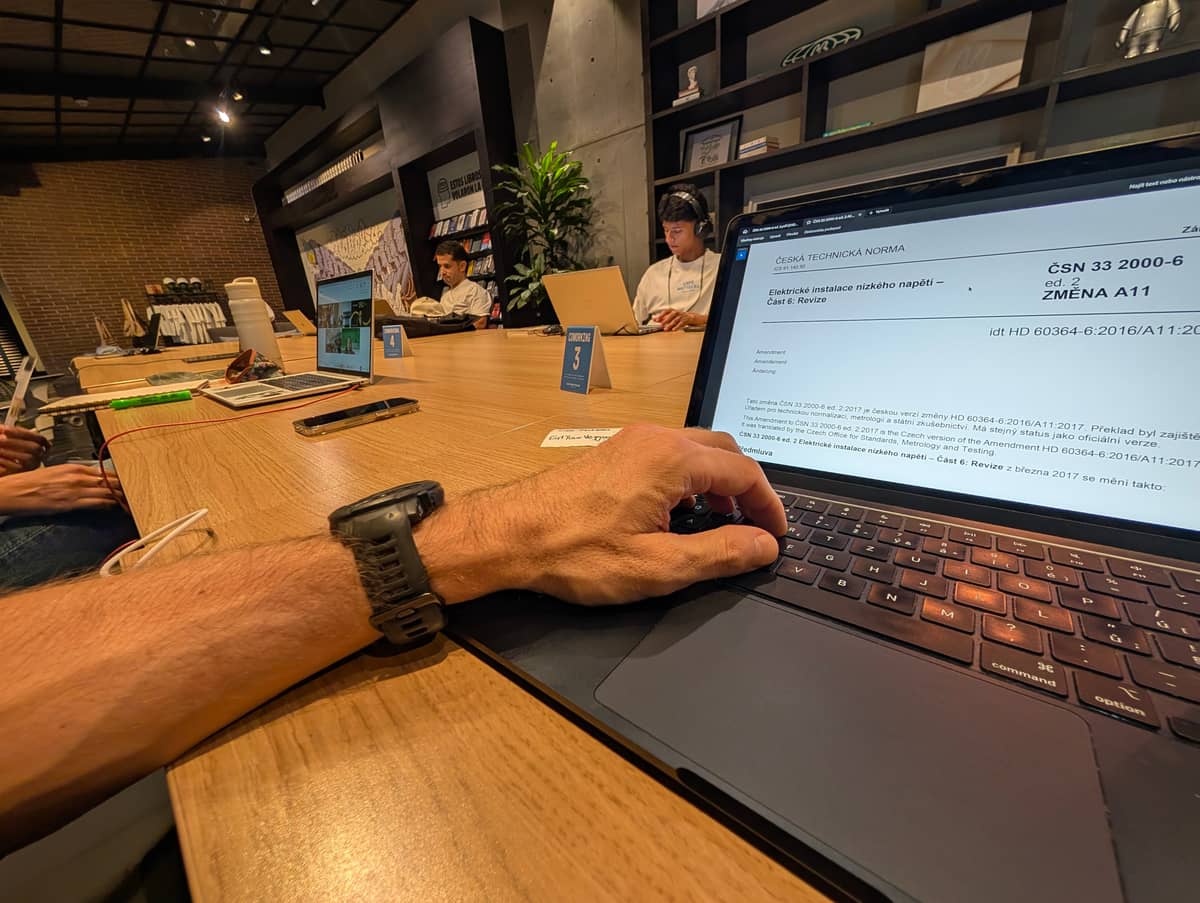
Café Mattelsa, two hours, one coffee and a kombucha. A Czech standard…
Café Mattelsa, two hours, one coffee and a kombucha. A Czech standard for electrical installations on the screen, a palm tree outside the window, people with laptops all around, and nobody making a…
7 September · Note
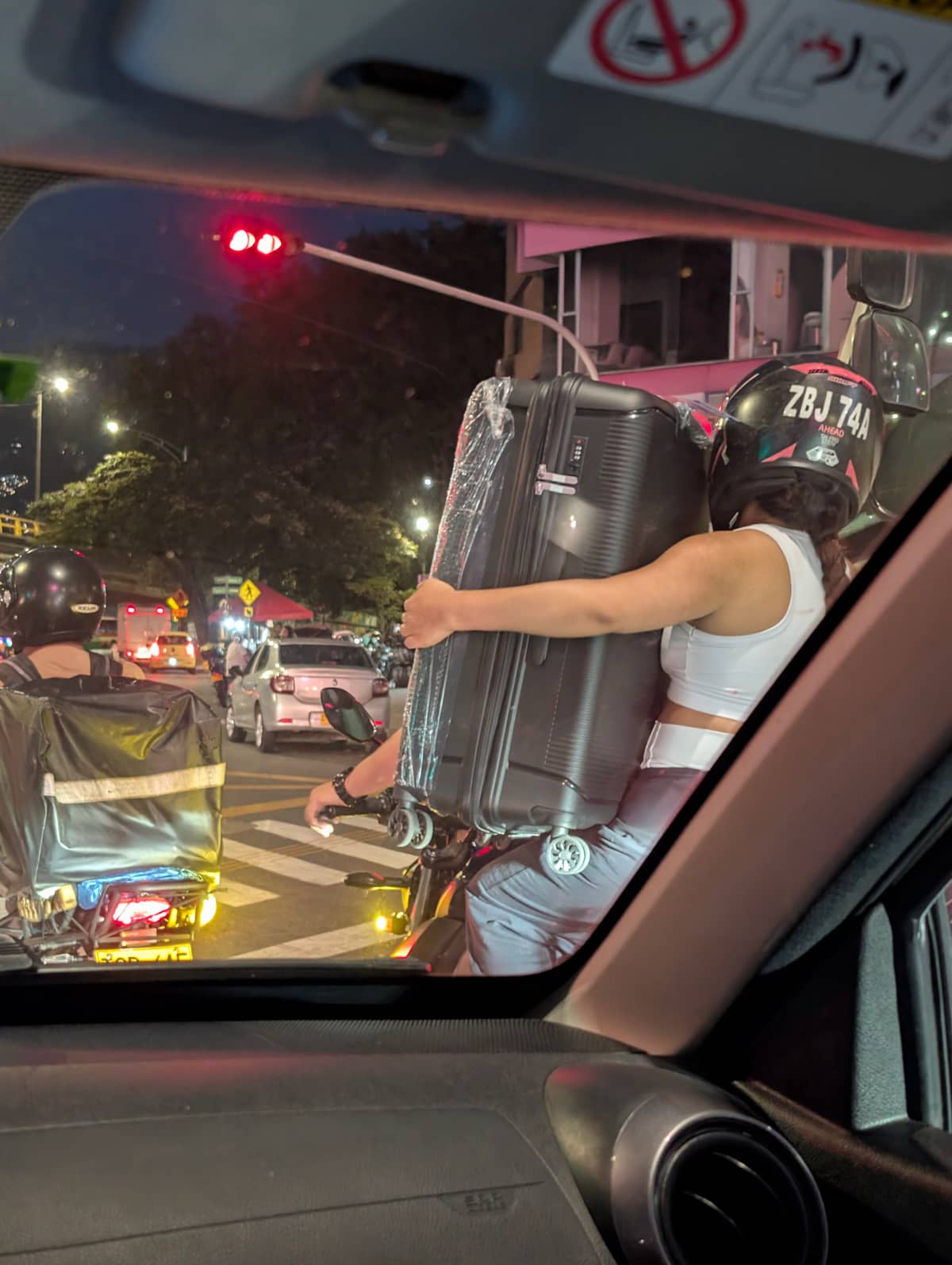
A pillion passenger on a motorbike carrying a large wheeled suitcase…
A pillion passenger on a motorbike carrying a large wheeled suitcase. One arm clamped around it, the other around the rider, knees against the tank, riding in traffic between the cars.
6 September · Article · Comuna 8, Villa Hermosa, Medellín
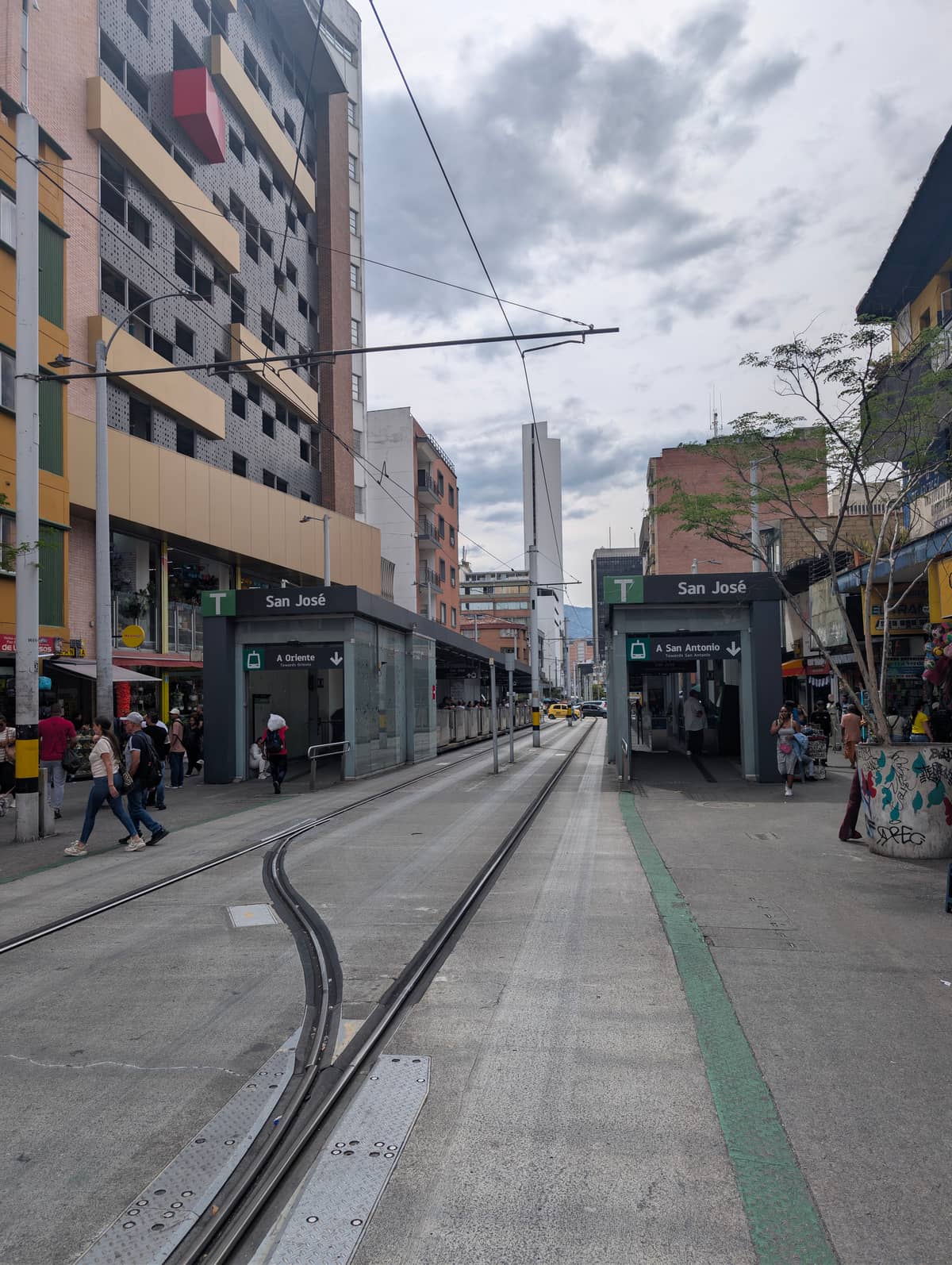
Up by cable car, down for an arepa
A tram on rubber tyres takes you from the centre to the edge of the city, and a cable car lifts you from there over the roofs of comuna 8. Back down there was an arepa festival, parakeets in a tree, a café in the house by the church, and a concert hall underground.
6 September · Article · La Candelaria, Medellín
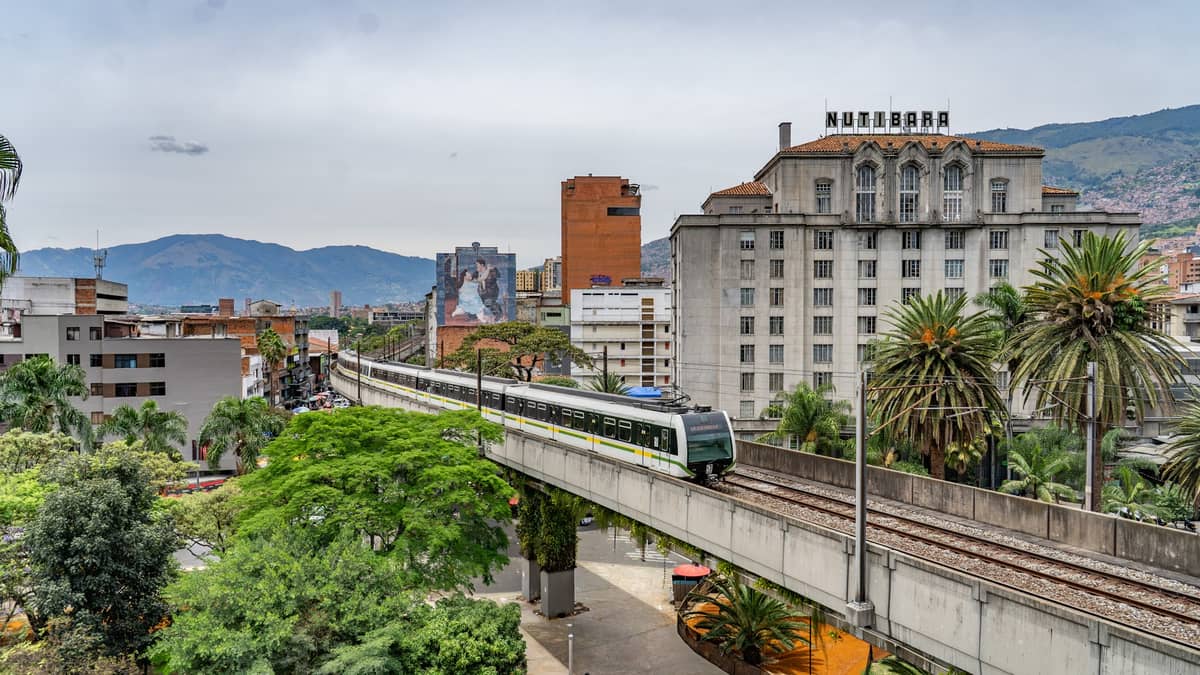
El centro: the day I finally saw the city
Every second person told me not to go into the centre of Medellín. I went by metro, cleaner than the one at home, and found a palace with a chequerboard facade, twenty three Botero sculptures, a cathedral made of a million bricks, and a market that has run since the seventies.
5 September · Note
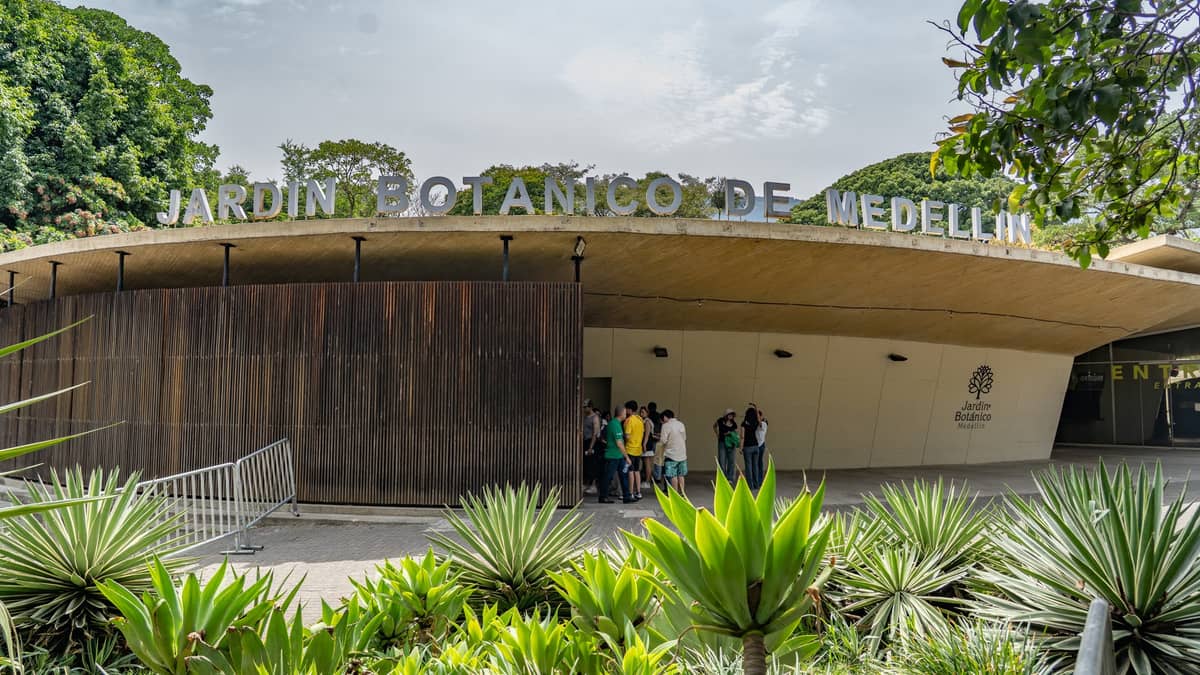
The botanical garden was closed. Not for a holiday or repairs: they…
The botanical garden was closed. Not for a holiday or repairs: they are building the Fiesta del Libro y la Cultura inside it, the city's book festival, in its twentieth year and running from 11 to 20…
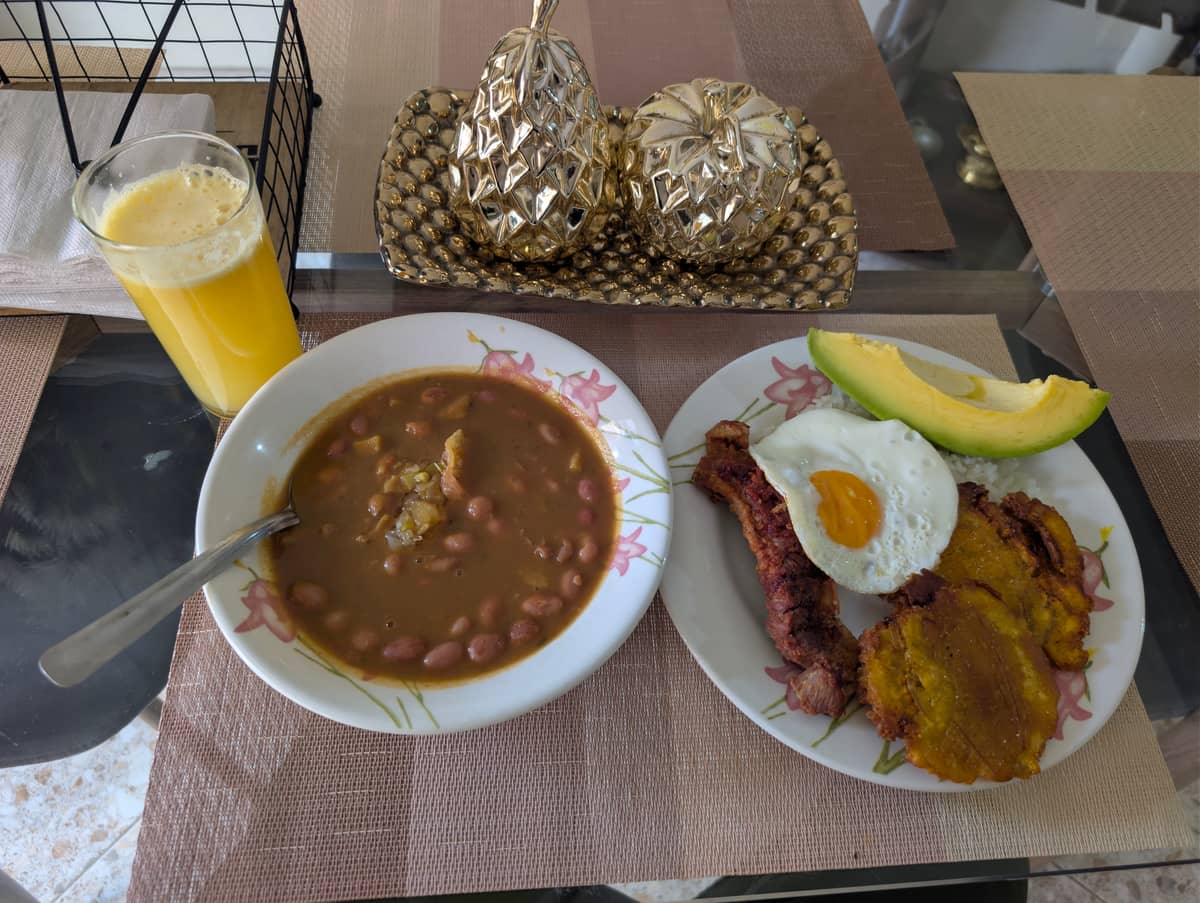
4 September · Article · Comuna 8, Villa Hermosa, Medellín
Villa Hermosa: lunch, a church and a market
Comuna 8 up close, not from the cable car. A home cooked bandeja paisa with chicharrón, the brick church of La Sagrada Familia, stalls on the pavement, and traffic that runs on eye contact. On the way back, a stop among the villas of Prado.
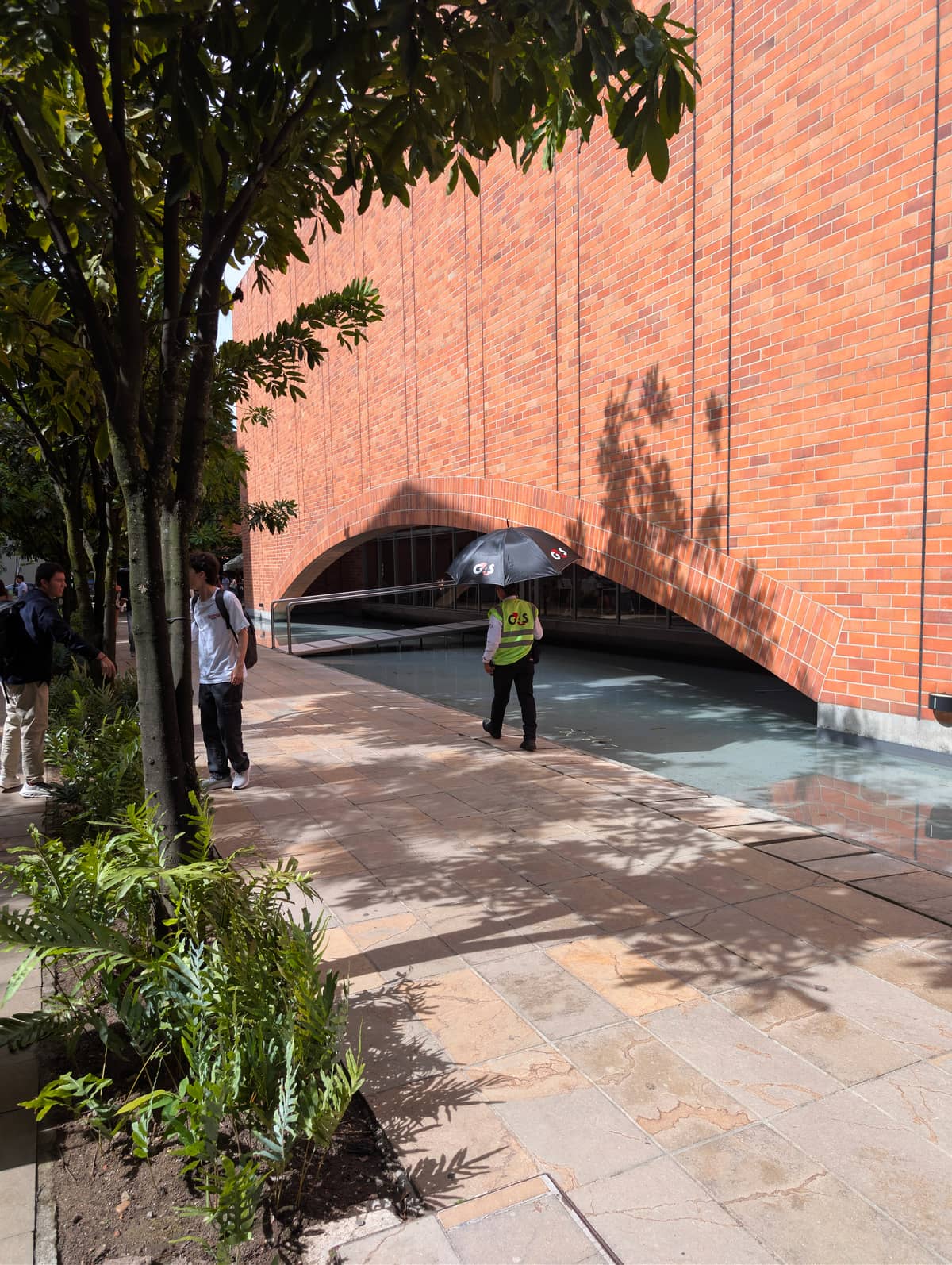
3 September · Article · El Poblado, Medellín
A university as a park and a cinema in a mall
The EAFIT campus, which you can simply walk into, with mango trees, water along brick walls and birds in the middle of the city. And in the evening, the oldest mall in El Poblado, the first in Colombia to have its own cinema.
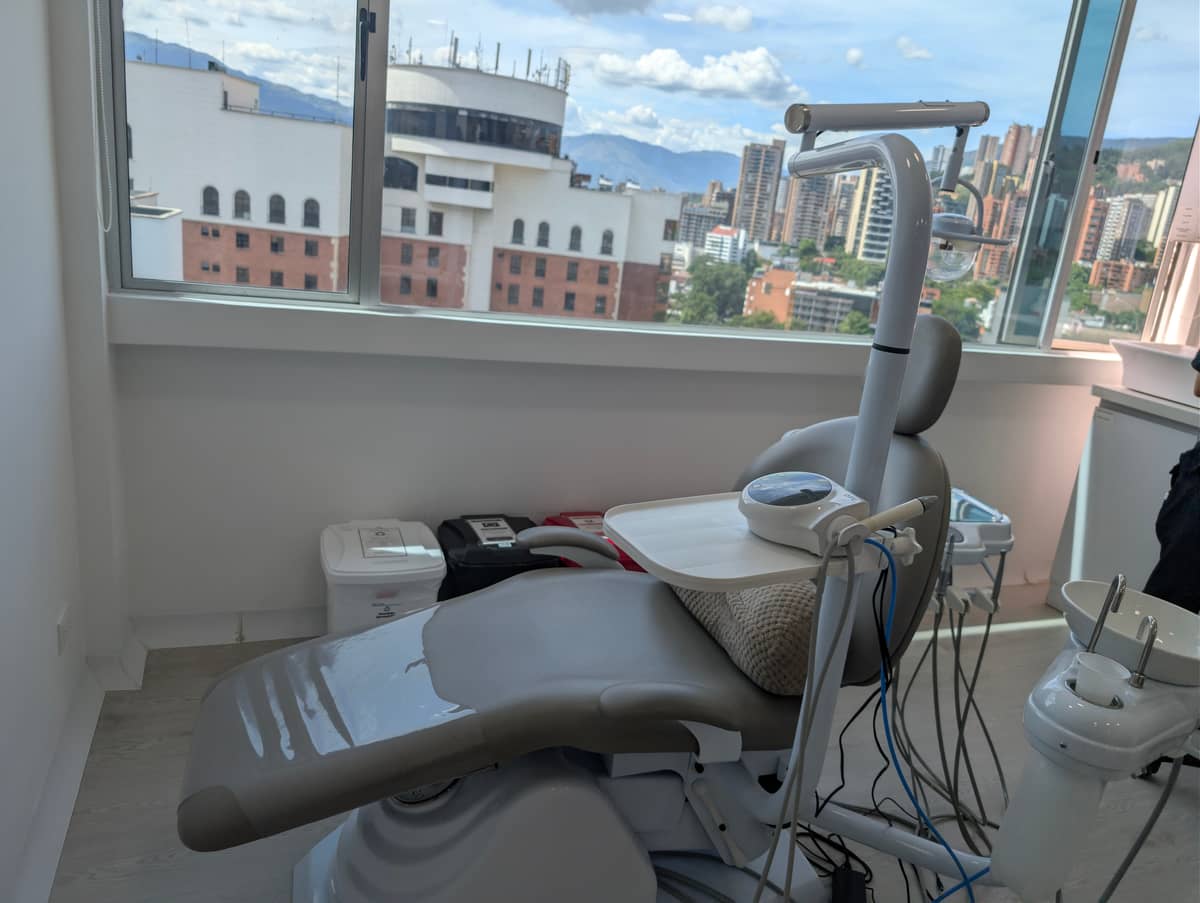
3 September · Article · El Poblado, Medellín
A dentist with a view
A tower full of consulting rooms in El Poblado, a restaurant on the ground floor, and a dentist's chair a metre from a glass wall with the whole Medellín valley behind it. What private care in Colombia looks like to a patient who arrived a month ago.
2 September · Note · Laureles, Medellín

2 September · Article · Laureles, Medellín
Laureles: a neighbourhood drawn in circles
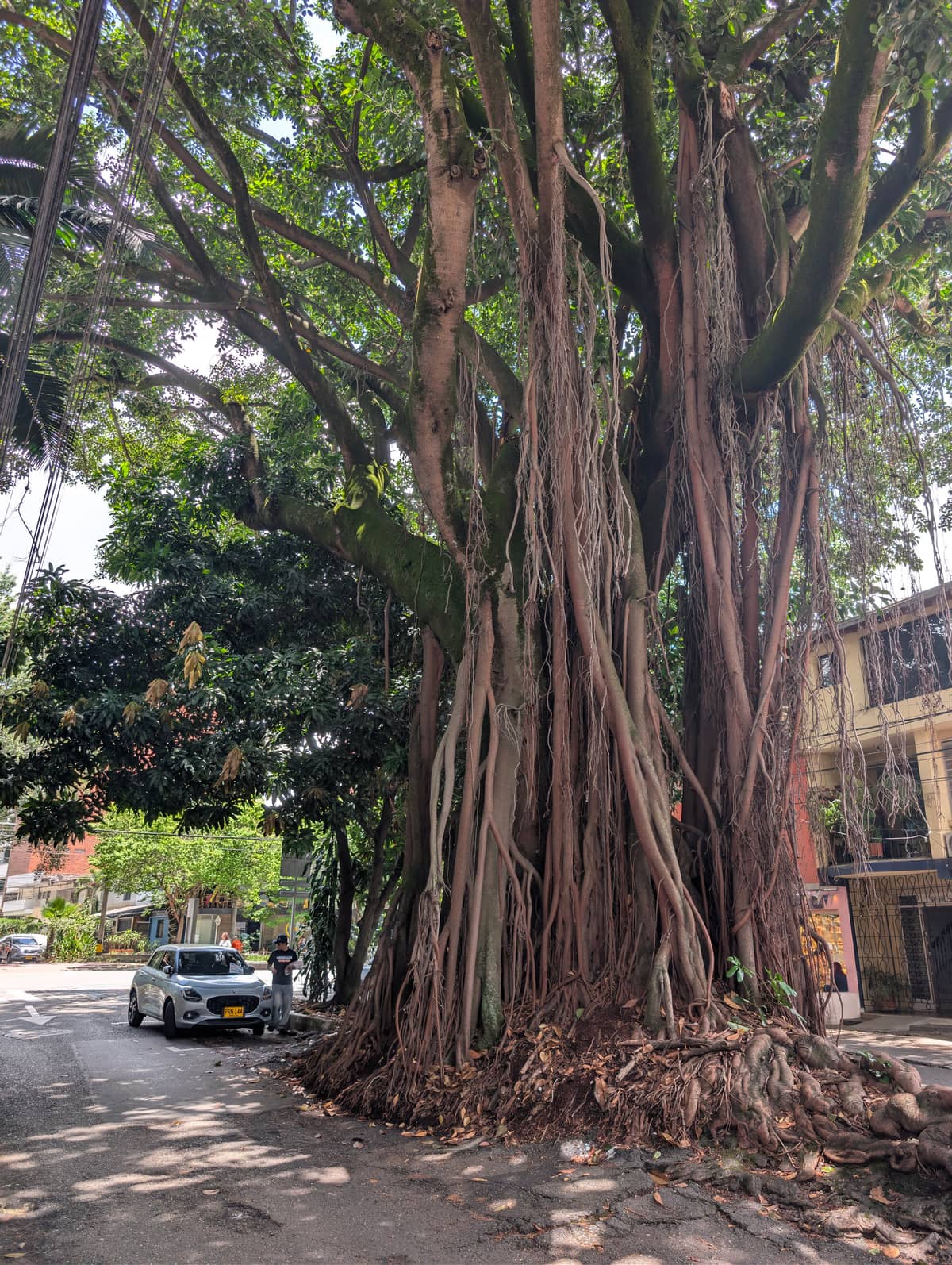
A garden city from 1940 with circular streets, fig trees across the whole road, and cafés you can work from. The neighbourhood Medellín recommends to itself, and the one Time Out called the best in the world.
August
2026
1 entry
31 August · Article · Conquistadores, Medellín
Where I live: Conquistadores
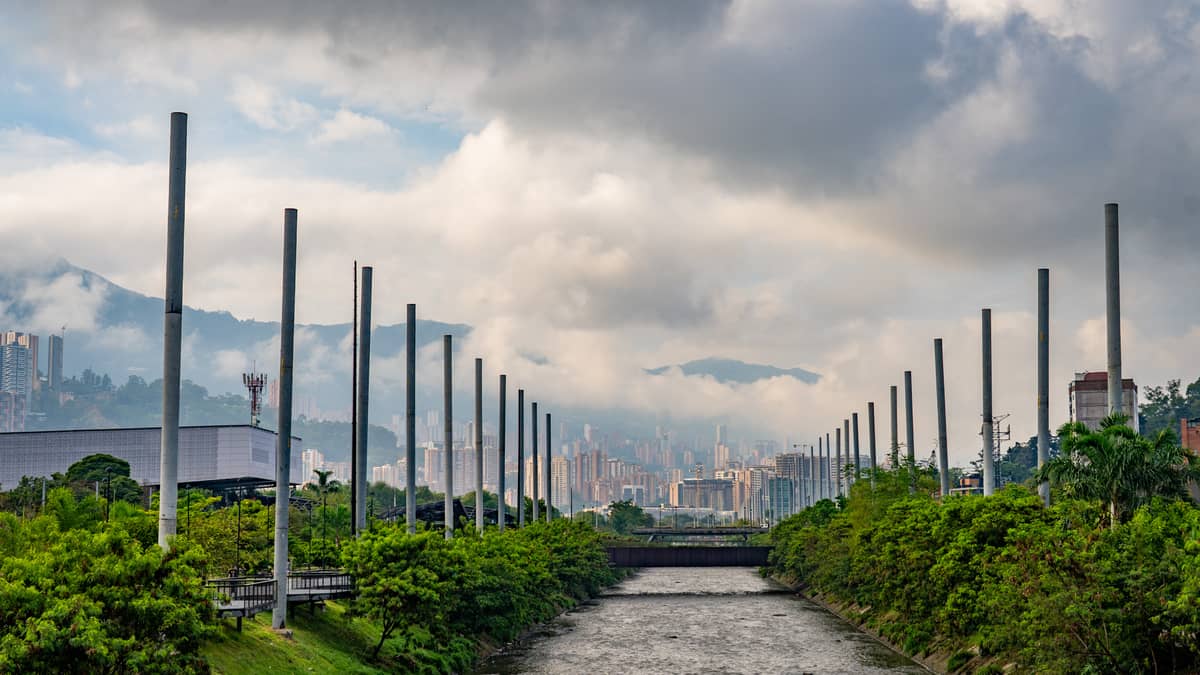
A neighbourhood between the river and Laureles that nobody writes about. Dogs on every corner and clean pavements, greenery that is not an accident, a bridge to the Barefoot Park, and seventies buildings among the palms.
Frequently asked
Where is the cheapest place to shop in Medellín?
Fruit and vegetables at the Plaza Minorista market, dry goods at the D1 and Ara discounters. On basics like rice, oil or eggs the gap against a big chain is twenty to thirty percent. Éxito is worth one visit a month for what the others do not carry.
What does a week of groceries cost for one person?
Roughly 100,000 to 150,000 pesos with fruit from the market and the rest from a discounter, so about 500,000 to 700,000 a month. For comparison, the measured basket of 23 staples came to 147,771 pesos in Medellín in 2026, among the cheapest of the big cities.
What is expensive here?
Anything imported: hard cheese, butter, wholegrain bread, muesli, olive oil, wine and imported chocolate. Alcohol other than aguardiente and beer is dear because of tax. The fastest way to double your spending is trying to eat the way you did at home.
What does a price per pound mean?
A libra is half a kilo, and markets and counters price in it, so the number looks half as attractive as it is. Prices are also quoted in thousands: cinco mil means five thousand pesos, about a euro.
What does lunch cost in a local restaurant?
A menú del día runs 15,000 to 25,000 pesos and includes soup, a main with rice and beans, a juice and sometimes dessert. It is served at midday and gone by three. Restaurants in Poblado cost three times that and cook international food.
Questions and answers
What do you want to ask?
Ask anything about this topic. I answer, and the answer stays here so the next person who wonders the same finds it.