Practically · Medellín
Which neighbourhoods of Medellín are safe, and where can you live?
Medellín today is safer than most of its reputation: from 380 homicides per hundred thousand in 1991 down to roughly eleven. What threatens a foreigner is not what is in those statistics but robbery, a spiked drink and a date arranged through an app. People live in El Poblado, Laureles, Envigado or Belén, and the difference between them is bigger in price than in safety.
Checked 31 August 2026
Medellín only starts to make sense when you stop reading the map as a flat surface and start reading it as a slope.
The city sits in the Aburrá valley, a river runs along the bottom and everything rises from it on both sides. The floor is around fifteen hundred metres above sea level, and the higher up the slope you go, the more different life gets: a different temperature, different air, different buildings and different prices. That one fact explains most of what you will hear about Medellín.
This text is long on purpose. If you want two sentences, they are above it; if you are moving here, you need the rest.
How the city is put together
Medellín has sixteen comunas, five corregimientos and over two hundred and seventy barrios. A comuna is an administrative district, a corregimiento a rural district beyond the built up area, and a barrio is a neighbourhood as people actually use the word. About two and a half million people live in the city, and over four million in the whole valley, which includes Envigado, Sabaneta, Itagüí and Bello.
One thing to get straight immediately: a comuna is a number, not an insult. In Europe the word sounds like a slum, because the only one anybody has heard of is Comuna 13. In fact Comuna 14 is El Poblado, the most expensive part of the city.
The metro holds the axis of the valley. Line A runs along the valley floor from north to south, line B heads west, and cable cars branch off them up into the hills. Those cable cars are not an attraction, they are public transport: the neighbourhoods up there were cut off for decades and the cable car connected them to the city.
Estrato: the number that tells you more than the name of the neighbourhood
This is the thing no guidebook explains properly, and the thing every local talks about.
Every address in Colombia has an estrato from one to six. It classifies the housing by external features: how it is built, what infrastructure surrounds it, what the street is like. It is not a tax bracket and not a ranking of the people living there.
It exists to cross subsidise energy and water:
- estrato 1, 2 and 3 pay discounted rates,
- estrato 4 pays the market rate with no discount and no surcharge,
- estrato 5 and 6 pay a surcharge, which funds those discounts.
In practice this means that for the same flat you will pay substantially more for electricity and water in El Poblado than in Belén, even if the flats are identical. And that when you ask about rent, ask about the estrato and about the administración, the building fees, in the same breath, because in a building with a pool and a reception desk that is not a small item.
But estrato is not a safety map. A calm street in estrato 3 can be safer than the boundary between an estrato 5 block and the neighbourhood above it. People use it as a shortcut because it is there, but a shortcut is what it is.
Where a foreigner ends up, and why
El Poblado, Comuna 14
The most expensive and most visited part of the city, mostly estrato 5 and 6. Cafés, restaurants, hotels, agencies, coworking spaces, more English than anywhere else. If you come for a week and do not want to solve anything, stay here and you are right to.
There are three catches. First the prices, which have come loose from the rest of the city. Second the hill: El Poblado is a slope and walking it is either downhill or uphill, which sounds like a detail until the third time you carry shopping up it. And third what people call the gringo bubble: around Parque Lleras the concentration of tourists, alcohol and everything that attaches itself to that combination is the highest in the city.
Laureles and Estadio, Comuna 11
For a longer stay this is, in my view, the best address in the city, and I am not alone: most people who stayed longer than three months ended up here.
Flat ground, a regular street grid, trees, bars full of locals, shorter distances, mostly estrato 4. You walk, you take the metro, prices are lower than in El Poblado and life is ordinary city life rather than tourist life. The downside mirrors the upside: less English and fewer things laid on for foreigners.
Envigado and Sabaneta
Separate towns south of Medellín, grown into the same conurbation and connected by the metro. Quiet, families, lower rents, their own squares and their own life. If you want to live somewhere rather than go out every night, you will be happy here. The centre of Medellín is a metro ride away, so it works.
Belén, La América, Buenos Aires
Ordinary city neighbourhoods where Medellín actually lives. Cheaper, authentic, mostly estrato 3 and 4. Few foreigners, Spanish required. If you are choosing a flat here, walk the street first at different times of day, because the difference between two blocks tends to be bigger than the difference between two neighbourhoods.
La Candelaria, the centre
By day it is the heart of the city: Botero, the Museo de Antioquia, markets, government offices, thousands of people. After dark it changes, and it is one of the few places where the advice really should not be ignored. Go to the centre, but not at night.
Comuna 13, San Javier
The most visited neighbourhood in the city and one of the hardest chapters of its history, at the same time. Safe during the day, full of people, tours led by locals. Walking around it alone in the evening is a different discipline and there is no point to it.
Safety without the legends and without the varnish
Three things get routinely melted into one here and need separating: the statistics, the risk to a foreigner, and the reputation.
The numbers
In 1991, at the peak of the cartel war, Medellín had around 380 homicides per hundred thousand inhabitants. It was the murder capital of the world and it was not close.
In 2024 there were about three hundred homicides in the year, roughly eleven per hundred thousand, the lowest figure in eighty two years. 2025 ended at a similar level. That is a drop of over ninety seven per cent in thirty years and there is nothing comparable in the modern history of cities.
For scale: Czechia sits at around one homicide per hundred thousand, so Medellín is still several times higher. And at the same time it is doing better than a number of large cities in the United States that nobody is afraid to visit.
What actually threatens a foreigner
Almost nothing in the numbers above. Homicides happen between people who know each other, in streets a visitor never reaches.
The real risks are different:
- Robbery and mugging for a phone. The most common thing by far. A phone in your hand on the street, on an outdoor table or through an open car window is the most ordinary invitation there is.
- Drink spiking. Scopolamine, locally burundanga, "devil's breath". Odourless and tasteless, the victim is compliant for hours and remembers nothing. It is used to empty flats and bank accounts.
- Dating apps. In January 2024 the US Embassy issued a warning after eight Americans died in Medellín within two months, several cases starting with a date arranged through an app. This is not an urban legend, it is a documented way foreigners get robbed here.
- Fake police and helpful strangers at cash machines. Withdraw inside a bank or in a shopping centre, not from a machine on the street.
The rule everybody repeats
No dar papaya. Literally "do not give papaya", meaning do not hand anyone an opportunity.
It does not mean be afraid. It means do not leave your phone on the table, do not wave money around, do not walk alone at night where nobody walks, do not accept a drink you did not watch being poured, and do not make yourself a target. A Colombian who tells you this is not scaring you; they are telling you the rule they live by themselves.
The practical version for a traveller:
- Uber, DiDi or Cabify rather than a taxi flagged down in the street.
- Phone in your pocket, not in your hand, especially at crossings and doorways.
- Comuna 13 and the centre in daylight, ideally with somebody who lives there.
- Do not buy drugs. Besides being stupid, it is the fastest route into a problem that ends badly.
- At night, get dropped at the door, not two blocks away.
The history that explains why it is like this
Without it the neighbourhoods cannot be read.
Founded in 1616, a town from 1675. Medellín entered the twentieth century as an industrial city: the Coltejer and Fabricato mills clothed the whole of Colombia and the valley filled up with work.
The fifties and sixties brought people from the countryside into the city, driven out by the civil conflict known as La Violencia. There was nowhere to house them, so they built houses themselves, on the slopes, where nobody was granting permission for anything. That is how the comunas up in the hills came about: no streets, no sewers, no state.
The eighties and Escobar. The cartel found in those neighbourhoods exactly what it needed: young people with no prospects. What followed was a war of everyone against everyone, in which the city belonged to whoever had the guns. Escobar was shot in 1993 and it solved nothing immediately, because what the cartel left behind were militias, paramilitaries and combos.
2002, Operación Orión. The largest urban military operation in the country's history, in Comuna 13. Along with fighters, civilians disappeared during it, and their families are still looking for them.
And then something nobody expected: urbanismo social. The city started building its best where things were worst. The metro in 1995, the first cable car in 2004, library parks, schools, the escalators in Comuna 13 in 2011, the tram in 2015. The idea was simple and it held: a neighbourhood connected to the city, with something in it people are proud of, stops being territory where different rules apply.
It is not a fairy tale. Combos still collect protection money, the vacuna, in parts of the city, and hold influence nobody discusses out loud. The tourism boom brought problems of its own: rising rents, locals pushed out of Laureles and Comuna 13, sex tourism and everything that comes with it. Medellín today is a city that pulled itself up, not a city that is finished.
What it means if you want to live here
- You choose your climate by altitude. The valley floor sits around twenty two degrees all year and it goes up from there. El Retiro or Santa Elena, seven hundred metres higher, mean a hoodie in the evening.
- The rain comes in two waves, roughly April to May and September to November. It does not rain all day, but when it rains it means it.
- Tap water is drinkable. In the city yes; outside it, ask.
- Estrato 4 is the right choice for most people: the infrastructure works, utility bills are not inflated and the neighbourhood is normal.
- Renting works differently from home. Long term contracts commonly require a local co-signer or rent insurance, so most foreigners spend the first months in short term rentals at a much higher price. Plan for it and do not call it a scam.
- Spanish is not an accessory. Without it you stay in the bubble and pay for it twice: in money, and in not knowing what is going on around you.
The transport that decides where you should live
The metro is the backbone and also the reference point: in Medellín addresses are not judged by neighbourhood but by how far it is to a station.
The system has two rail lines (A along the valley floor, B to the west), a tram, six cable cars into the hills and buses feeding into all of it. You pay with a Cívica card, and transfers between metro, tram and cable car are covered by one fare; only the tourist cable car to Arví is charged separately. It runs when people go to work, meaning early, and it stops earlier in the evening than a European expects.
The rest:
- Uber, DiDi, Cabify. Formally in a grey zone, in practice used by the whole city, and the safest way to get home at night. The driver may ask you to sit in the front; they are not joking when they do.
- A taxi flagged in the street is cheaper and less predictable. A running meter is not a given.
- Motorbike taxis exist, they are the fastest way to travel in rush hour and the fastest way to end up in hospital.
- Your own car is not needed in the city and not wanted in the centre. For the mountains yes, and then an SUV.
Which gives you a practical rule for flat hunting: before you look at the photos, look at how far the metro station is and whether the walk is downhill or uphill. In El Poblado that is the difference between five minutes and twenty minutes up a slope at twenty five degrees.
Choose a street, not a neighbourhood
The difference between two blocks here is bigger than the difference between two neighbourhoods. Go through this before you sign anything:
- Walk the street three times: in the morning, at six in the evening and at ten. What is a café by day can be noise under your window at night.
- Find out the estrato and ask to see a utility bill and the administración fee. Rent in Medellín is only part of the cost of living somewhere.
- Ask about water and pressure on the upper floors, and whether the building has a backup pump.
- Look at the hill. Google Maps shows you distance, not elevation. Two hundred metres uphill with shopping is a different route from two hundred metres on the flat.
- Ask about noise. Colombia is a loud country and a speaker on the pavement is a normal part of a business. Anyone working from home underestimates this exactly once.
- Test the internet in the flat itself, not on the operator's coverage map.
When the city is a different place
- Feria de las Flores, early August. The biggest festival of the year, the silleteros parade with flower panels on their backs, full hotels and different prices. Beautiful, but if you want quiet, sit this one out.
- The Christmas alumbrados, December into January. Lights along the river that people travel across the country to see.
- Colombiamoda, the fashion fair in July. A reminder that this was a textile city long before it was a cartel city.
- The rain waves, April to May and September to November. It does not rain all day, but the afternoon needs planning for.
What not to believe
That the whole city is dangerous. It is not. Most people here simply live their lives.
That El Poblado is the only option. It is the easiest option for a week. For a year it is the most expensive way not to get to know Medellín.
Tours with Escobar in the name. In a city where almost every family lost somebody in those years, it is tactless at best. And you will learn less about Medellín than on one walk through Laureles.
Numbers without a date. Including mine: they are valid as of the date at the top, which is exactly why this page is a guide and not an article.
Where this comes from
Homicide statistics from the city's and the police annual reports, the dating app warning issued in January 2024 by the US Embassy in Bogotá, the estrato system from the public utilities act and from ordinary EPM practice, the history from public sources and from what people here have told me.
What is first hand is marked as my own experience. Verify the rest before you act on it.
What I wrote about it
September
2026
17 entries
10 September · Article
Driving in Medellín: the day of the week your car stays home
The last digit of your number plate keeps the car off the streets one day a week, from five in the morning to eight in the evening, across the whole valley. Plus the licence that expires after six months, a fine over six hundred thousand pesos, and road death figures that make me uneasy.
10 September · Article · La Candelaria, Medellín
No water after eight in the evening. What is going on in Medellín
Three hundred thousand people in six communes have had water every other day since late August. The city broke its temperature records in May, Ideam expects a strong El Niño into March, and the grid operator warns that power may not stretch through December. What the rule says, why it landed on the hillsides, and what it means for a trip.
10 September · Article · La Casa del Alimento, Medellín
A lunch where the meat dries on a washing line
A Colombian lunch is not one dish, it is a whole set for one price. Two mains, two desserts, two coffees and a lemonade came to 146,000 pesos. And in that restaurant's yard, beef hangs drying.

10 September · Article · Conquistadores, Medellín
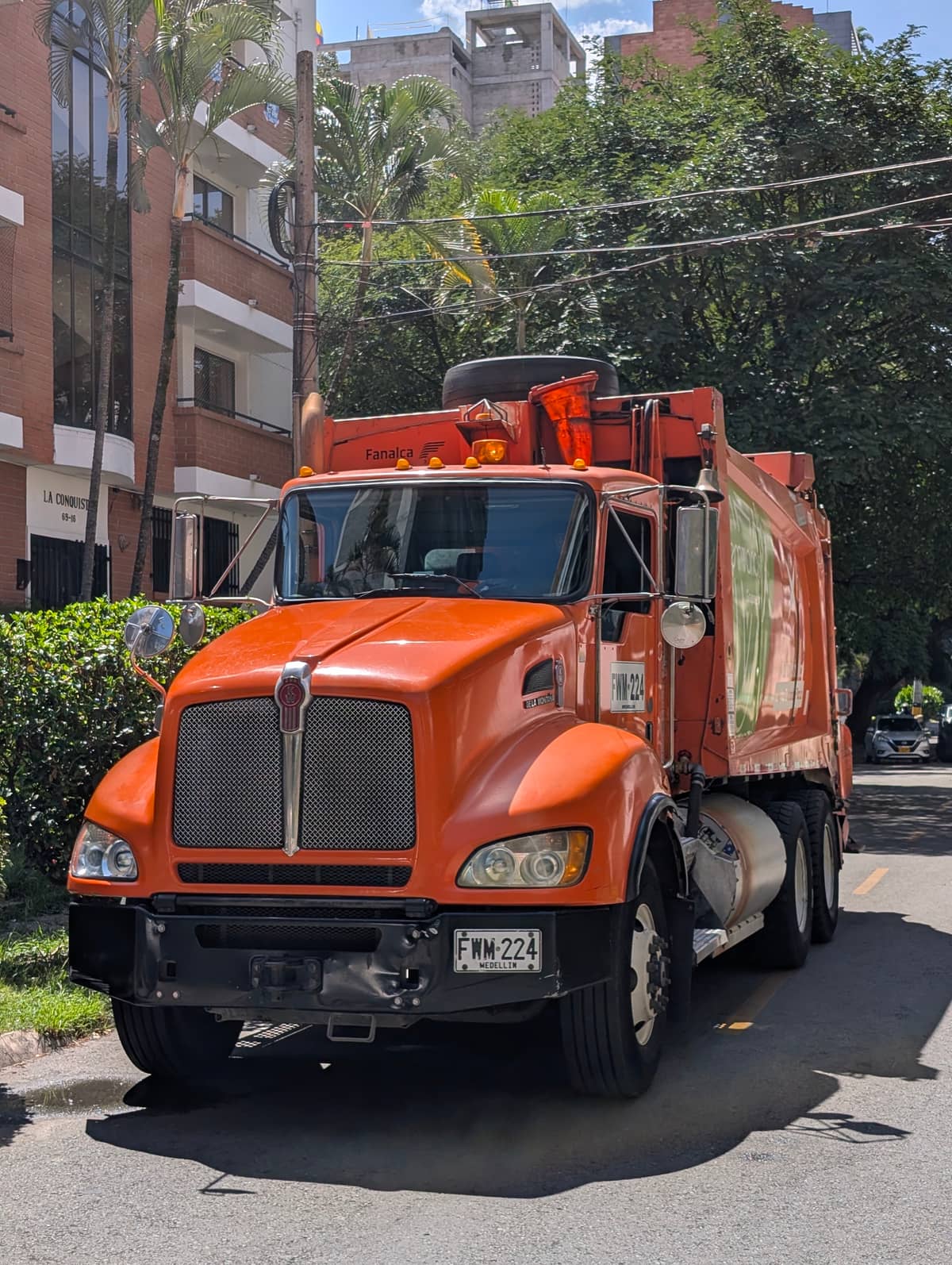
The bin men of Medellín
A garbage truck with a slogan saying this city is a little silver cup. Who runs it, where the waste goes, why the landfill has eight years left, and how the people who open bags on the street come to be paid out of the water bill.
10 September · Article · Comuna 8, Villa Hermosa, Medellín
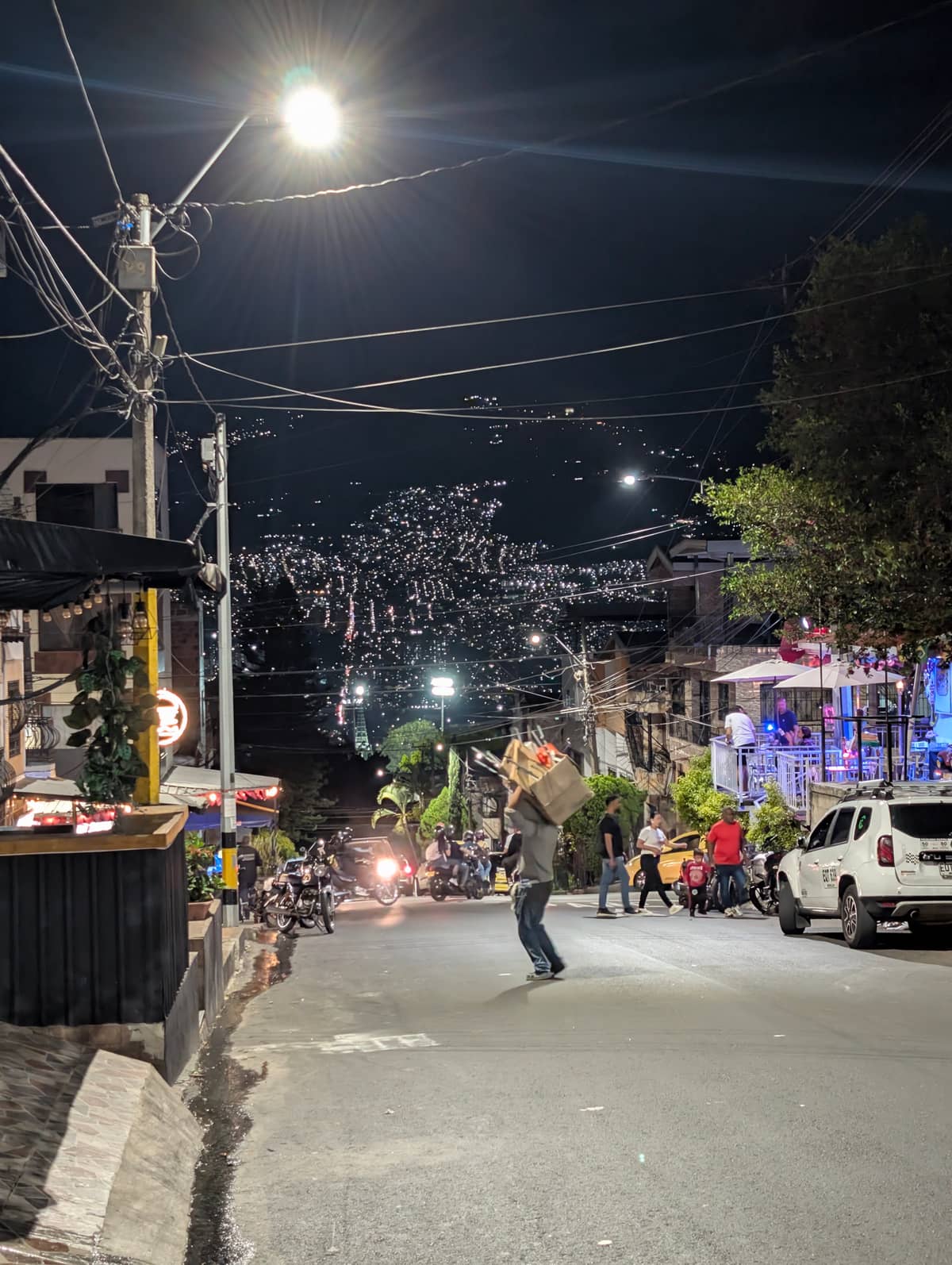
Villa Hermosa after dark
A house with almost no windows, hot rice pudding with cheese, and a slope full of lights right up to the ridge. And the only thing that made me uneasy was not what someone who has read about comuna 8 online would expect.
8 September · Article · El Poblado, Medellín
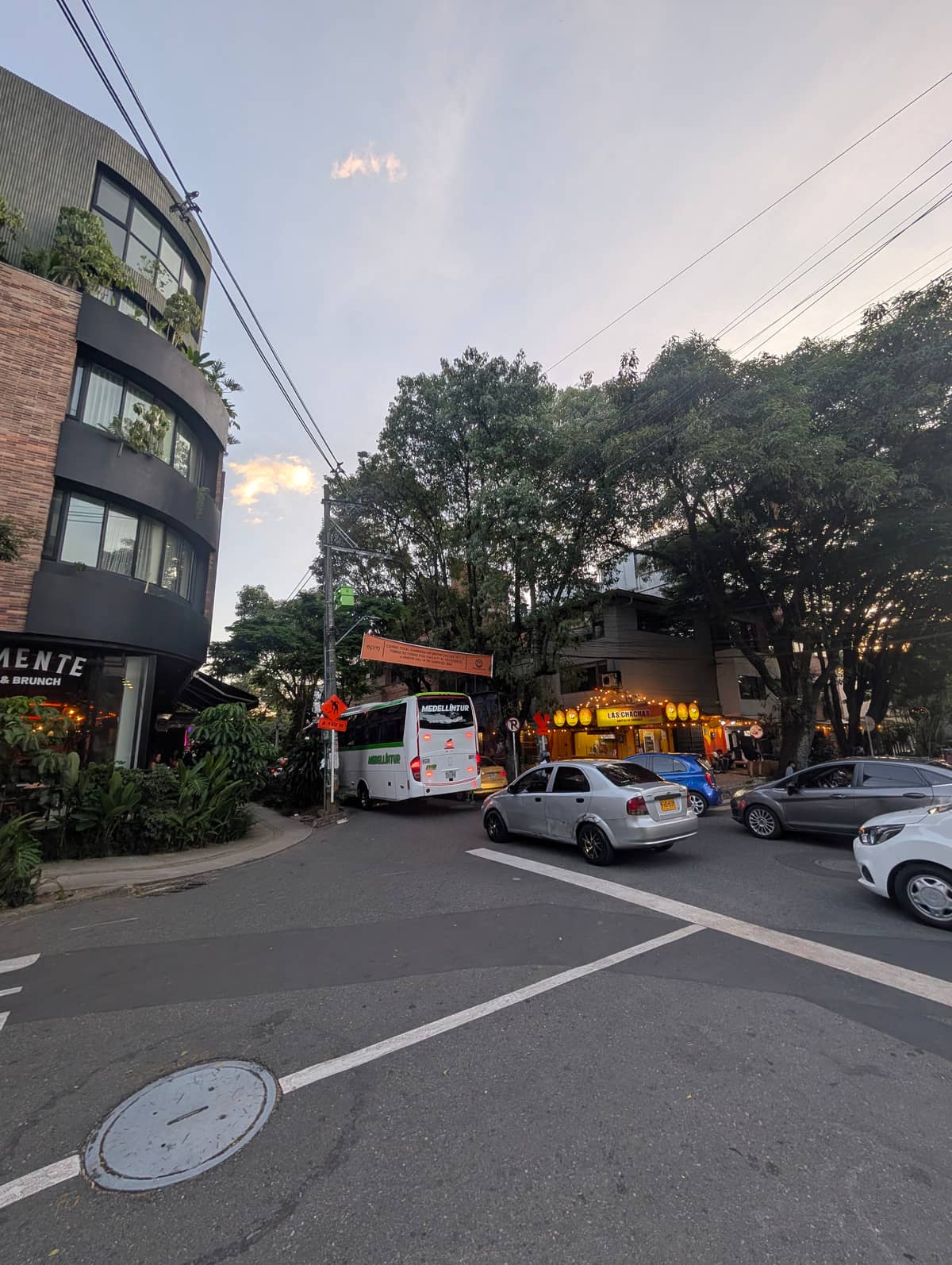
El Poblado after dark
The district where Medellín was founded in 1616 and where almost everybody who flies into the city now sleeps. Provenza with lights in the trees, the singer Karol G's restaurant, a road sign saying tourist zone, and a bill that sums it all up.
8 September · Note · La Candelaria, Medellín
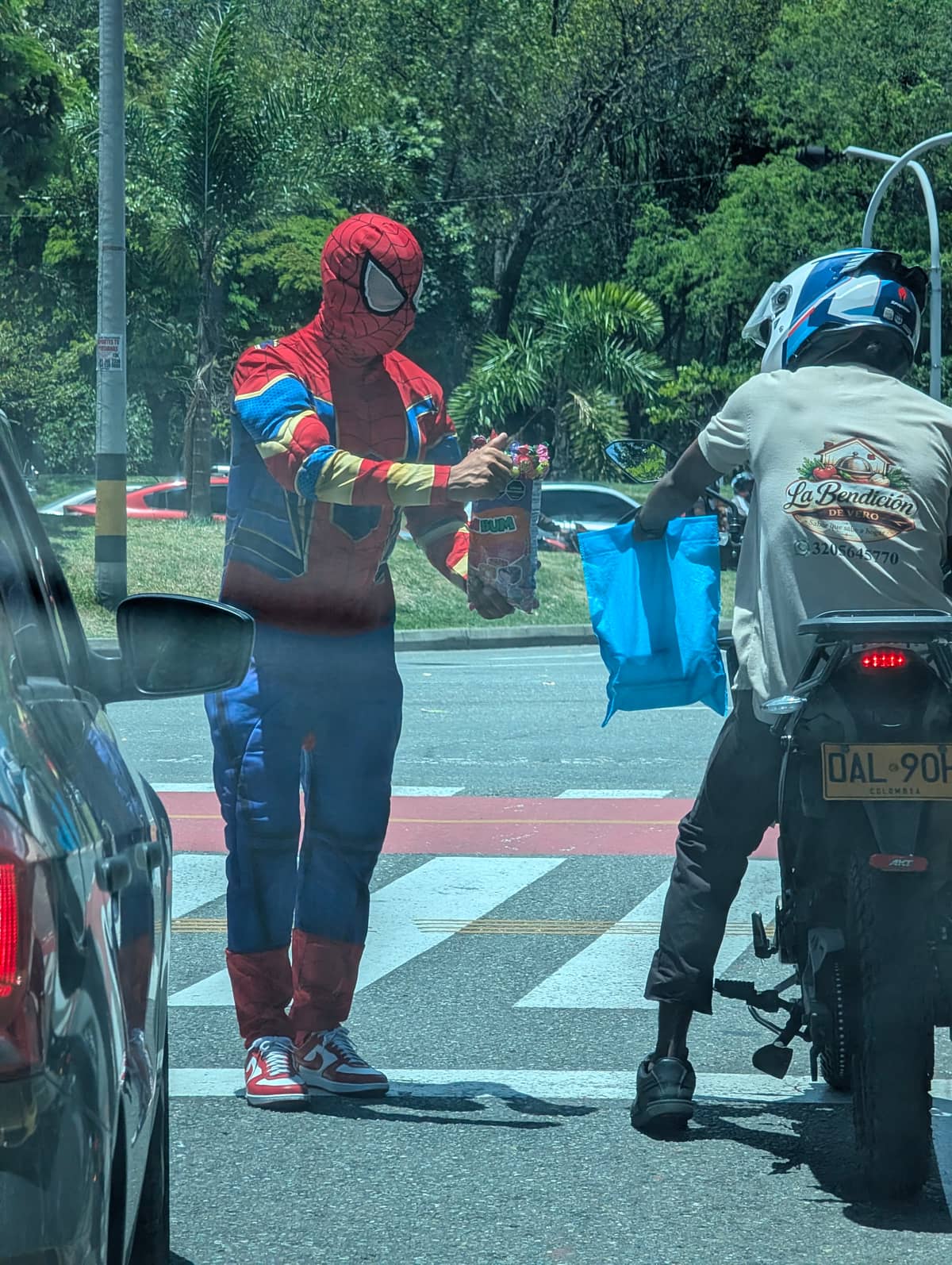
At a junction on Carrera 55, Spider-Man stands at a red light selling…
At a junction on Carrera 55, Spider-Man stands at a red light selling sweets between the cars. A motorbike rider behind him, a water stall beside him.
8 September · Note · Café Mattelsa, Medellín
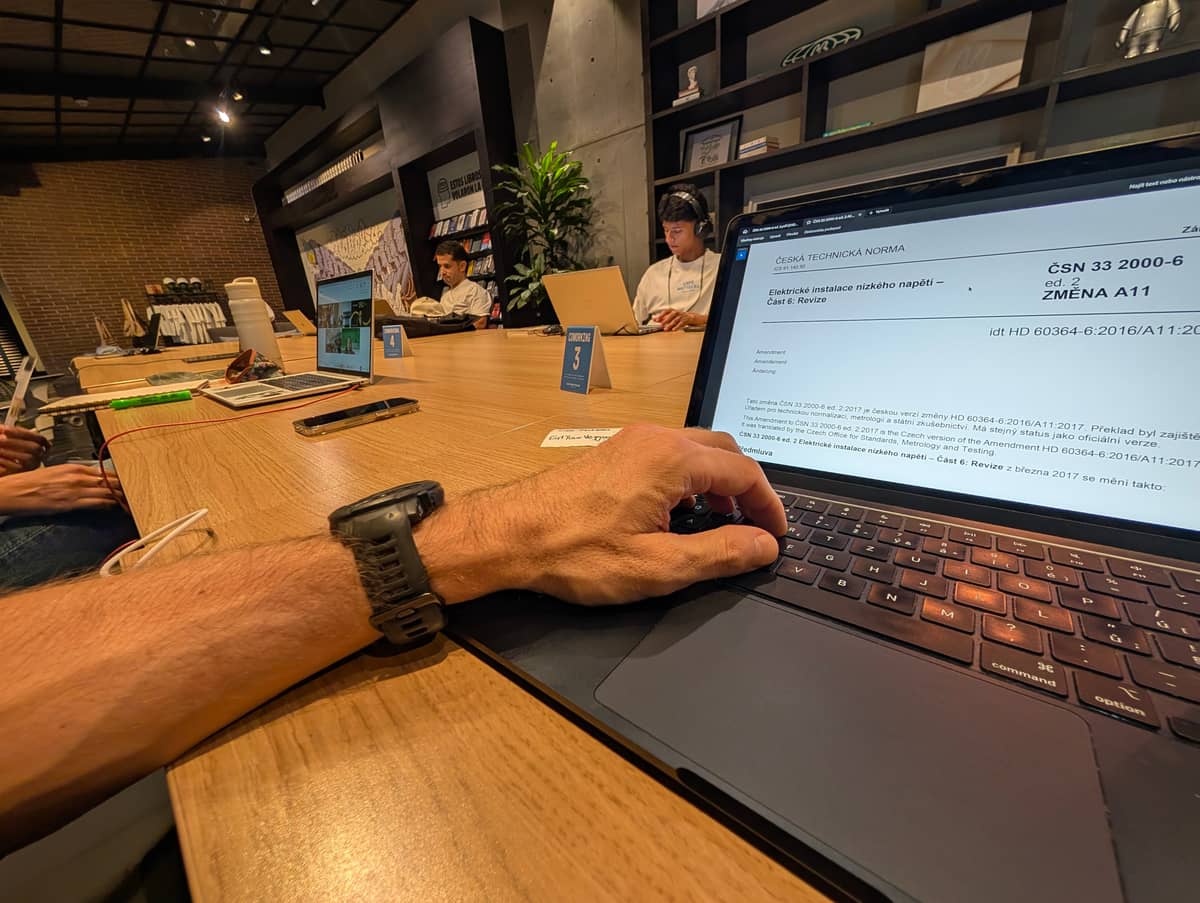
Café Mattelsa, two hours, one coffee and a kombucha. A Czech standard…
Café Mattelsa, two hours, one coffee and a kombucha. A Czech standard for electrical installations on the screen, a palm tree outside the window, people with laptops all around, and nobody making a…
7 September · Note
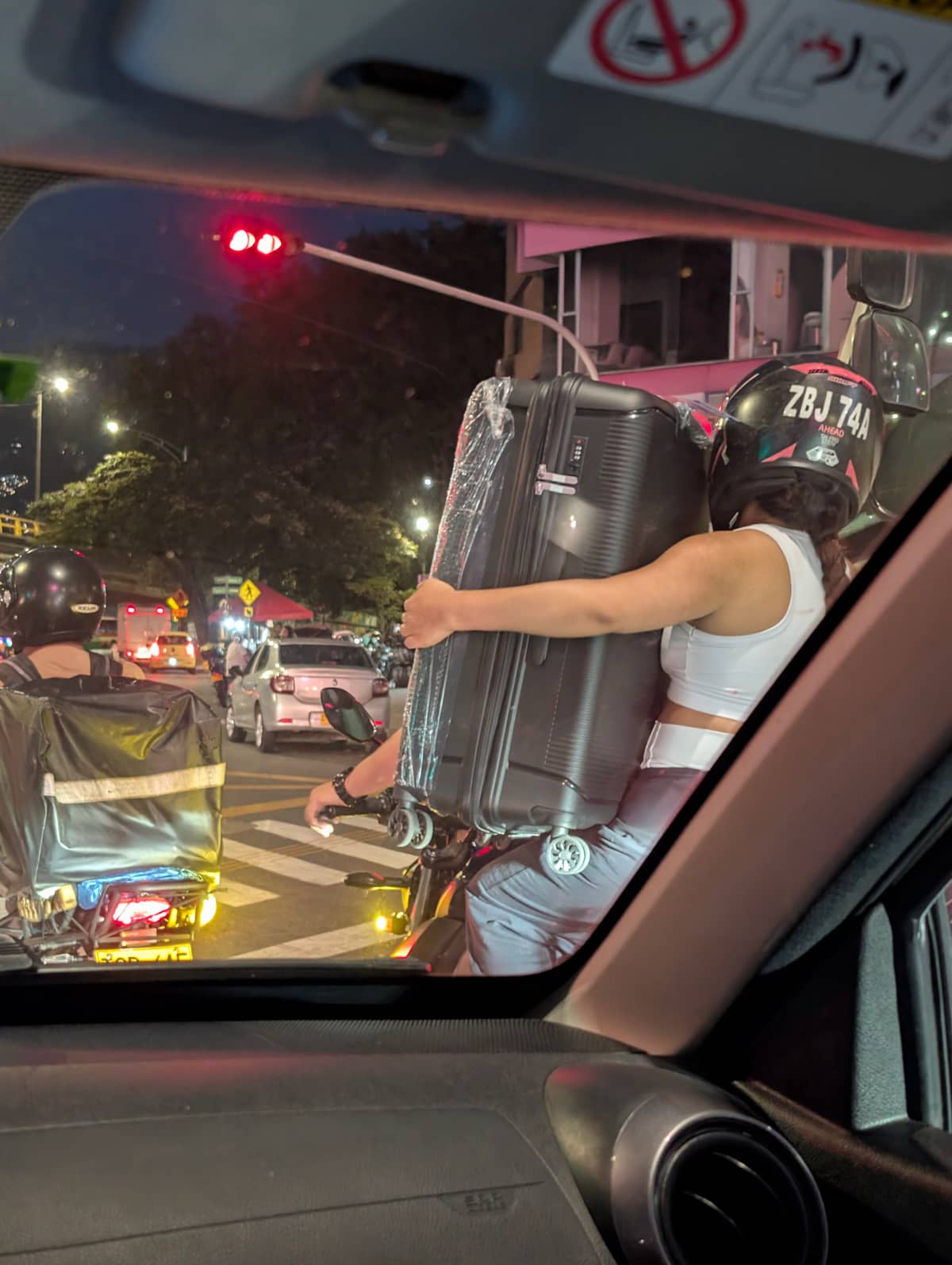
A pillion passenger on a motorbike carrying a large wheeled suitcase…
A pillion passenger on a motorbike carrying a large wheeled suitcase. One arm clamped around it, the other around the rider, knees against the tank, riding in traffic between the cars.
6 September · Article · Comuna 8, Villa Hermosa, Medellín
Up by cable car, down for an arepa
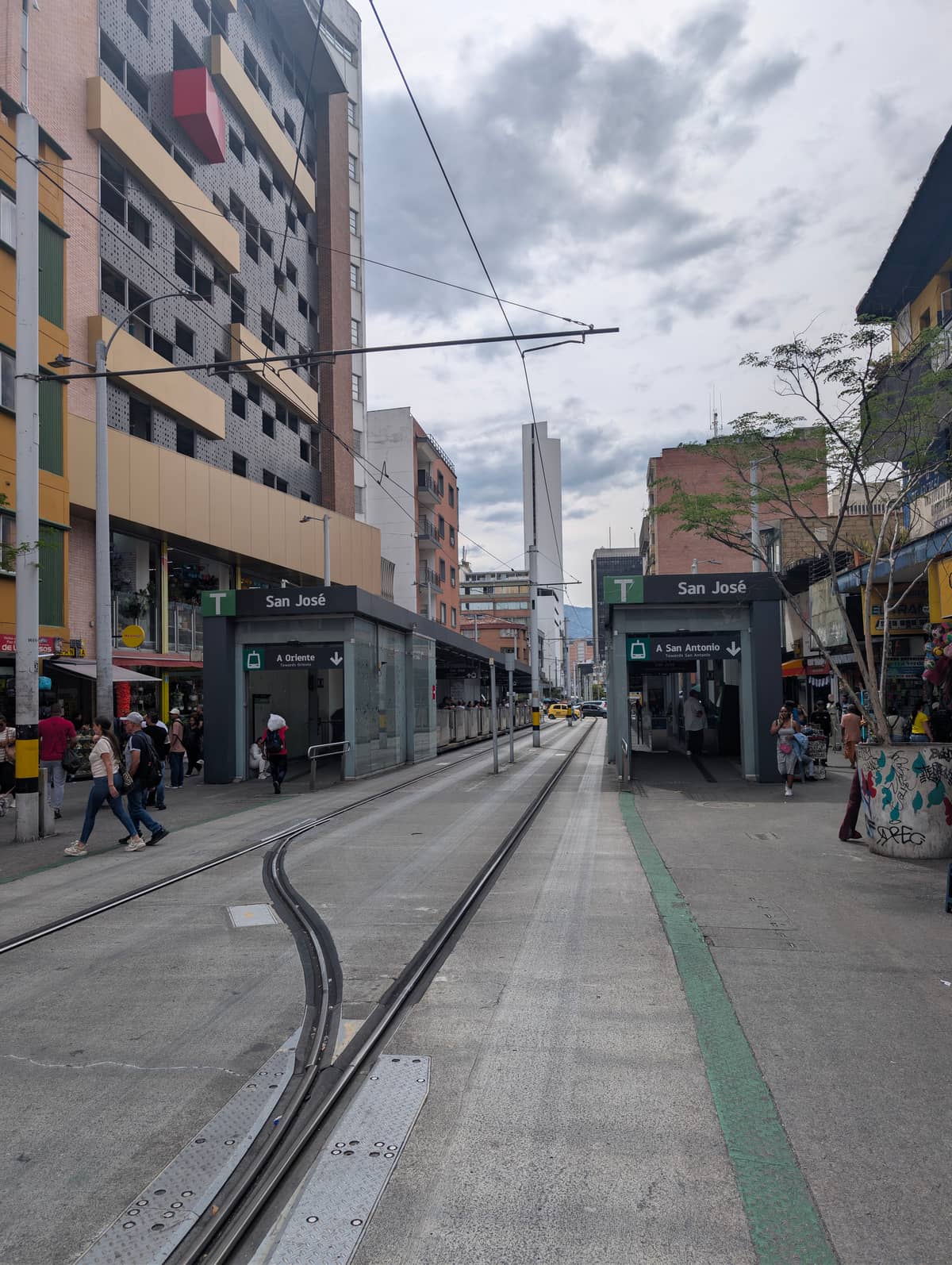
A tram on rubber tyres takes you from the centre to the edge of the city, and a cable car lifts you from there over the roofs of comuna 8. Back down there was an arepa festival, parakeets in a tree, a café in the house by the church, and a concert hall underground.
6 September · Article · La Candelaria, Medellín
El centro: the day I finally saw the city
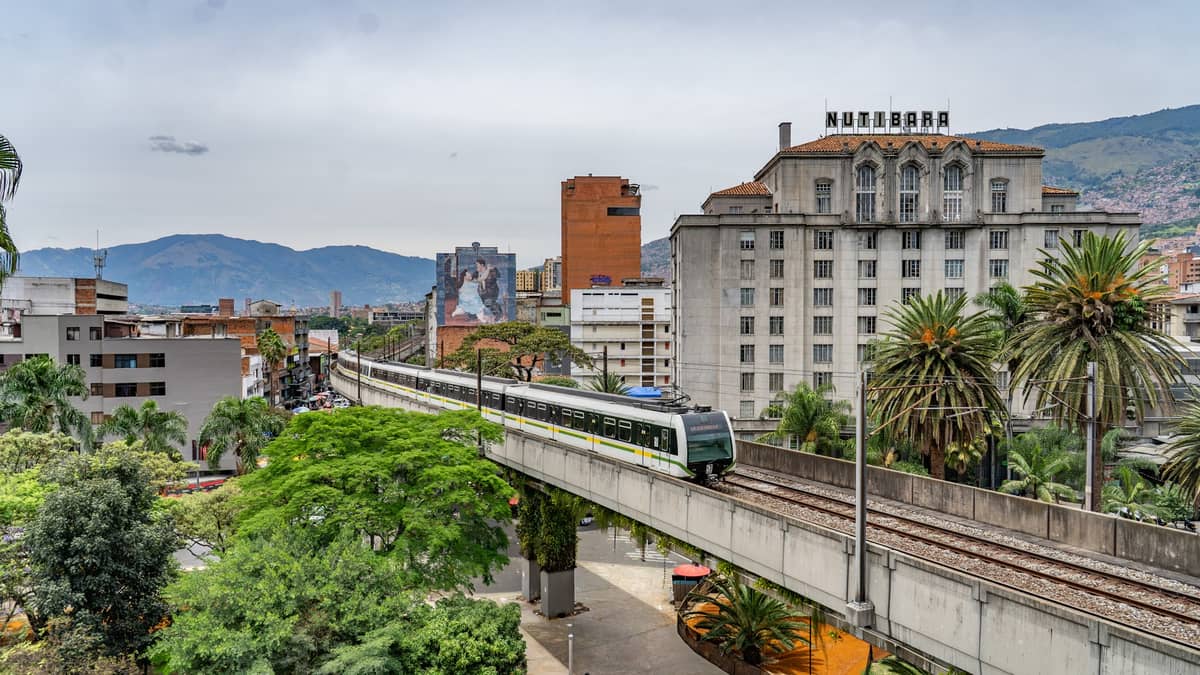
Every second person told me not to go into the centre of Medellín. I went by metro, cleaner than the one at home, and found a palace with a chequerboard facade, twenty three Botero sculptures, a cathedral made of a million bricks, and a market that has run since the seventies.
5 September · Note
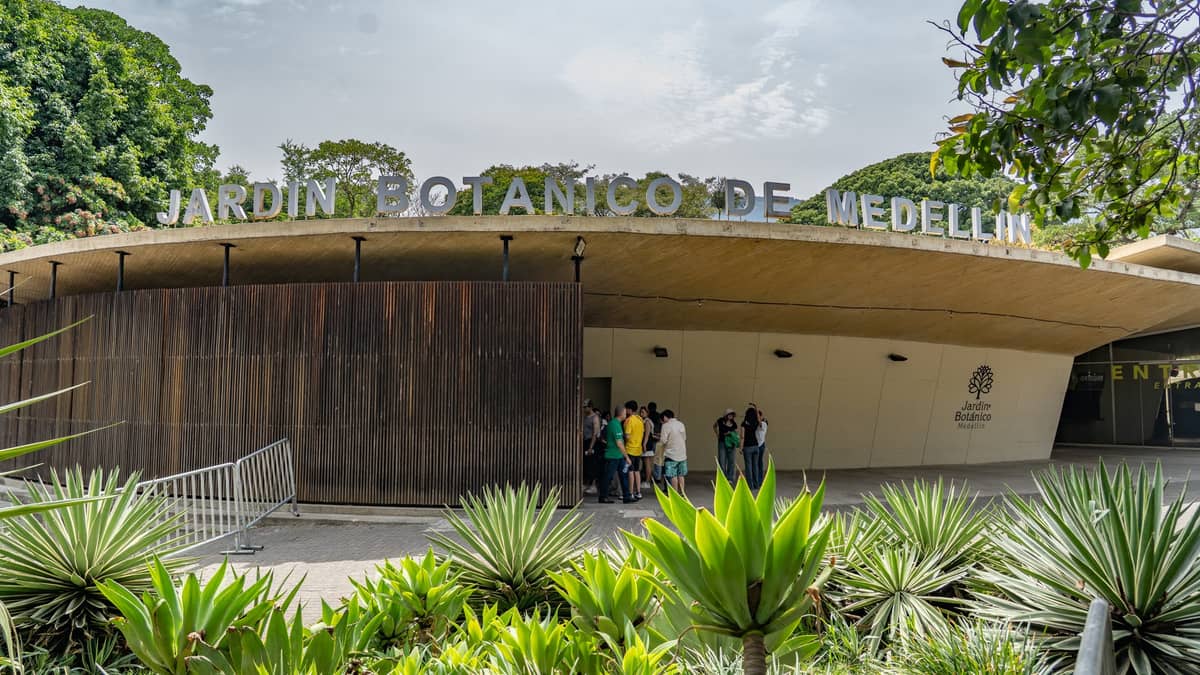
The botanical garden was closed. Not for a holiday or repairs: they…
The botanical garden was closed. Not for a holiday or repairs: they are building the Fiesta del Libro y la Cultura inside it, the city's book festival, in its twentieth year and running from 11 to 20…
4 September · Article · Comuna 8, Villa Hermosa, Medellín
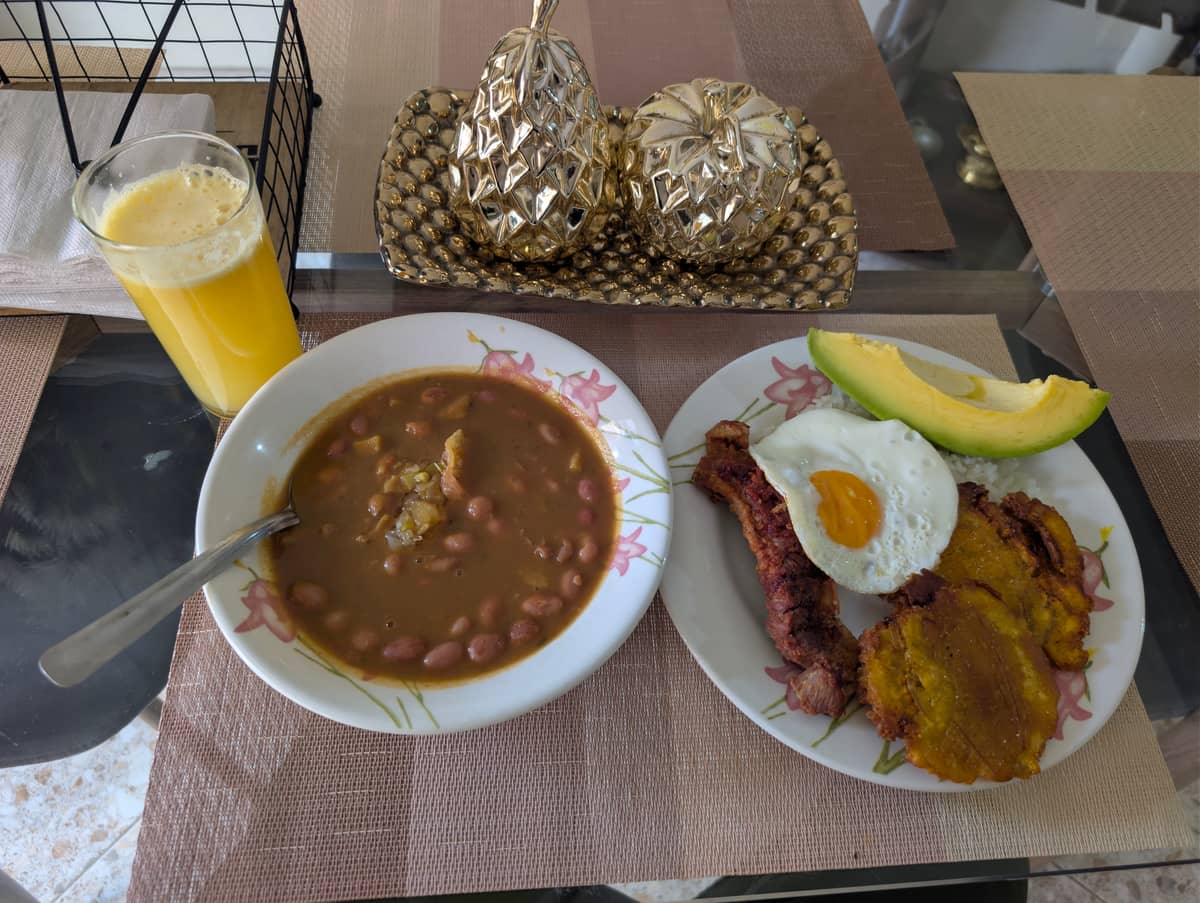
Villa Hermosa: lunch, a church and a market
Comuna 8 up close, not from the cable car. A home cooked bandeja paisa with chicharrón, the brick church of La Sagrada Familia, stalls on the pavement, and traffic that runs on eye contact. On the way back, a stop among the villas of Prado.
3 September · Article · El Poblado, Medellín
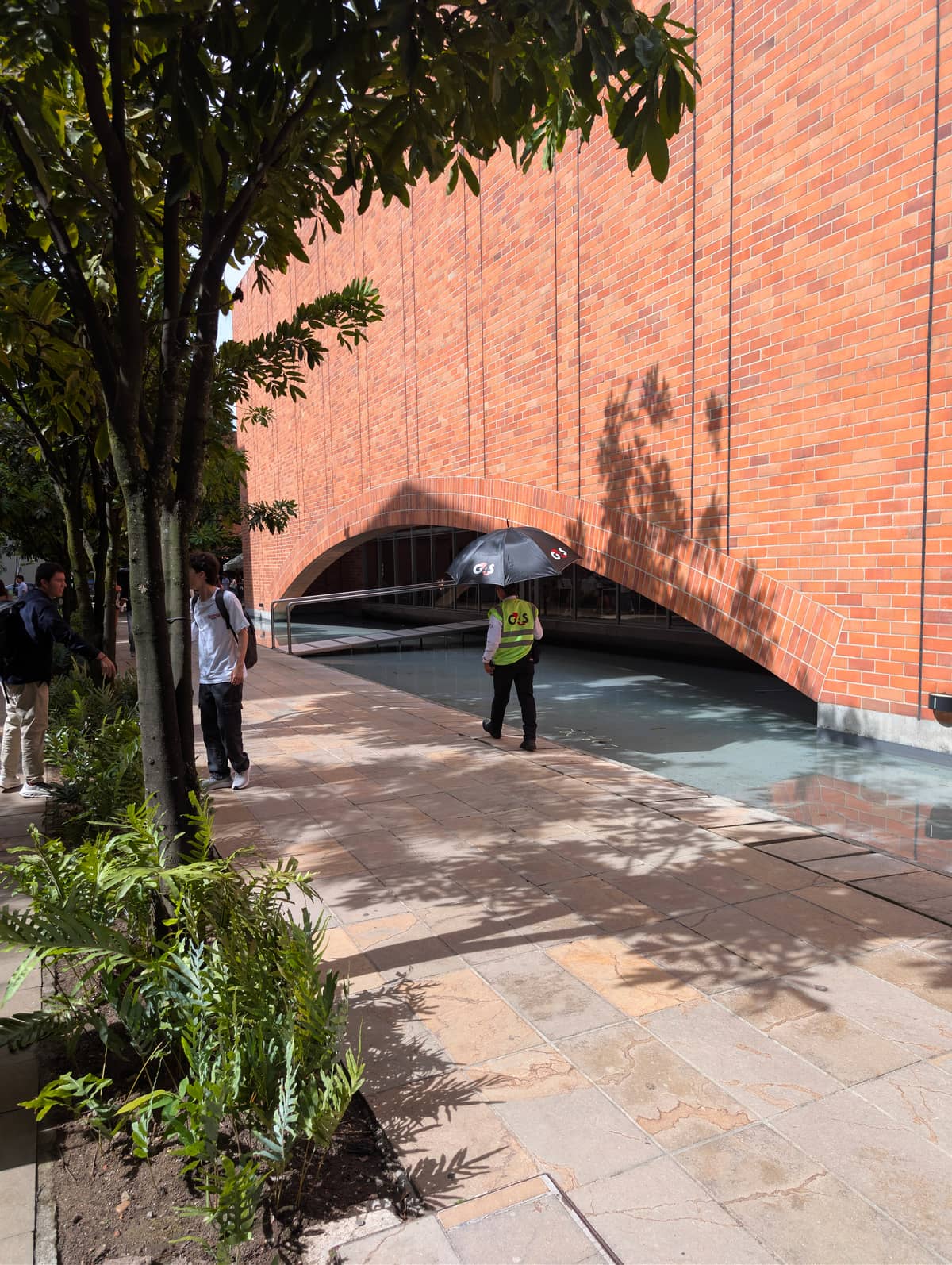
A university as a park and a cinema in a mall
The EAFIT campus, which you can simply walk into, with mango trees, water along brick walls and birds in the middle of the city. And in the evening, the oldest mall in El Poblado, the first in Colombia to have its own cinema.
3 September · Article · El Poblado, Medellín
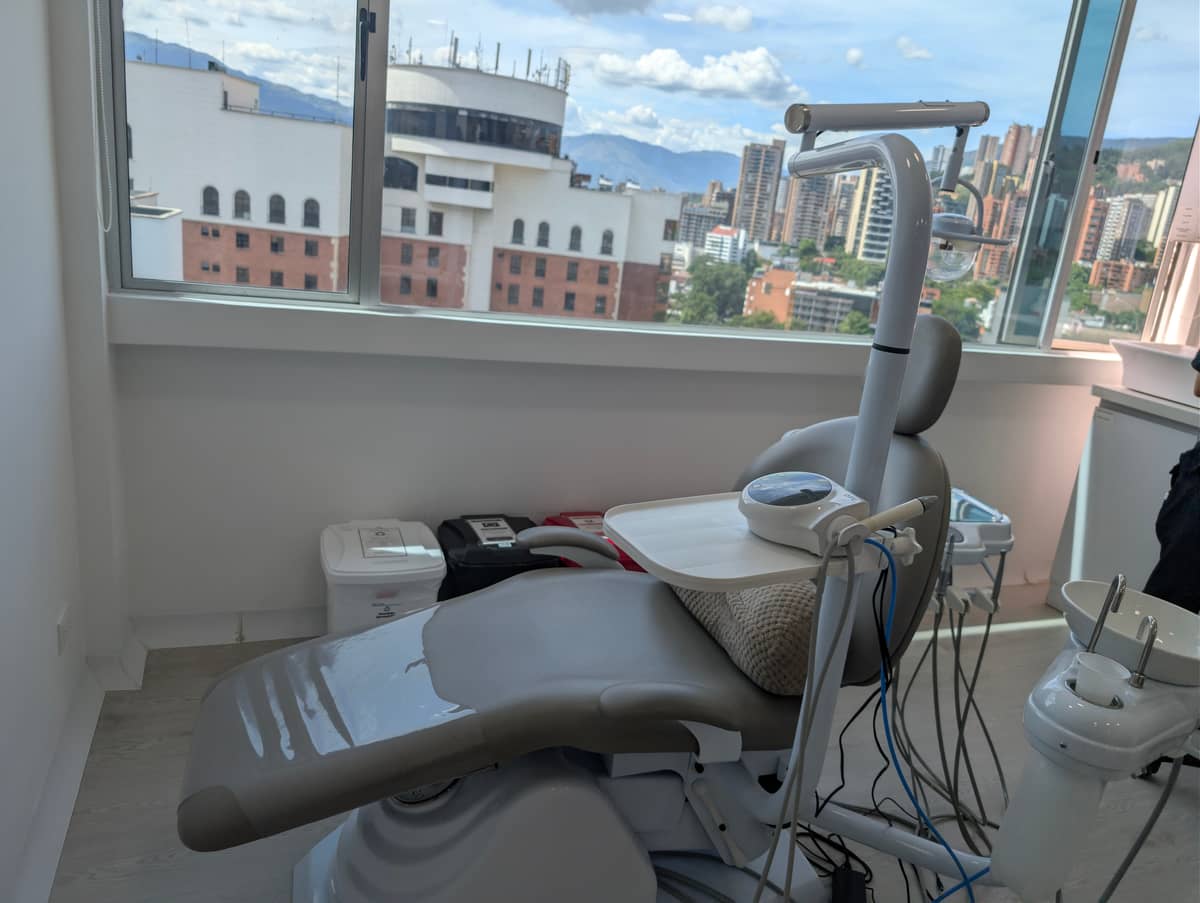
A dentist with a view
A tower full of consulting rooms in El Poblado, a restaurant on the ground floor, and a dentist's chair a metre from a glass wall with the whole Medellín valley behind it. What private care in Colombia looks like to a patient who arrived a month ago.
2 September · Note · Laureles, Medellín

2 September · Article · Laureles, Medellín
Laureles: a neighbourhood drawn in circles
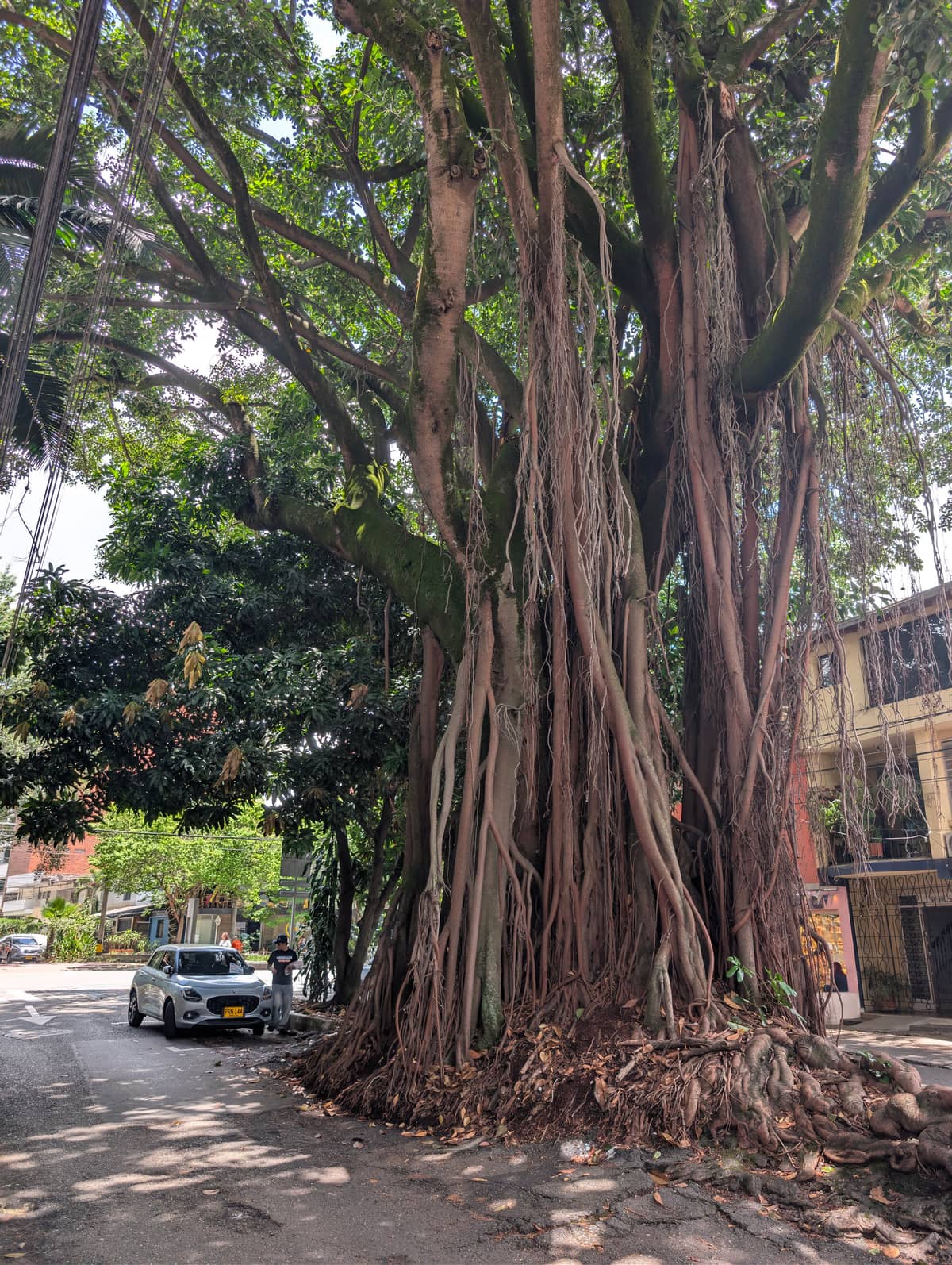
A garden city from 1940 with circular streets, fig trees across the whole road, and cafés you can work from. The neighbourhood Medellín recommends to itself, and the one Time Out called the best in the world.
August
2026
1 entry
31 August · Article · Conquistadores, Medellín
Where I live: Conquistadores
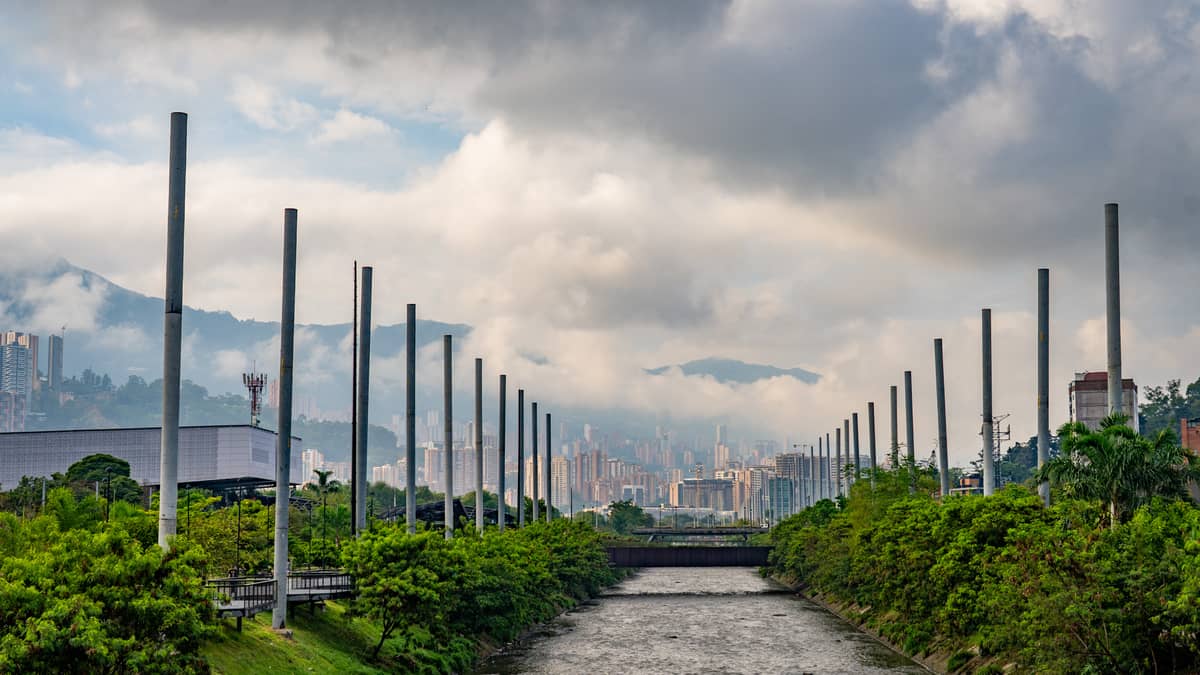
A neighbourhood between the river and Laureles that nobody writes about. Dogs on every corner and clean pavements, greenery that is not an accident, a bridge to the Barefoot Park, and seventies buildings among the palms.
Questions and answers
What do you want to ask?
Ask anything about this topic. I answer, and the answer stays here so the next person who wonders the same finds it.