Practically · Dentists and cosmetic work
Is it worth seeing a dentist or having a procedure here?
An implant with the crown for 3.5 to 6 million pesos, hygiene for 60 to 150 thousand and an appointment within three days. For cosmetic work something other than price decides: the doctor in the ReTHUS register, the clinic in REPS, a dedicated anaesthetist, and two to three weeks before you may fly home.
Checked 1 September 2026
The dentist is the first thing that makes even a sceptic raise an eyebrow: treatment that costs a fortune at home costs a fraction here, and the wait is days rather than months. A whole industry grew around it, medical tourism, and Medellín is its shop window. Much of it is true, and a few things do not make it into the adverts.
This guide is about what you pay for yourself here: teeth, skin, cosmetic work. Ordinary doctors, insurance and what to do when you fall ill are in the guide about health.
Getting the numbers straight: a million pesos is roughly 240 euros, a hundred thousand pesos about 24. The prices below come from private clinic price lists in Medellín as of September 2026 and they are ranges, not quotes: the same procedure can differ by a third between Envigado and El Poblado.
Why it is cheaper, and what that means
The lower price does not come from cutting corners on materials. It comes from cheaper labour, cheaper premises and cheaper medical education, and from serious competition: Medellín has several times more dentists per head than most European cities. Implants, ceramics and equipment are imported at world prices, which is exactly where you can tell who is skimping.
Hence the first practical rule: the difference between clinics here is not double the price, it is what the price includes. A cheaper offer often leaves out the X ray, the follow up visits, the temporary crown or the warranty. Ask for the total for the whole course of treatment, not per procedure.
The dentist: what it costs
Per tooth, in a private practice, without insurance:
- Initial consultation and plan: 40,000 to 80,000 pesos, free at many clinics if you then have the work done there.
- Panoramic X ray: 60,000 to 120,000.
- Hygiene (limpieza or profilaxis): 60,000 to 150,000.
- White filling (resina): 120,000 to 250,000 depending on size.
- Extraction: 100,000 to 250,000; an impacted wisdom tooth 400,000 to 700,000.
- Root canal (endodoncia): 400,000 to 900,000 depending on the tooth.
- Zirconia crown: 1,300,000 to 2,200,000.
- Implant including abutment and crown: 3,500,000 to 6,000,000, so roughly 850 to 1,450 euros for the whole tooth.
- In chair whitening: 400,000 to 900,000.
- Veneers (carillas): 900,000 to 1,800,000 per tooth, and that is a decision for years, not an adjustment.
- Braces: 3,000,000 to 7,000,000 for the whole course, clear aligners higher.
What the price list does not show:
Dentists here work fast. Consultation, X ray, treatment and a check up in a single week is not unusual. Come for three weeks and you can get the first stage of an implant done; the crown on top of it comes months later, after healing, and that part cannot be rushed.
You get an appointment within two or three days. Booking happens over WhatsApp, not through a receptionist and not by email. The answer comes within the hour and it is normal for the dentist to write themselves.
Card and cash both work, with a small discount for a transfer on larger amounts. An invoice with your name and tax number is no problem, you just have to ask before you pay.
When public insurance is enough and when it is not
If you live here and pay into an EPS, the basic package covers a check up, hygiene, fillings and extractions. Waiting times are worse and you do not choose the dentist, but for nothing it is not a bad start. Everything else, meaning implants, crowns, veneers, whitening and braces, you pay yourself, and no local top up plan commonly covers it.
Cosmetic work is never covered, anywhere. Not by your European travel policy either: that covers accidents and illness, not a planned procedure and not a complication after one. This is the most common and most expensive misunderstanding among people who fly in for surgery.
Cosmetic work without a scalpel
Dermatology and non invasive procedures are cheap and widespread enough here that people treat them like a haircut:
- Dermatology consultation: 150,000 to 300,000 pesos.
- Botulinum toxin, one area: 400,000 to 900,000.
- Hyaluronic acid: 900,000 to 1,800,000 per millilitre depending on the brand.
- Laser or a facial: 300,000 to 800,000 per session.
The rule is simple and holds at home too: a doctor injects faces, not a beautician. Anyone offering the procedure in a flat, in a hair salon or in your hotel room is doing something illegal and has nowhere to hand you over when it goes wrong.
Plastic surgery: where saving money is the wrong move
Colombia is among the most sought after countries in the world for this and there are genuinely excellent surgeons here. At the same time, precisely because of the demand, there are garage clinics that make the news every time somebody ends up with necrosis, an embolism or biopolymers in their body. You cannot tell the good from the bad on Instagram, and often not from the price either.
Rough prices with a board certified surgeon, in a licensed clinic, with an anaesthetist: rhinoplasty 12 to 25 million pesos, breast augmentation 14 to 25 million, liposuction 12 to 22 million, abdominoplasty 18 to 30 million. An offer well below that is not a bargain, it is information about what is being cut.
Five things you can verify beforehand
- The doctor in the ReTHUS register. The health ministry's national register of health professionals, public and online. You search by name and document number. Not there, or there without plastic surgery? End of discussion.
- Membership of the Sociedad Colombiana de Cirugía Plástica. The professional society lists its members. It is not a legal requirement, but it is the fastest filter there is.
- The clinic in the REPS register. The register of health service providers says whether the premises are authorised for what they do. A procedure in a practice licensed only for consultations is a red flag.
- An anaesthetist with a name. General anaesthesia means a separate qualified anaesthetist in the room, and you must be able to ask about them. If the answer is vague, walk away.
- What happens if it goes wrong. Who pays for the revision, where you would stay, who is reachable at night. Ask beforehand and preferably get it in writing.
What to avoid entirely
Biopolymers and so called body fillers. They are banned, and removing them later is more expensive and worse than the original procedure.
Agents selling a package. Flight, hotel, driver and surgery for one price sounds convenient, but none of them stands behind the result and you are not the one choosing the surgeon.
Five procedures at once. Longer anaesthesia means higher risk, not a saving.
Recovery houses without medical staff. There are good ones where a nurse comes daily, and there are shared flats with somebody who can make soup.
When to fly in, and when definitely not
Leave yourself time. After major surgery, flying is commonly discouraged for two to three weeks, partly because of the thrombosis risk, and the trip to Europe takes twenty to thirty hours. Book a return flight for day five and you are planning a problem.
Do not count on working. Medellín sits at 1,500 metres, swelling goes down more slowly and the heat does its bit. Give the healing some room.
Do not combine it with sightseeing. A coffee farm three days after surgery is not a reward, it is a complication.
Teeth are a different league. Hygiene, a filling, a crown or whitening carry no flying restrictions and fit sensibly into a short stay.
How to pick an actual practice
It works the same as at home, you just look elsewhere:
- Ask people who live here, not travel forums. A recommendation from somebody who has been to that dentist three times is worth more than last week's review.
- Ask for the plan in writing, even from a dentist. How many procedures, in what order, for how much in total, and what happens if the X ray looks worse than expected.
- A good clinic does not rush you. Anyone pushing for a deposit by tonight with a discount valid only today is selling, not treating.
- Managing without Spanish is possible, but ask in advance. Plenty of clinics have English speaking doctors, plenty do not and the receptionist translates. For a detailed treatment plan that is not a detail.
- The first visit is always just a consultation. Nothing gets signed or paid up front until you know what is going to happen.
What is worth doing here and what at home
Here makes sense for hygiene, fillings, crowns, implants, whitening, dermatology and the check ups you wait months for at home. The ratio of price to speed is different, and with a good doctor so is the quality.
Home makes sense for anything that needs long term follow up and that somebody will still be dealing with a year from now. Two years of braces when you are here for three months is a trap. So is any procedure where you would want the certainty that someone will redo it free within the year, because pursuing a complaint from another continent is a theory.
Continuity decides, not price. The cheapest crown in the world is the one nobody has to make twice.
What I wrote about it
September
2026
17 entries
10 September · Article
Driving in Medellín: the day of the week your car stays home
The last digit of your number plate keeps the car off the streets one day a week, from five in the morning to eight in the evening, across the whole valley. Plus the licence that expires after six months, a fine over six hundred thousand pesos, and road death figures that make me uneasy.
10 September · Article · La Candelaria, Medellín
No water after eight in the evening. What is going on in Medellín
Three hundred thousand people in six communes have had water every other day since late August. The city broke its temperature records in May, Ideam expects a strong El Niño into March, and the grid operator warns that power may not stretch through December. What the rule says, why it landed on the hillsides, and what it means for a trip.
10 September · Article · La Casa del Alimento, Medellín
A lunch where the meat dries on a washing line
A Colombian lunch is not one dish, it is a whole set for one price. Two mains, two desserts, two coffees and a lemonade came to 146,000 pesos. And in that restaurant's yard, beef hangs drying.

10 September · Article · Conquistadores, Medellín
The bin men of Medellín
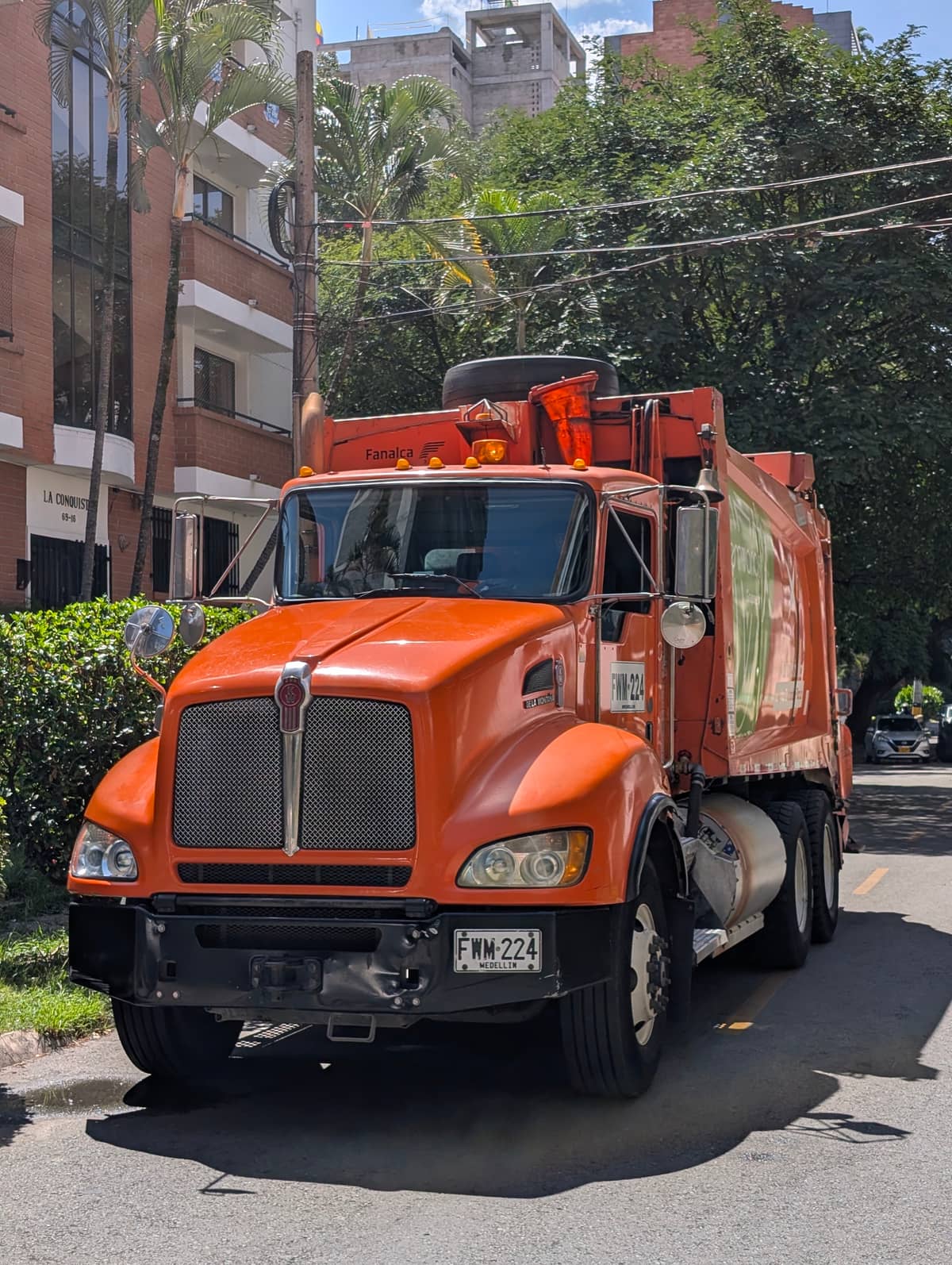
A garbage truck with a slogan saying this city is a little silver cup. Who runs it, where the waste goes, why the landfill has eight years left, and how the people who open bags on the street come to be paid out of the water bill.
10 September · Article · Comuna 8, Villa Hermosa, Medellín
Villa Hermosa after dark
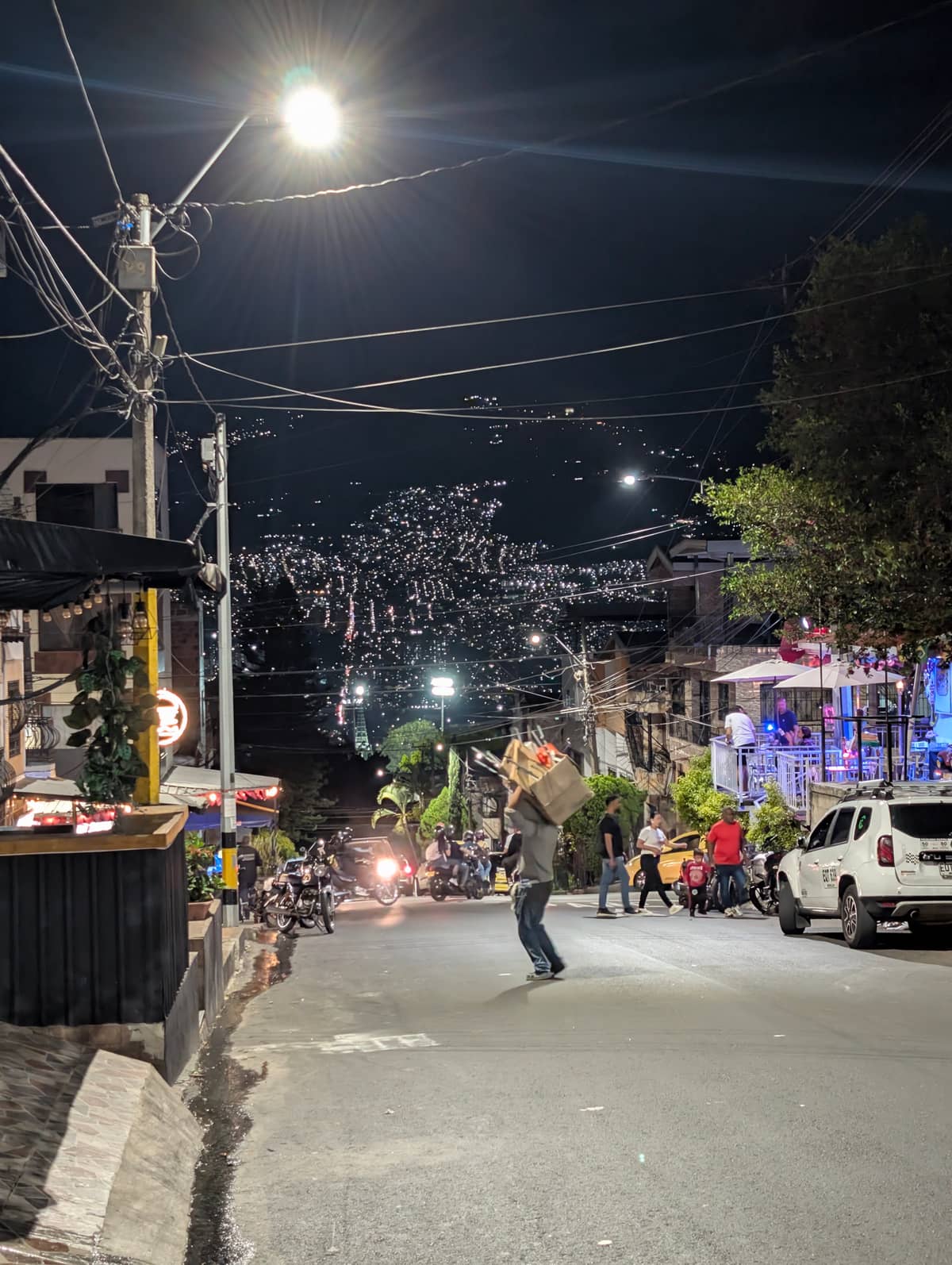
A house with almost no windows, hot rice pudding with cheese, and a slope full of lights right up to the ridge. And the only thing that made me uneasy was not what someone who has read about comuna 8 online would expect.
8 September · Article · El Poblado, Medellín
El Poblado after dark
The district where Medellín was founded in 1616 and where almost everybody who flies into the city now sleeps. Provenza with lights in the trees, the singer Karol G's restaurant, a road sign saying tourist zone, and a bill that sums it all up.
8 September · Note · La Candelaria, Medellín
At a junction on Carrera 55, Spider-Man stands at a red light selling…
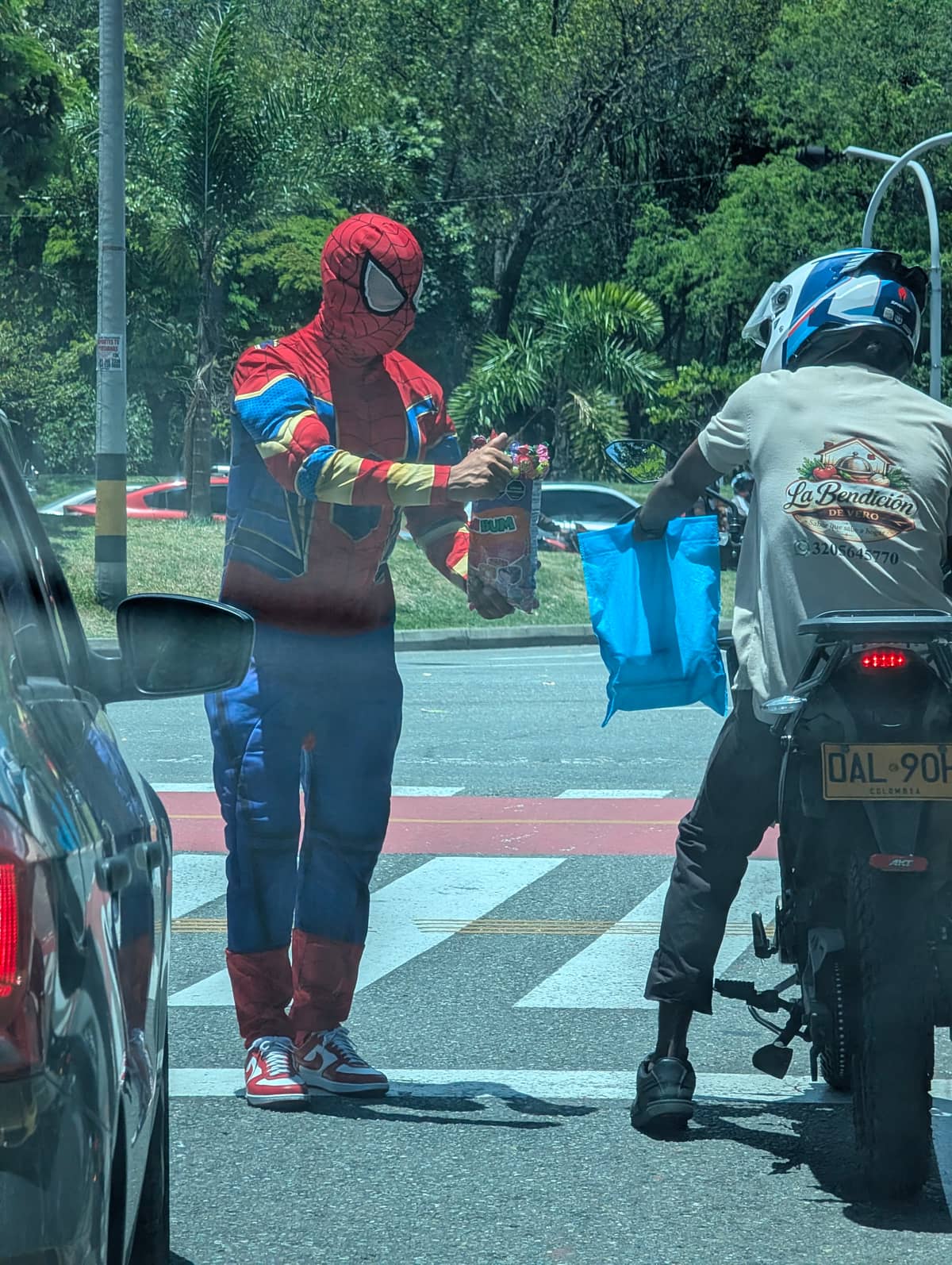
At a junction on Carrera 55, Spider-Man stands at a red light selling sweets between the cars. A motorbike rider behind him, a water stall beside him.
8 September · Note · Café Mattelsa, Medellín
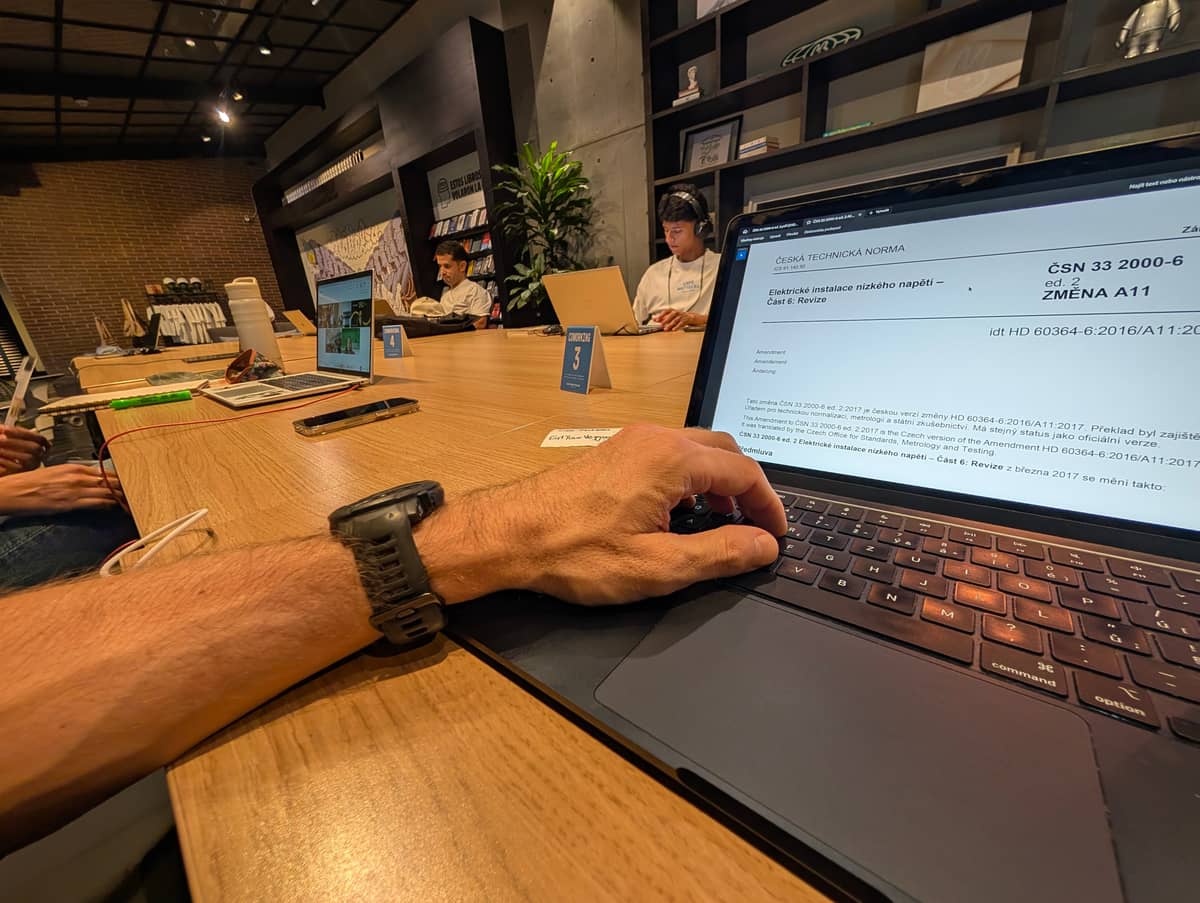
Café Mattelsa, two hours, one coffee and a kombucha. A Czech standard…
Café Mattelsa, two hours, one coffee and a kombucha. A Czech standard for electrical installations on the screen, a palm tree outside the window, people with laptops all around, and nobody making a…
7 September · Note
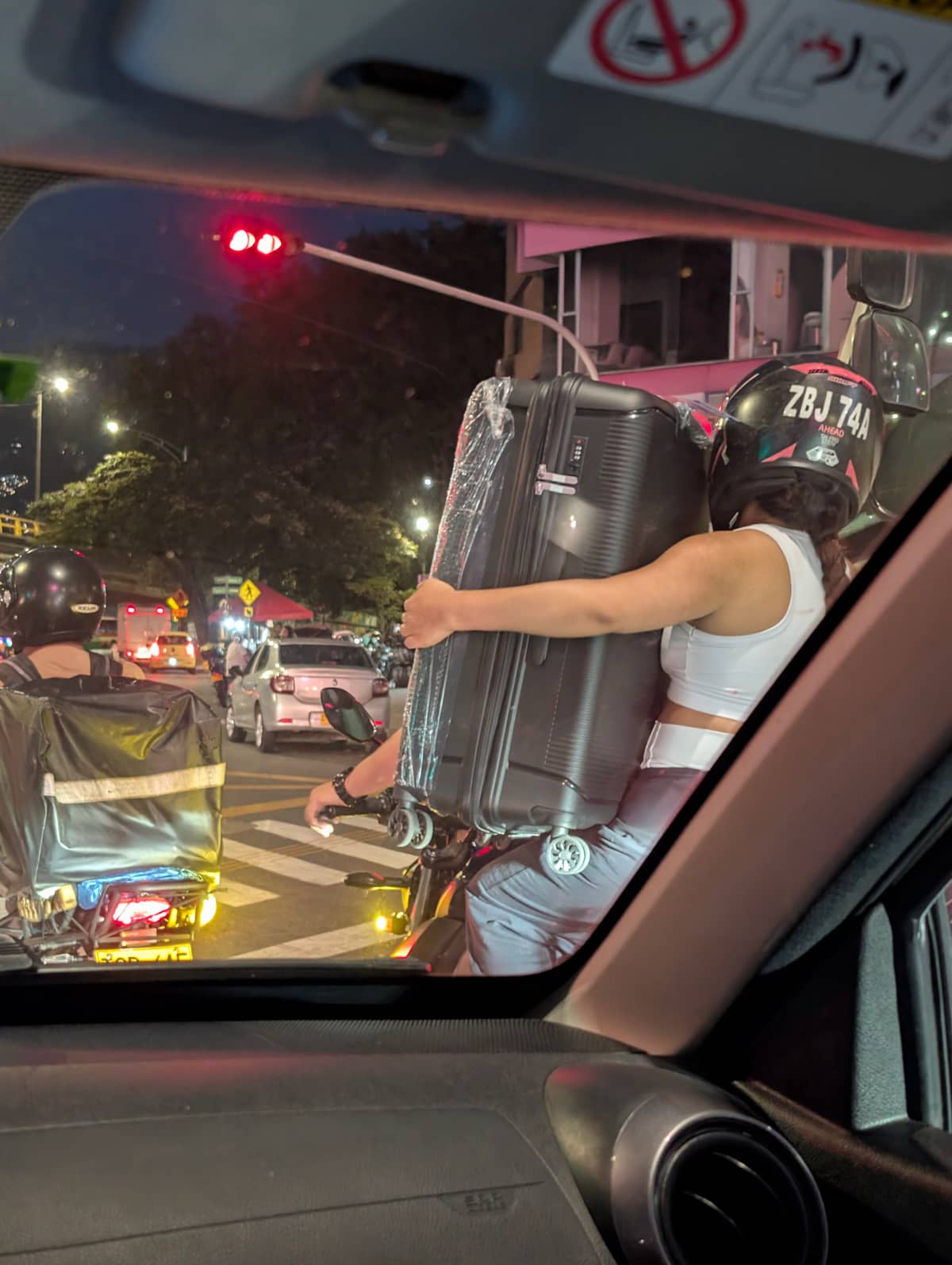
A pillion passenger on a motorbike carrying a large wheeled suitcase…
A pillion passenger on a motorbike carrying a large wheeled suitcase. One arm clamped around it, the other around the rider, knees against the tank, riding in traffic between the cars.
6 September · Article · Comuna 8, Villa Hermosa, Medellín
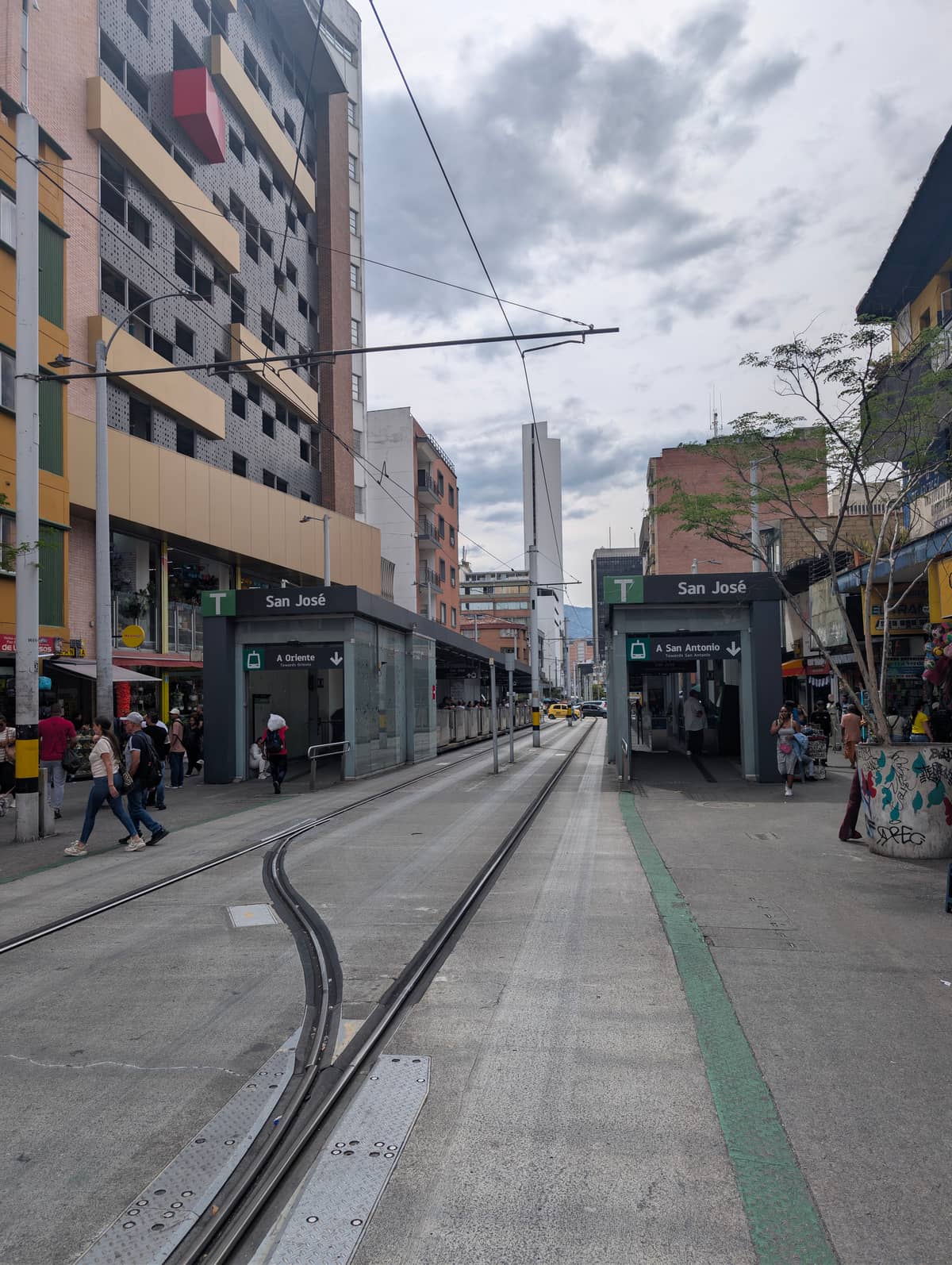
Up by cable car, down for an arepa
A tram on rubber tyres takes you from the centre to the edge of the city, and a cable car lifts you from there over the roofs of comuna 8. Back down there was an arepa festival, parakeets in a tree, a café in the house by the church, and a concert hall underground.
6 September · Article · La Candelaria, Medellín
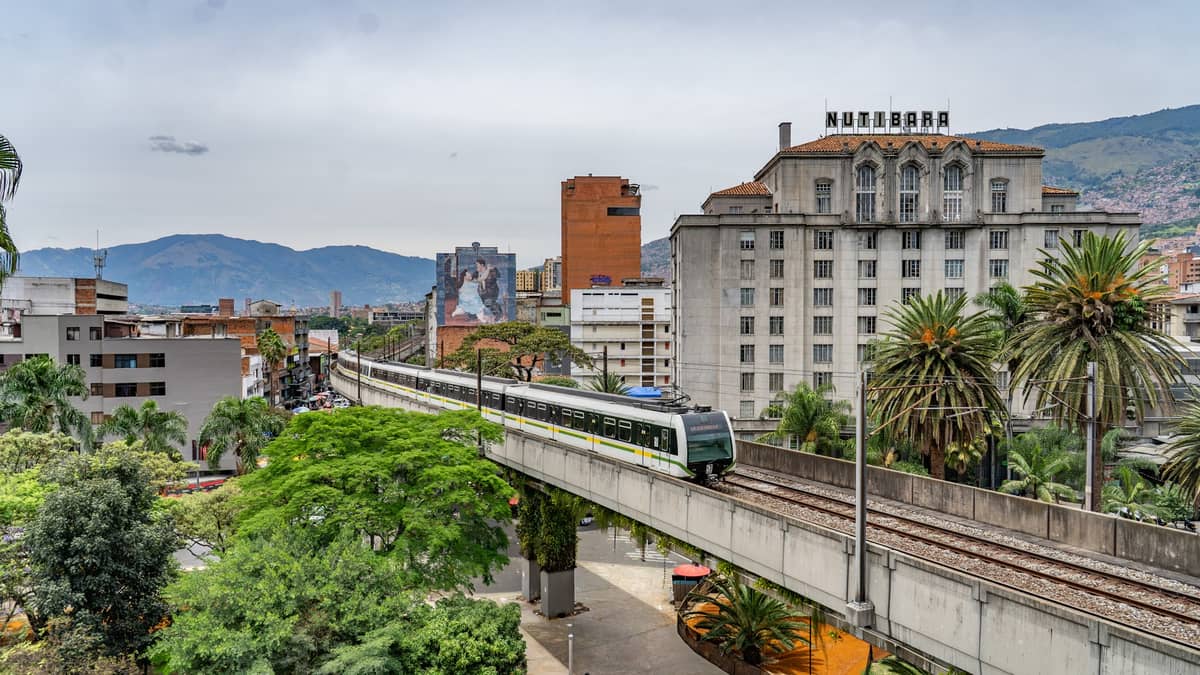
El centro: the day I finally saw the city
Every second person told me not to go into the centre of Medellín. I went by metro, cleaner than the one at home, and found a palace with a chequerboard facade, twenty three Botero sculptures, a cathedral made of a million bricks, and a market that has run since the seventies.
5 September · Note
The botanical garden was closed. Not for a holiday or repairs: they…
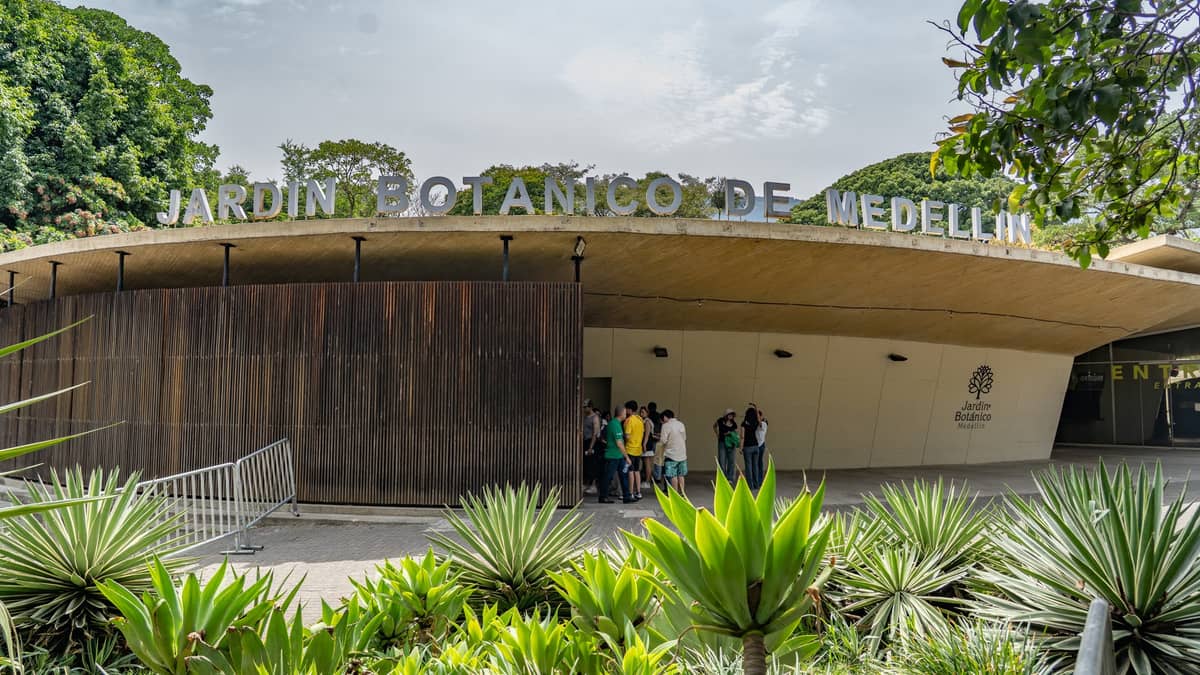
The botanical garden was closed. Not for a holiday or repairs: they are building the Fiesta del Libro y la Cultura inside it, the city's book festival, in its twentieth year and running from 11 to 20…
4 September · Article · Comuna 8, Villa Hermosa, Medellín
Villa Hermosa: lunch, a church and a market
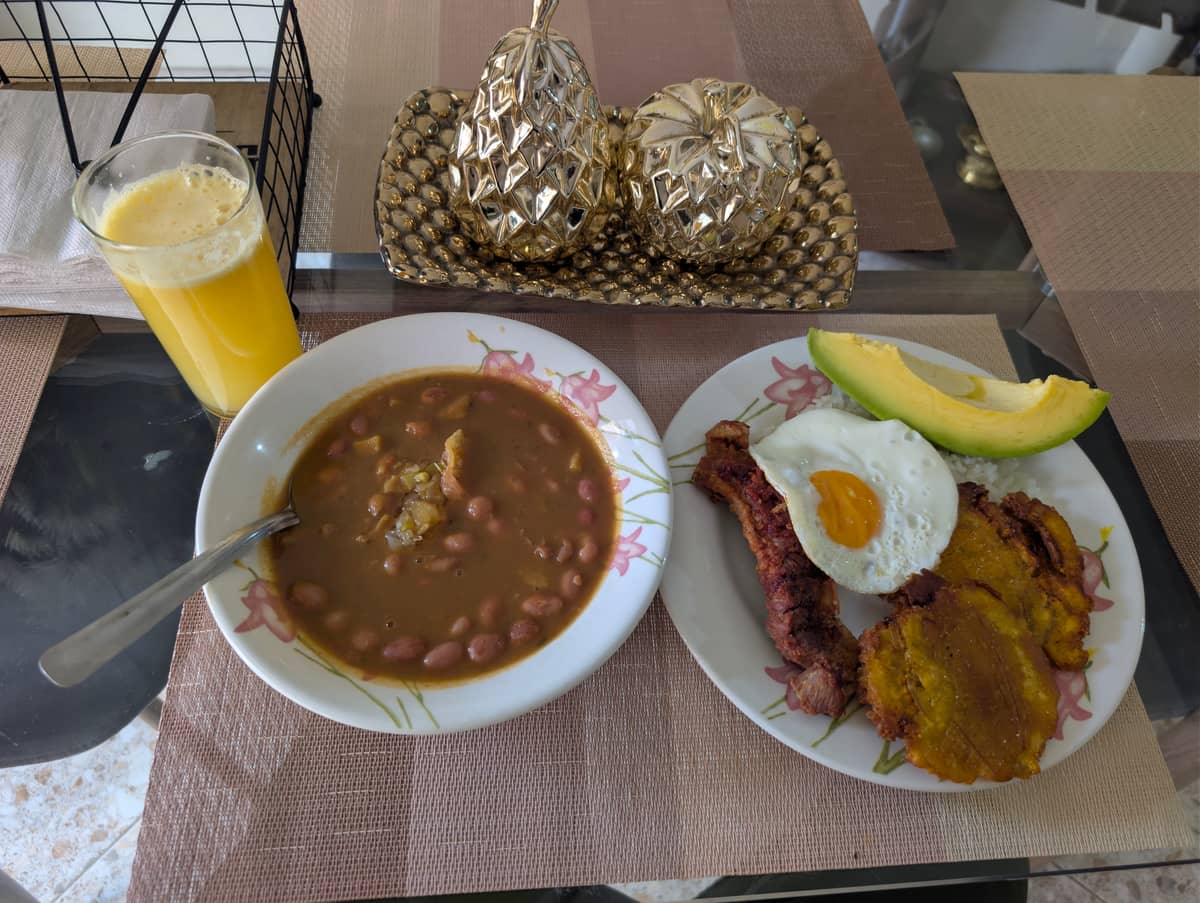
Comuna 8 up close, not from the cable car. A home cooked bandeja paisa with chicharrón, the brick church of La Sagrada Familia, stalls on the pavement, and traffic that runs on eye contact. On the way back, a stop among the villas of Prado.
3 September · Article · El Poblado, Medellín
A university as a park and a cinema in a mall
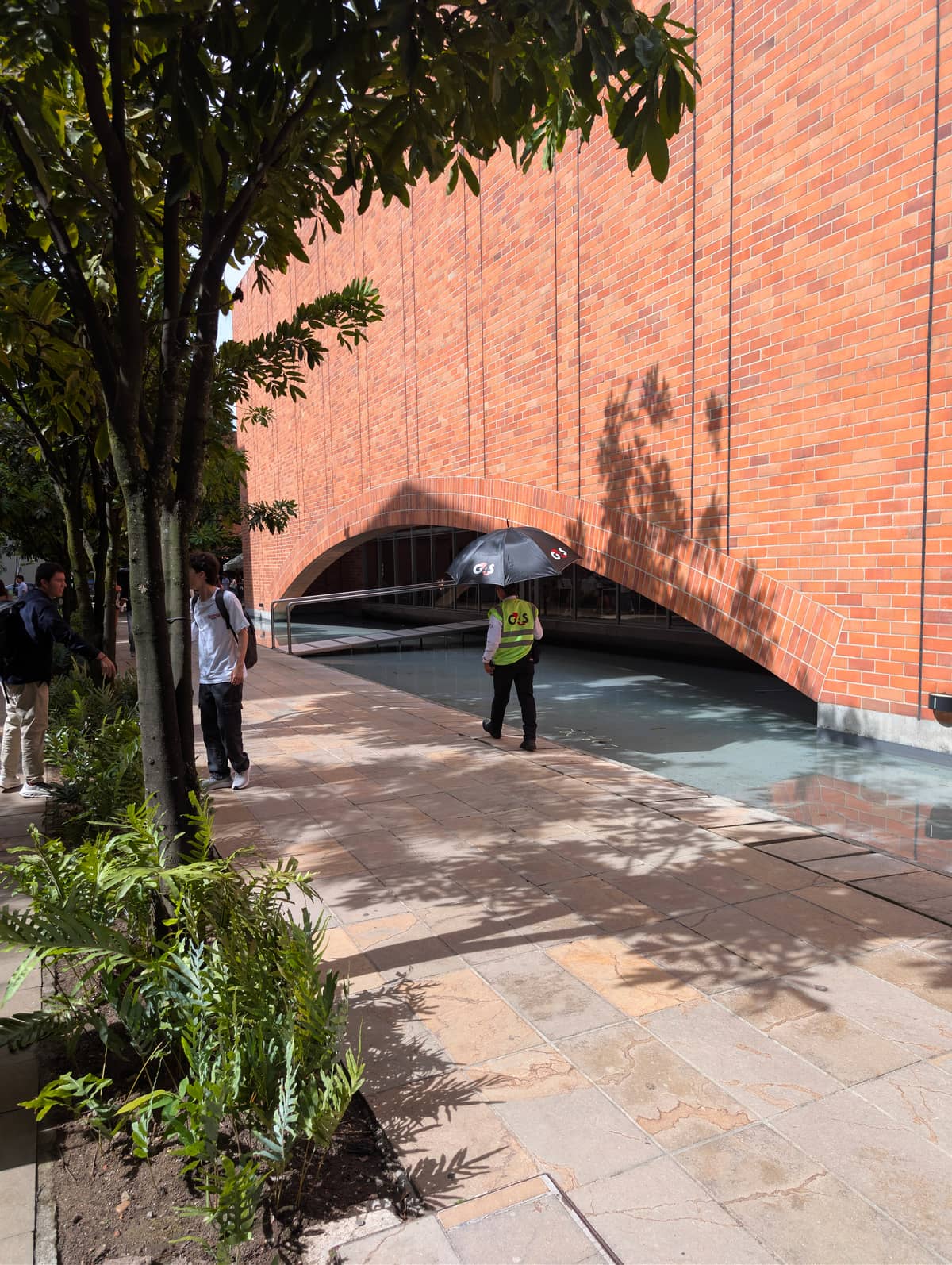
The EAFIT campus, which you can simply walk into, with mango trees, water along brick walls and birds in the middle of the city. And in the evening, the oldest mall in El Poblado, the first in Colombia to have its own cinema.
3 September · Article · El Poblado, Medellín
A dentist with a view
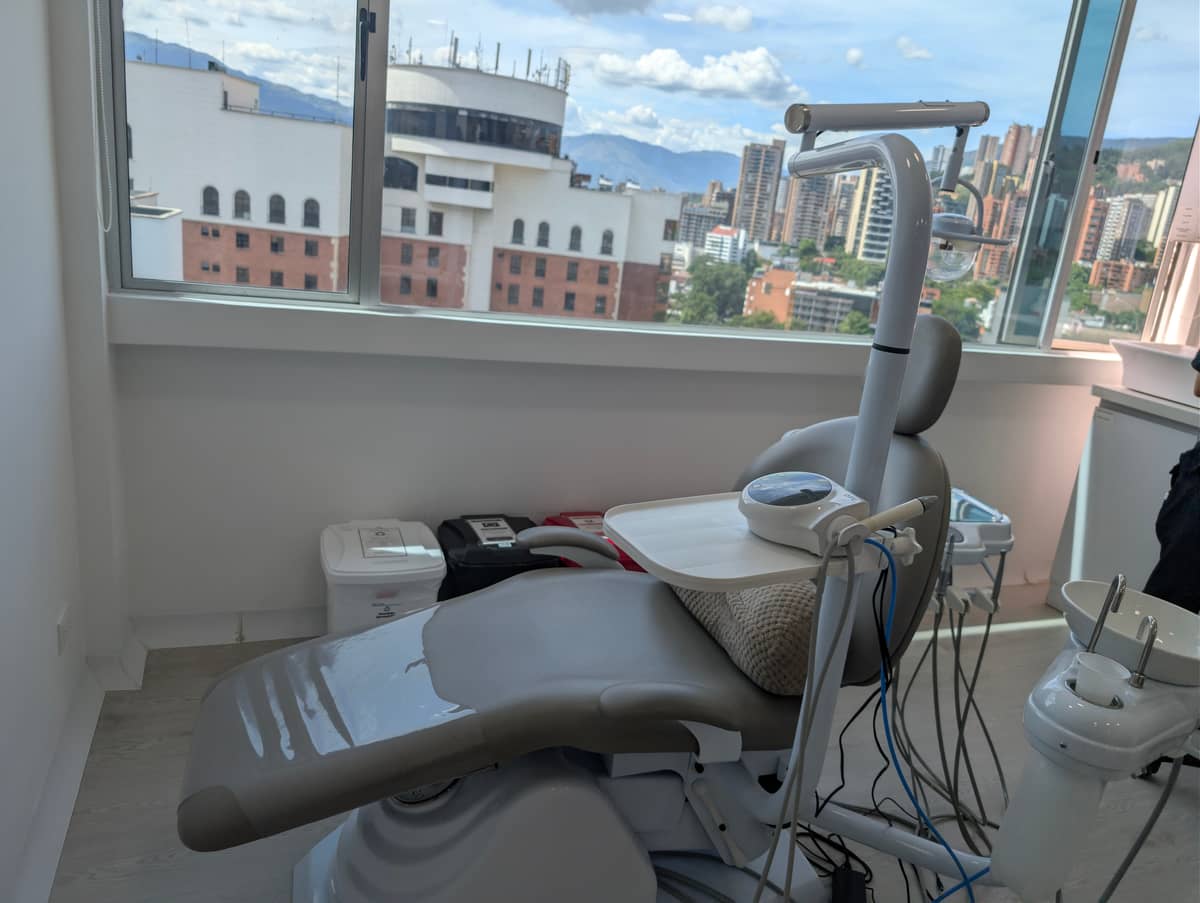
A tower full of consulting rooms in El Poblado, a restaurant on the ground floor, and a dentist's chair a metre from a glass wall with the whole Medellín valley behind it. What private care in Colombia looks like to a patient who arrived a month ago.
2 September · Note · Laureles, Medellín

2 September · Article · Laureles, Medellín
Laureles: a neighbourhood drawn in circles
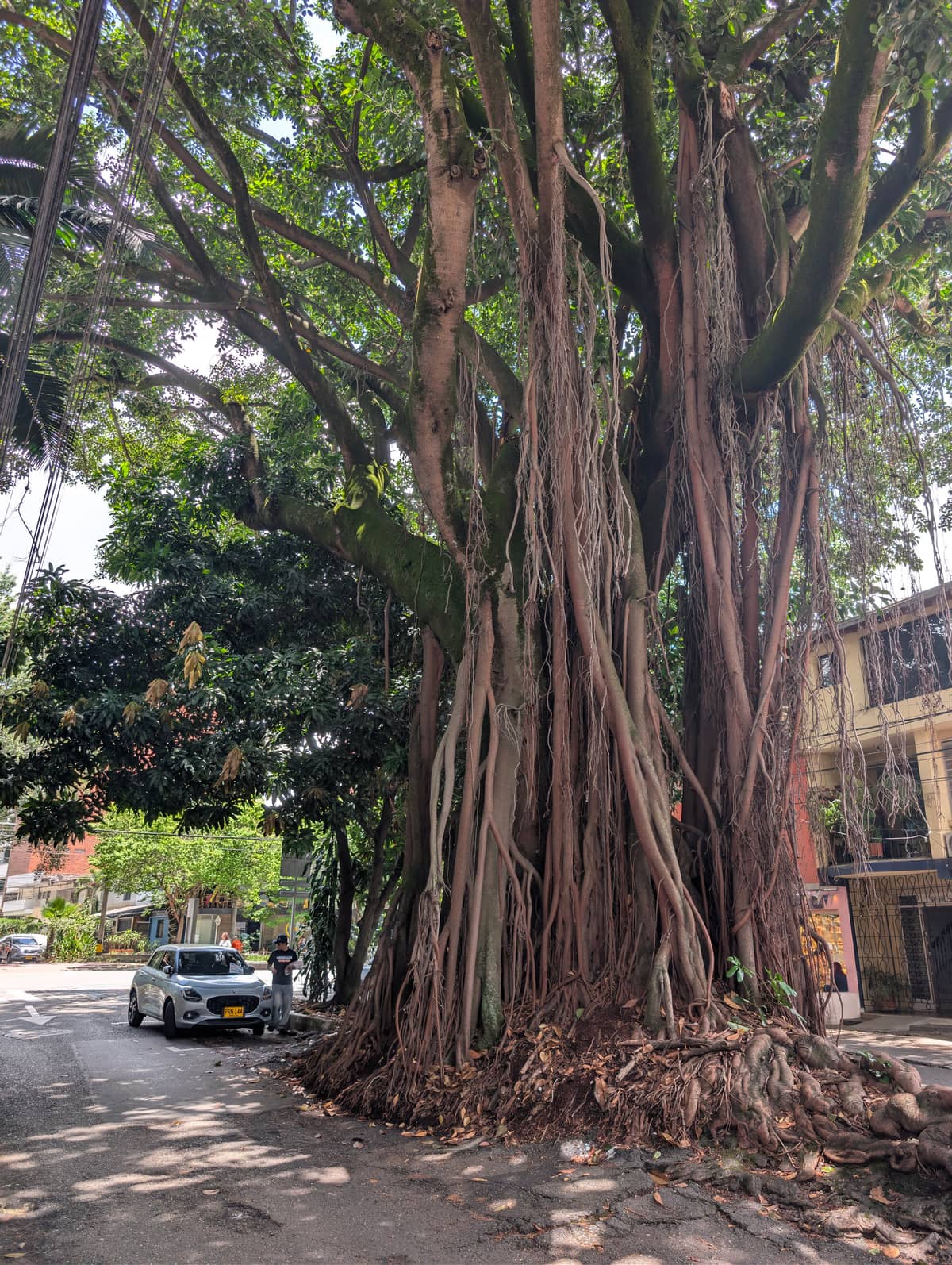
A garden city from 1940 with circular streets, fig trees across the whole road, and cafés you can work from. The neighbourhood Medellín recommends to itself, and the one Time Out called the best in the world.
August
2026
1 entry
31 August · Article · Conquistadores, Medellín
Where I live: Conquistadores
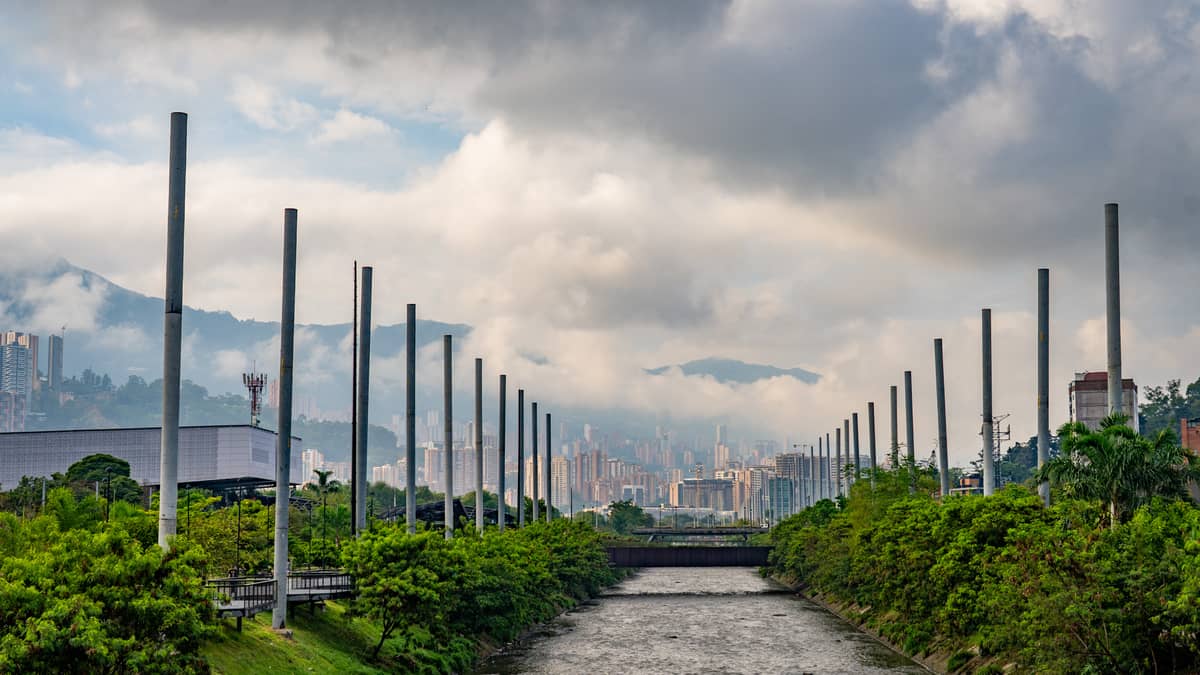
A neighbourhood between the river and Laureles that nobody writes about. Dogs on every corner and clean pavements, greenery that is not an accident, a bridge to the Barefoot Park, and seventies buildings among the palms.
Frequently asked
What does an implant cost here and how long does it take?
An implant including abutment and crown runs 3,500,000 to 6,000,000 pesos, roughly 850 to 1,450 euros. The first stage, placing the screw, fits into a few days, but the crown comes months later after healing. The whole thing cannot be planned into one short stay.
How do I check that a plastic surgeon is genuine?
Through three public registers. ReTHUS is the health ministry's national register of health professionals, searchable by name and document number. The Sociedad Colombiana de Cirugía Plástica lists its members. REPS says whether the clinic is licensed for what it does. If the doctor is missing from the first or the clinic from the third, there is nothing to discuss.
Does my travel insurance cover the procedure or a complication?
No. Travel insurance covers accidents and illness, not a planned procedure and not a complication arising from one. Cosmetic work is never covered, not by local insurance either. Assume you pay for any revision yourself, and ask beforehand who covers it if the result is not right.
How long after surgery can I fly home?
After major surgery flying is commonly discouraged for two to three weeks, partly because of thrombosis risk, and the trip to Europe takes twenty to thirty hours. After dental work, whitening or dermatology there is no restriction. Buy the return ticket only once you know what is being done.
Does the public insurer cover the dentist?
The basics, yes: a check up, hygiene, fillings and extractions. Waiting times are worse and you do not choose the dentist. Implants, crowns, veneers, whitening and braces you pay for yourself, and a top up plan that would cover them is not commonly available here.
Will they speak English at the clinic?
Sometimes yes, sometimes the receptionist translates. For simple treatment that is fine; for a treatment plan or before surgery it matters: ask when booking, not on arrival. The safest option is to bring somebody who speaks Spanish to the one visit where decisions get made.
Questions and answers
What do you want to ask?
Ask anything about this topic. I answer, and the answer stays here so the next person who wonders the same finds it.