Neighbourhood · Medellín · Colombia · 1495 m a.s.l.
Laureles
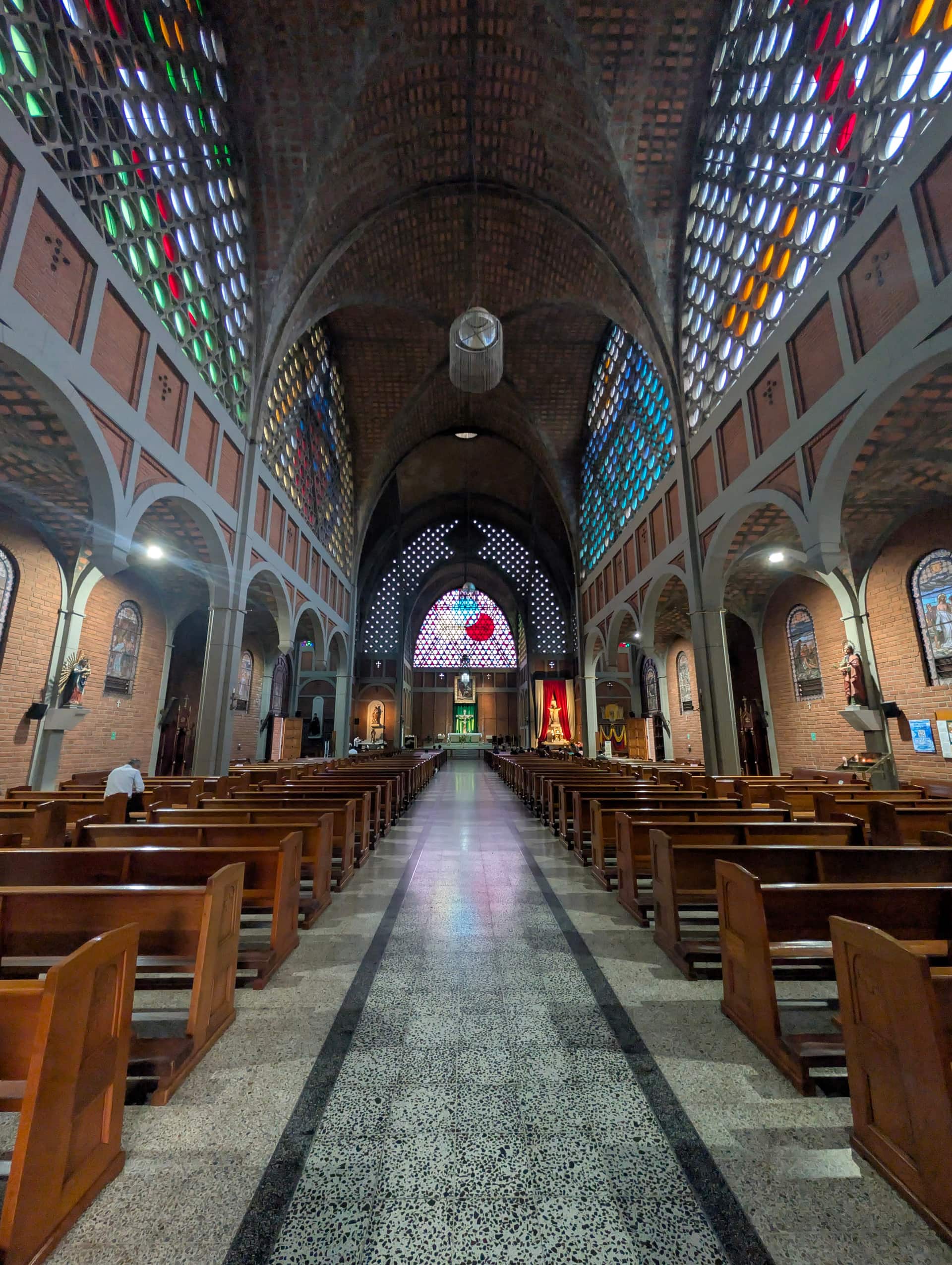
Inside the Santa Teresita church: brick vaulting and coloured windows.
Comuna 11, Laureles-Estadio. The neighbourhood Medellín recommends to itself: greenery, cafés, markets, and rents that still make sense.
What it looks like
Low buildings, wide pavements, and trees as the main architecture. Fig trees with trunks over a metre across and roots that have crossed the pavement, palms, mango trees, avenues lined the whole way.
The streets curve into circles, the circulares, the one place in Medellín where the grid does not apply and where a foreigner gets lost even with a map.
What is here
Cafés that roast their own coffee and have sockets by the tables, bakeries, bars showing football, markets, shops for the people who live here. The brick church of Santa Teresita. The Atanasio Girardot stadium on the northern edge. The UPB university in the middle of the circles.
Tourism arrived only in the last few years, and it shows mostly in the rents.
Who it is for
For somebody who wants to live in Medellín rather than visit it.
A bit of history
Until the 1920s this was farmland and estates. The name comes from the La Laureles estate.
Around 1940 the neighbourhood began as a planned expansion of Medellín onto the western side of the valley, built to the garden city model: trees, parks, low buildings, and streets meant to serve the neighbourhood rather than through traffic.
Its peculiarity, unique in the city, is the circular streets, the circulares, winding around what was then the new Pontifical Bolivarian University. The plan is attributed to the painter and architect Pedro Nel Gómez, and this is the only part of Medellín where the regular grid of carreras and calles does not apply.
Through the second half of the century Laureles became a middle and upper middle class district, the place where doctors, teachers and office workers live, and it has stayed that way.
In 2023 the British magazine Time Out named Laureles the coolest neighbourhood in the world. Since then more foreigners have arrived, rents have risen, and the local papers write about it under the headings gentrification and airbnbification. It is the same debate as in El Poblado, a few years behind.
Entries from here
Photos from here
31 frames