Town · Colombia · 2175 m a.s.l.
El Retiro
I went for one afternoon and left knowing I would come back.
It is an hour by car from Medellín and the road climbs the whole way. When you get out the air is suddenly cooler and somehow cleaner. It sits almost seven hundred metres above the city below and you feel it: the average here is sixteen degrees, so even when Medellín is baking, up here it is just right.
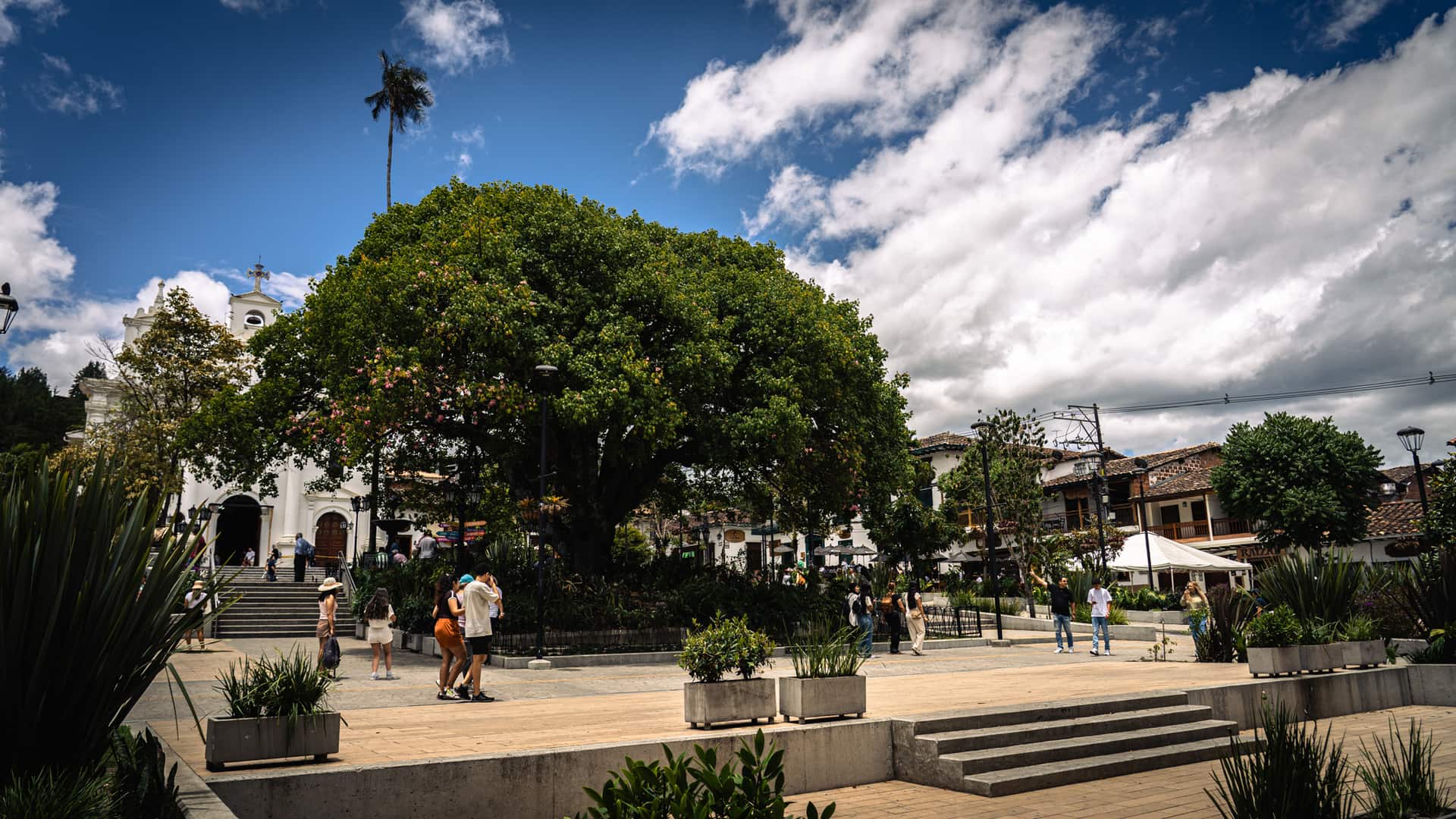
The square is the prettiest I have seen so far. A white church with a tower, trees all around, benches and tables carried out of the cafés onto the paving. You sit outside, people walk past, live music plays and nobody is in a hurry. After a while two of them stand up and start dancing. Just like that, in the middle of the afternoon, and nobody even turns their head.
Streets worth walking into
The whole town is a few blocks and all of them are worth walking. Narrow streets, low houses with wooden doors and shutters, each painted a different colour. Cafés, restaurants and small workshops in between. Around the square, stalls with fruit and souvenirs, nothing big, a few tables.
It feels like another era, and yet it is not an open air museum built for visitors. It simply stayed that way.
The lunch I would drive back for
Entre Sabores, Carrera 21, just off the square. From outside, a white house with a tiled roof and wooden doors, a board on the pavement with today's cooking written on it in chalk. Inside it looks like a living room, because it is one.
I had beef tongue in sauce. I am writing about that separately, because one sentence would not do.
What belongs here is the woman who served us. She went through the whole board with us, said what was in each dish and why we should have it, and talked about it in a way that made me want all of it. That is rare in restaurants and you notice it immediately.
Meat in a barrel
Something was going on at the back that I had never seen. A lad in an apron and gloves hung a piece of beef on a wire hook and lowered it into a tall metal barrel. Hot coals at the bottom, a lid on top, and that was it for several hours.
It is called carne al barril and it is an Antioquian thing. The meat is not grilled and not stewed, it hangs in that barrel in its own steam and smoke, nothing touches it the whole time and nobody turns it. What comes out is soft enough to pull apart with a fork.
That they show you without being asked probably says everything about how they run the place.
The people
That was the strongest thing about the whole day. Everyone is talking. On the square, in shop doorways, at the stalls. Music plays, somebody dances, somebody just watches, and the mood it makes is one you can simply sit down in and be part of.
You do not go to El Retiro for one thing you tick off and drive on. You go for what the whole place is like.
In the afternoon we moved on to the next town, La Ceja. That belongs to another entry.
A bit of history
The name El Retiro, meaning the retreat, only came second. At first the place was called El Cuarzo, after the quartz found around here in such quantities that people named the whole settlement after it. The word wore down to Guarzo over time and it stuck in what locals still call themselves: guarceños.
The settlement belonged to Rionegro for a long time and became a parish of its own only in 1814. The church on the square, Nuestra Señora del Rosario, took its present shape sixty years after that.
A hundred and forty people who stopped being property
The main thing here happened earlier, and it has nothing to do with quartz.
In 1766 Javiera Londoño signed a will that gave freedom to her hundred and forty slaves. Not one by one and not for services rendered, but all of them at once. It was eighty five years before Colombia abolished slavery by law.
Locals call it cuna de la libertad, the cradle of freedom, and they do not speak about it as distant history. Between Christmas and New Year the Fiestas de los Negritos are held here, a festival about exactly this.
Wood
The other thing they know how to do here is furniture. Carpentry has held on in El Retiro since the nineteenth century and it is not a museum piece for visitors. The workshops are still scattered through the streets and furniture from here is bought across Antioquia for a simple reason: it lasts.
Food from here
All the food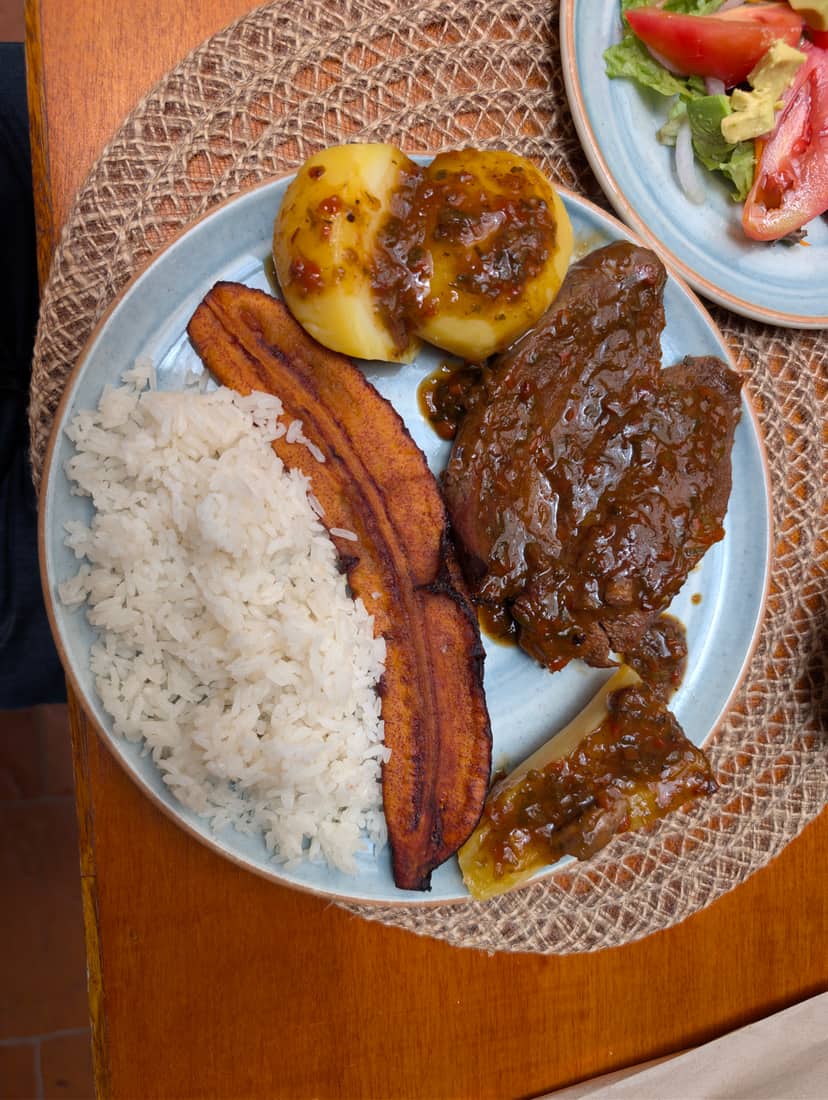
Photos from here
5 frames