Town · Colombia · 1750 m a.s.l.
Jardín
Three hours from Medellín and you are in a different country.
On the way southwest, Antioquia climbs and drops along the ridges for so long that you lose track of where you are. Then the last hill opens onto a valley with a small town in it, a white tower in the middle and green all around. Not green the way it is at home, where there is a forest and there is a field. Green with everything in it at once: coffee, banana trees, plantains, avocados, pineapple. It grows over and through and between itself and you cannot tell where the garden ends and the farm begins.
We stayed two nights and it was not enough.
A square you can spend the whole day on
The main square is painted in every colour and people sit on it.
The houses around it have wooden balconies and every one of them is painted differently: blue next to yellow next to green, shutters in a different colour from the wall. Wooden tables and chairs stand outside the bars, also painted, and those chairs are not decoration for visitors. Locals sit on them from morning to night, drinking coffee, drinking beer, talking, watching everyone else.
In the middle of it stands the basilica. Stone, neo-gothic, far bigger than a town this size should have, and that mismatch is what makes the square.
We were in no hurry to leave and it was the best part of the day.
Around the farms by tuk tuk
On the first day we took a tuk tuk and rode around the hills with no plan at all.
In Jardín a tuk tuk is ordinary transport, not an attraction. A motorbike with a cabin, a driver who knows where to take you, and roads that gradually stop being roads. You go up between the farms, past coffee bushes and banana trees, and the higher you get the further you see.
There was no programme and that was the point. You stop where you like it, you look, you carry on.
A café full of hummingbirds
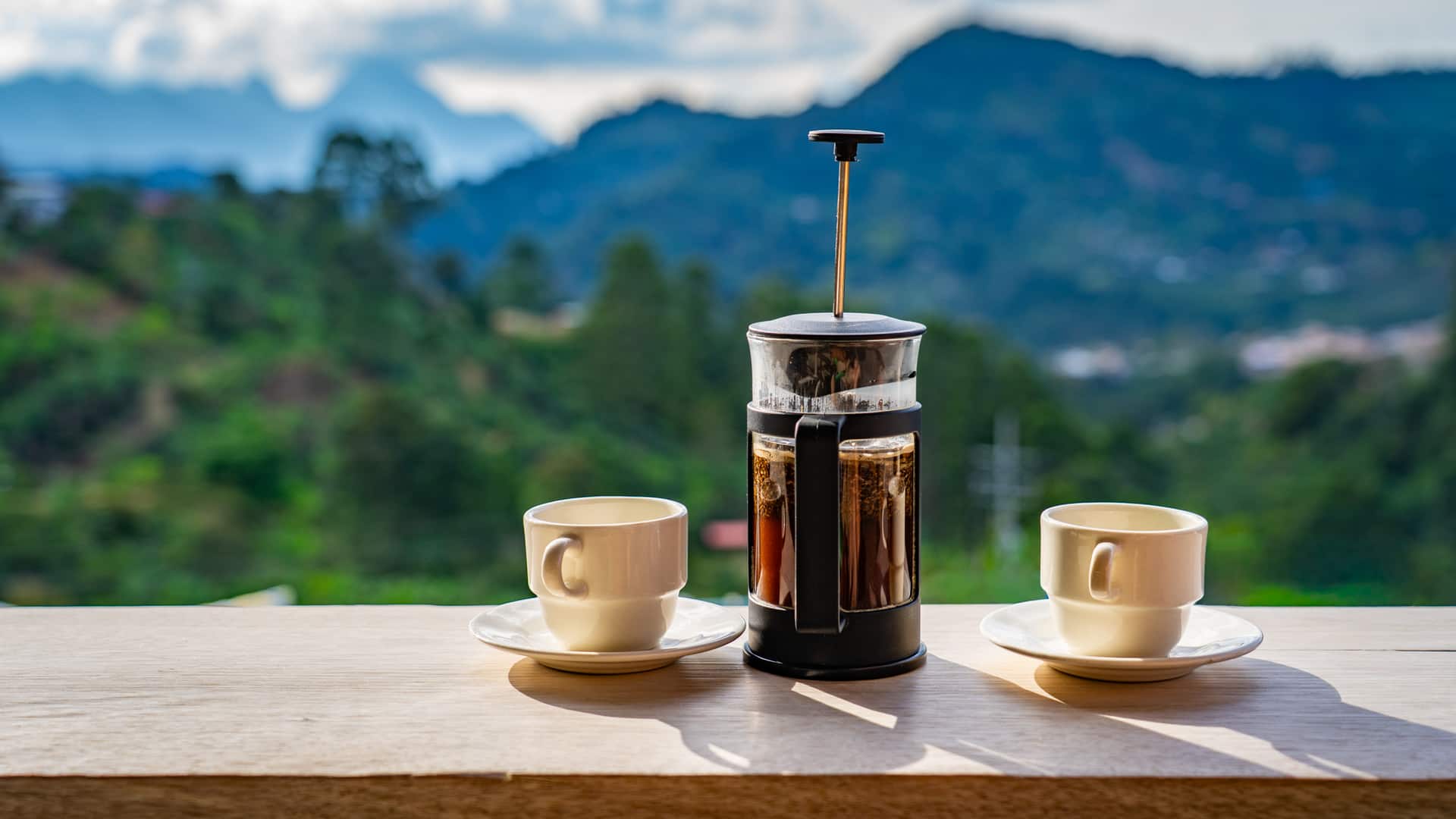
Somewhere up above the town we stopped for coffee, and it was the best stop of the day.
A view down the valley, quiet, and hummingbirds everywhere. Not one, not two, whole flocks of them. They arrive, stop dead in the air, hang half a metre from your head for a moment and are gone. You hear the wings before you see the bird.
And the coffee grows on the hills you are looking at while you drink it.
Anyone who thinks they know this from a zoo or a documentary does not know it. Sitting with a cup in your hand among wild hummingbirds is something you still remember that night as you fall asleep.
Coffee, from the bush to the cup
The second day was about coffee and it was a different world from the café.
We went to a coffee farm and walked the whole road the bean travels before it reaches a cup. Picking, processing, roasting, brewing. All of it by hand, not as a presentation.
Picking is not romantic. You get a basket on your waist and you go up the slope. Only the red cherries come off, the green ones stay on the bush to ripen, so you do not pick row by row, you pick bean by bean. Every bush is gone over several times a season. After half an hour you know why the coffee costs what it costs, and why so much of that work is paid so little.
Processing is a craft. They showed us what happens to the cherries next: how the bean comes out, why it is left to ferment, how it is dried, when and how it is roasted. Every step can be done faster and cheaper, and every step shows it afterwards.
And then they brewed it. Coffee from the farm you are standing on, made by the person who grew it. The taste is somewhere else entirely from anything you can buy at home, but the real thing is that it is the first time you understand it. I know what I drank and I know how much work is behind it.
And a place to sleep
We slept in a local hotel, not a chain, and it was Colombian through and through: a painted house, wood, a courtyard, plants, and birds in the morning.
Exactly the kind of place that makes it worth coming to Jardín for two nights instead of one.
A bit of history
Jardín looks like a film set, but it is a real town that simply never changed.
It was founded on 23 May 1863, has been a parish since 1871 and became a municipality in 1882. It lives on what it always lived on: coffee, plantains, sugar cane, beans. These days tourism too, with more than forty hotels, which for thirteen thousand inhabitants tells you something.
Above the square stands the Basilica of the Immaculate Conception. It was built between 1918 and 1942 from local stone, declared a national monument in 1980 and a minor basilica on 3 June 2003. For a town in the mountains it is a building that has no business being there, which is exactly why everyone looks at it.
Jardín is one of Colombia's seventeen pueblos patrimonio, the official network of towns whose character is protected. The colour on the square is not paint for photographs, it is how people here have always built and painted, and now it is written down as well.
And one more thing you cannot see from the square: in 2007 they built two cable cars. Not for tourists, but for the people on the farms up in the hills, who otherwise had hours on foot. One runs to Alto de las Flores and Cristo Rey, the other to the La Garrucha viewpoint. That they became an attraction is a side effect.
Food from here
All the food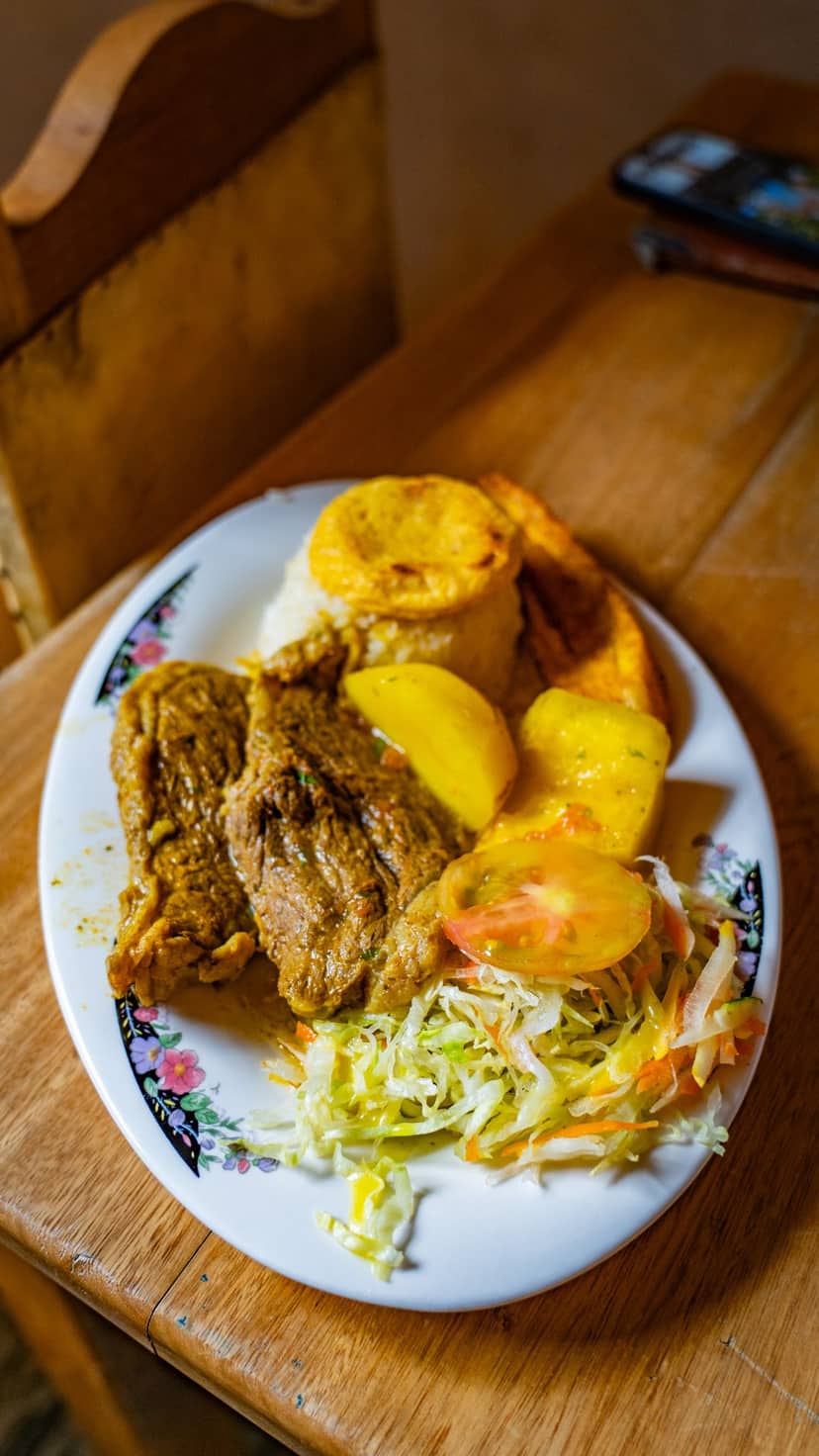
Photos from here
60 frames